
Introduction
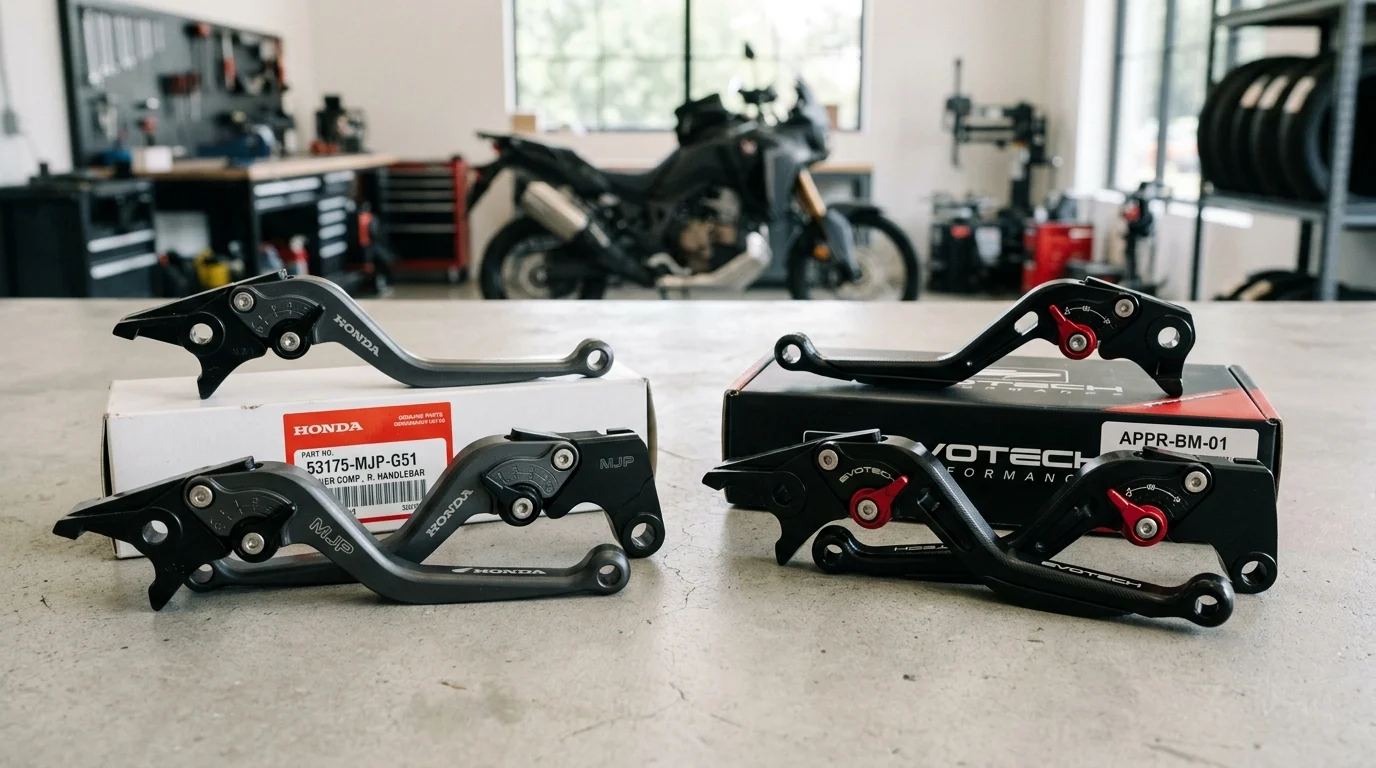
Choosing between OEM and aftermarket motorcycle parts affects more than the purchase price. It shapes reliability, fitment consistency, warranty exposure, downtime, and the total cost of keeping bikes on the road. This comparison explains where the main cost differences come from, why quality can vary so widely between suppliers, and which trade-offs matter most for different maintenance priorities. By looking beyond sticker price to engineering standards, supply chain factors, and operational risk, readers can better judge when OEM parts justify the premium and when aftermarket options offer real value.
Why OEM vs aftermarket motorcycle parts matter
The global motorcycle parts and accessories market, projected to exceed $130 billion by 2030, presents procurement professionals, fleet operators, and service centers with a continuous dilemma: balancing Original Equipment Manufacturer (OEM) components against aftermarket alternatives. This decision impacts not only immediate capital expenditure but also long-term reliability, regulatory compliance, and liability.
Understanding the structural differences between these two supply channels is essential for optimizing maintenance budgets. A nuanced approach requires moving beyond simple price tags to evaluate supply chain mechanics, engineering tolerances, and application-specific risks.
How to frame the OEM vs aftermarket choice
The choice between OEM and aftermarket components must be framed around Total Cost of Ownership (TCO) and operational risk rather than upfront unit cost alone. OEM components are engineered to meet stringent defect tolerances, often adhering to Six Sigma methodologies, which target fewer than 3.4 defects per million opportunities (DPMO). This statistical reliability minimizes downtime and rework.
Conversely, the aftermarket landscape is highly fragmented. While premium aftermarket segments offer engineered solutions that rival or exceed original specifications, the broader market requires buyers to carefully weigh acceptable failure risks against potential capital savings.
What drives cost and quality differences
Cost and quality differentials stem directly from supply chain architecture and R&D amortization. OEM parts carry the overhead of initial vehicle development, rigorous multi-stage validation testing, and brand licensing. These costs are baked into the final unit price.
Material selection also plays a critical role in driving these differences. For instance, an OEM structural subframe may utilize aerospace-grade 6061-T6 aluminum to meet specific tensile strength requirements. A budget aftermarket equivalent might rely on heavier, lower-tensile cast alloys to reduce production costs by 15% to 25%, sacrificing weight savings and long-term fatigue resistance in exchange for a lower retail price.
What defines OEM and aftermarket motorcycle parts
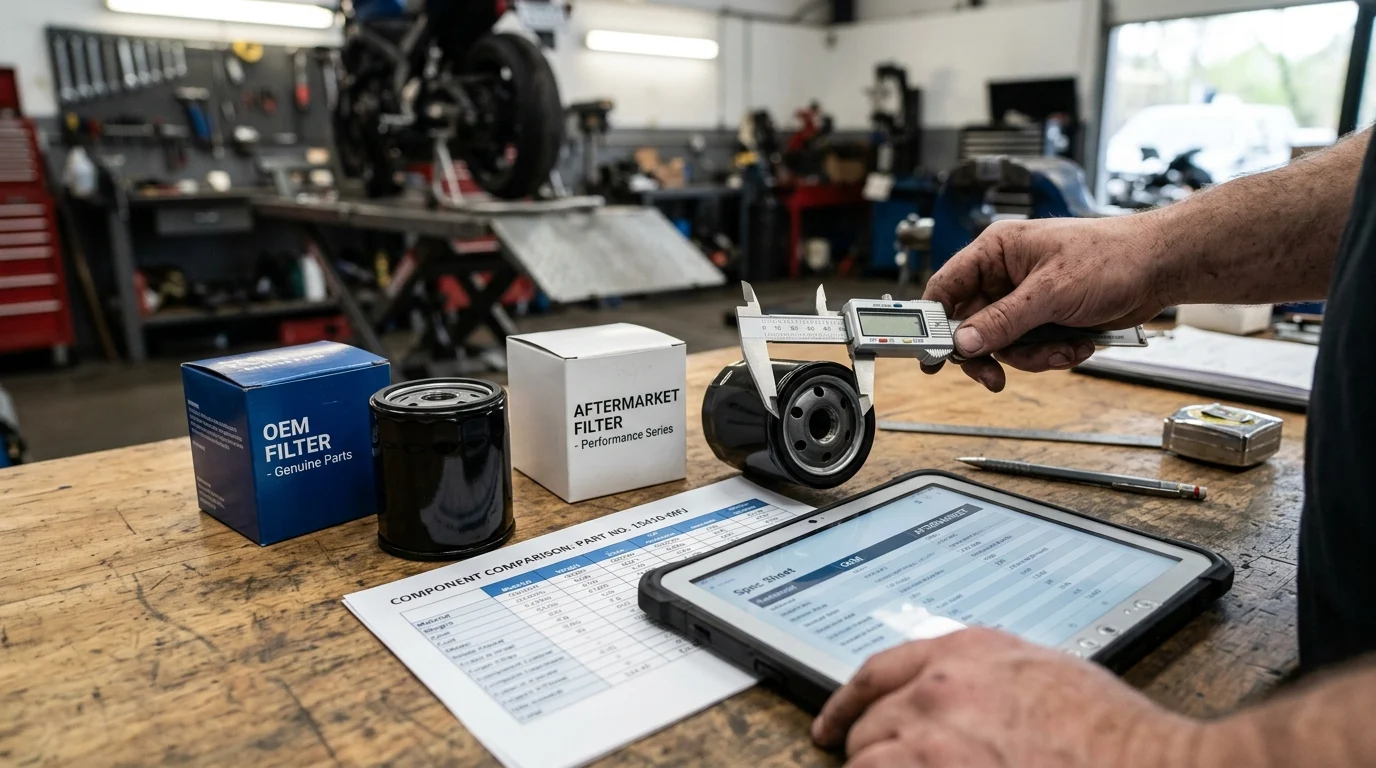
Establishing clear definitions is paramount for effective procurement and inventory management. The dividing line between genuine and non-genuine components is defined by intellectual property ownership, supply chain origin, and the quality management systems governing their production.
How OEM parts are specified and distributed
OEM parts are manufactured according to the motorcycle brand's proprietary specifications and tolerances. The production of these components is typically governed by stringent automotive quality management standards, most notably IATF 16949.
Once manufactured, OEM parts are distributed almost exclusively through authorized dealer networks and centralized corporate warehouses. This closed-loop distribution model historically adds a 30% to 40% markup at the dealership level to cover logistics, brand licensing, and franchise overhead.
How aftermarket parts vary by quality tier
The aftermarket sector is not monolithic and is generally stratified into three distinct quality tiers. Tier 1 consists of premium or performance parts that often exceed OEM specifications, sometimes offering a 10% to 20% reduction in weight or a measurable increase in thermal efficiency.
Tier 2 provides standard replacement parts designed to match OEM performance at a more accessible price point, targeting the everyday repair market. Finally, Tier 3 includes budget components where aggressive cost reduction is prioritized, often resulting in compromised longevity or less precise fitment.
Which misconceptions affect fair comparison
A pervasive misconception in the industry is that aftermarket parts are inherently inferior to their OEM counterparts. In reality, modern motorcycle manufacturing relies heavily on external vendors.
Approximately 60% to 70% of OEM components are actually produced by tier-one third-party suppliers (e.g., Brembo, Showa, Bosch, Denso). These same manufacturers frequently sell identical or slightly modified components directly to the aftermarket without the OEM branding, offering equivalent engineering quality at a significantly reduced cost.
How OEM and aftermarket parts compare
A direct comparison requires evaluating both the financial implications and the physical characteristics of the components. Procurement strategies must align with the specific application, the lifecycle stage of the motorcycle, and the technical capabilities of the installation facility.
What explains price differences
The price discrepancy is the most immediate differentiator for buyers. OEM parts typically command a 20% to 60% premium over standard aftermarket alternatives.
This markup does not necessarily reflect higher material quality. Instead, it subsidizes the motorcycle manufacturer's extensive dealer network, warranty reserve funds, and the massive administrative overhead required to maintain global parts catalogs and warehousing for decades of legacy models.
How to compare quality, fit, and durability
Quality, fit, and durability are best assessed through dimensional tolerances and material testing. OEM components are manufactured to exact proprietary CAD models, often ensuring dimensional tolerances of ±0.05mm, which guarantees seamless installation without secondary machining.
Aftermarket manufacturers frequently rely on reverse-engineering techniques, such as Coordinate Measuring Machine (CMM) scanning or 3D optical tracking. While advanced, this process can introduce tolerance stacking. This sometimes results in variances of ±0.15mm or more, necessitating minor modifications, shimming, or adjustments during assembly.
What a simple comparison table should include
To systematize procurement decisions, buyers should utilize a standardized evaluation matrix to quickly assess trade-offs across different tiers of components.
| Evaluation Metric | OEM Parts | Premium Aftermarket | Budget Aftermarket |
|---|---|---|---|
| Price Premium | Baseline (Highest) | -10% to +20% | -40% to -60% |
| Dimensional Tolerance | ±0.05mm | ±0.05mm to ±0.10mm | ±0.15mm or greater |
| Warranty Coverage | 12 to 24 months | 6 to 12 months | 30 days or none |
| R&D Focus | Broad reliability | Specific performance | Cost reduction |
What sourcing and compliance factors affect the decision
Beyond the physical attributes of the parts, the supply chain mechanics and regulatory environments dictate the feasibility of utilizing OEM versus aftermarket options. Sourcing professionals must navigate these external variables to ensure operational continuity and mitigate legal risks.
How to assess traceability, counterfeit risk, and recalls
Counterfeit components represent a significant hazard, costing the broader automotive and motorcycle industry an estimated $45 billion annually. Assessing traceability is critical to avoiding substandard materials.
OEM parts offer robust traceability through authorized dealer networks and integrated RFID or QR coding on packaging. When sourcing aftermarket parts, buyers must vet suppliers for ISO 9001 certifications and demand clear bill-of-lading documentation to mitigate the liability associated with counterfeit infiltration, particularly in safety-critical systems.
What lead times and availability mean for buyers
Inventory availability heavily influences the sourcing decision, particularly for fleet operators where vehicle downtime equals lost revenue. OEM supply chains, while reliable, can suffer from extended lead times of 4 to 12 weeks for non-consumable or legacy components due to centralized global warehousing.
Conversely, agile aftermarket distributors often maintain localized safety stocks, reducing lead times to 3 to 7 days. However, commercial buyers leveraging aftermarket channels must also negotiate Minimum Order Quantities (MOQs), which can range from 50 to 500 units for direct-from-factory wholesale orders.
Which part categories require extra caution
Categorical risk assessment is essential for compliance and safety. Critical components, such as brake calipers, ABS sensors, and engine internals, demand rigorous standards. For example, aftermarket brake pads sold in European markets must meet stringent ECE R90 compliance, ensuring they perform within 15% of the original equipment specifications.
In these high-liability categories, OEM or certified Tier 1 aftermarket parts are mandatory. Conversely, non-critical items like cosmetic fairings, turn signal housings, or mirrors carry negligible safety risks, making them prime candidates for budget aftermarket sourcing.
How to choose the right motorcycle parts
Developing a robust procurement protocol requires synthesizing cost, quality, and sourcing variables into an actionable framework. This ensures consistency across maintenance operations and maximizes return on investment without compromising rider safety.
What step-by-step decision process to use
A structured decision process begins with application criticality, followed by budget constraints and lead time requirements. Evaluating these three pillars prevents emotional or purely price-driven purchasing.
The following matrix illustrates a standard procurement logic model based on component categorization.
| Part Category | Recommended Source | Rationale | Typical Cost Variance |
|---|---|---|---|
| Internal Engine/Transmission | OEM | Exact tolerances required; high labor cost for rework | Baseline |
| Suspension/Braking | OEM or Premium Aftermarket | Safety critical; ECE R90 or DOT compliance needed | -10% to +15% |
| Consumables (Filters, Plugs) | Premium Aftermarket | Equivalent quality from original suppliers (e.g., NGK, Mahle) | -20% to -30% |
| Cosmetics (Plastics, Mirrors) | Budget Aftermarket | Low safety risk; high aesthetic replacement frequency | -50% to -70% |
When OEM is the better choice
OEM remains the optimal choice for motorcycles operating under a factory warranty, which typically spans 1 to 3 years. Utilizing aftermarket components for critical systems during this period risks voiding the manufacturer's coverage, exposing the owner to severe financial liability.
Furthermore, OEM is highly recommended for complex electronic control units (ECUs), proprietary wiring harnesses, and advanced rider assistance systems (ARAS). In these areas, aftermarket reverse-engineering often falls short in achieving seamless Controller Area Network (CAN) bus integration, leading to persistent diagnostic error codes.
When aftermarket is the better choice
The aftermarket ecosystem becomes highly advantageous for out-of-warranty repairs and aging fleets. For motorcycles older than 5 years, the 30% to 50% cost savings offered by standard aftermarket parts can be the determining factor in keeping a vehicle economically viable to operate.
Additionally, when a specific operational requirement exceeds the original design parameters—such as heavy-duty off-road suspension upgrades, track-focused braking systems, or high-flow exhaust manifolds—premium aftermarket components are the only logical choice to achieve the desired performance metrics.
Key Takeaways
- The most important conclusions and rationale for OEM vs aftermarket motorcycle parts
- Specs, compliance, and risk checks worth validating before you commit
- Practical next steps and caveats readers can apply immediately
Frequently Asked Questions
Are OEM motorcycle parts always better quality?
No. Many OEM parts are made by the same tier-one suppliers that sell high-grade aftermarket versions. Compare certification, materials, fitment accuracy, and warranty before buying.
When is it worth paying more for OEM parts?
Choose OEM for safety-critical parts, warranty-sensitive repairs, strict compliance needs, or when exact fit and predictable reliability matter more than upfront savings.
How much can aftermarket motorcycle parts save?
Standard aftermarket parts often cost 20% to 60% less than OEM. Savings vary by brand, supplier tier, and part type, so compare total installed cost, not price alone.
Which aftermarket parts are the riskiest to buy cheap?
Avoid low-tier budget options for brakes, suspension, engine internals, and structural components. Poor tolerances or weaker materials can increase failure risk, downtime, and liability.
What should buyers check before choosing aftermarket parts?
Verify supplier reputation, fitment data, material specs, quality standards like IATF-aligned processes, warranty terms, and lead times. For fleets and service centers, track failure rates to confirm true cost savings.