
Introduction
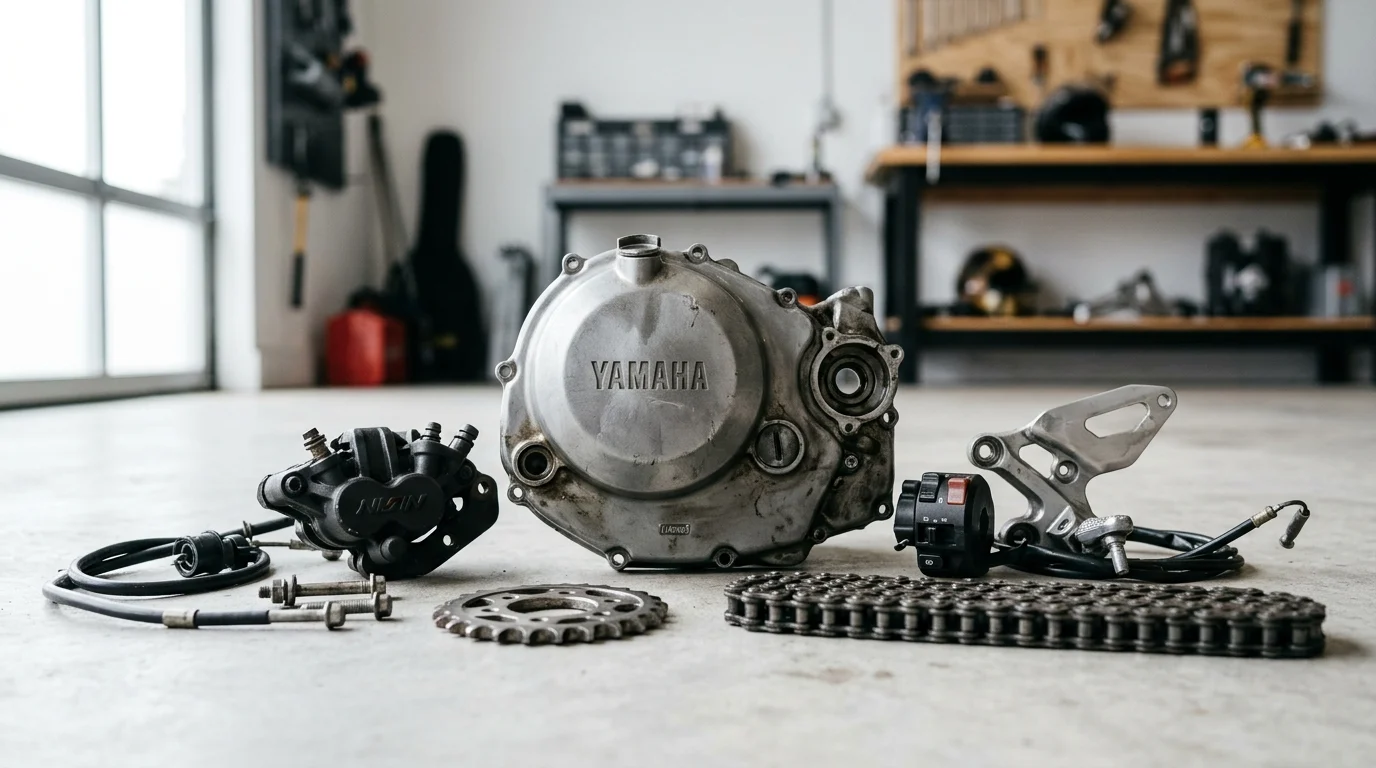
Choosing OEM motorcycle parts for wholesale distribution involves more than finding genuine components at workable prices. Distributors need to weigh supplier authorization, part traceability, defect rates, inventory turnover, and the effect of OEM pricing premiums on margins and warranty exposure. The right selection process can reduce returns, protect dealer relationships, and improve long-term profitability across a powersports portfolio. This article explains the key factors that separate reliable OEM sourcing from costly purchasing mistakes, so you can evaluate parts, suppliers, and commercial risks with a clearer framework before building or expanding your distribution strategy.
Why OEM Motorcycle Parts Matter for Wholesale Distribution
Procuring OEM motorcycle parts for wholesale distribution requires a rigorous approach to supply chain management, quality assurance, and financial modeling. In the powersports industry, original equipment manufacturer (OEM) components serve as the critical baseline for performance and reliability. Wholesale distributors must navigate a landscape where genuine OEM parts typically command a 20% to 35% price premium over standard aftermarket variants.
This premium directly influences gross margin calculations, inventory carrying costs, and downstream pricing strategies for B2B clients, including dealership networks and specialized repair facilities. Understanding the commercial weight of these components is the first step in building a profitable distribution model.
Impact on margins and warranty claims
The financial impact of distributing authentic OEM components extends well beyond the initial procurement cost. Distributors consistently report that defect rates for genuine OEM parts remain below 0.8%, compared to the 3% to 5% variance often seen in mid-tier aftermarket alternatives.
This reduction in failure rates drastically lowers the volume of Return Merchandise Authorizations (RMAs) and associated warranty claims. Consequently, while the upfront capital expenditure is higher, the total cost of ownership decreases due to minimized reverse logistics and processing overhead.
Commercial risks of misclassified parts
Misclassifying high-grade aftermarket or Original Equipment Supplier (OES) components as true OEM carries severe commercial and legal risks. Dealership contracts typically contain strict stipulations regarding parts authenticity; distributing misrepresented components can trigger breach-of-contract clauses.
Financial penalties for such infractions can range from $10,000 to $50,000 per incident, depending on the scale of the distribution network. Furthermore, misclassification exposes the distributor to liability in the event of catastrophic mechanical failures, severely damaging brand equity and jeopardizing long-term vendor agreements.
What Wholesale Buyers Should Verify in OEM Motorcycle Parts
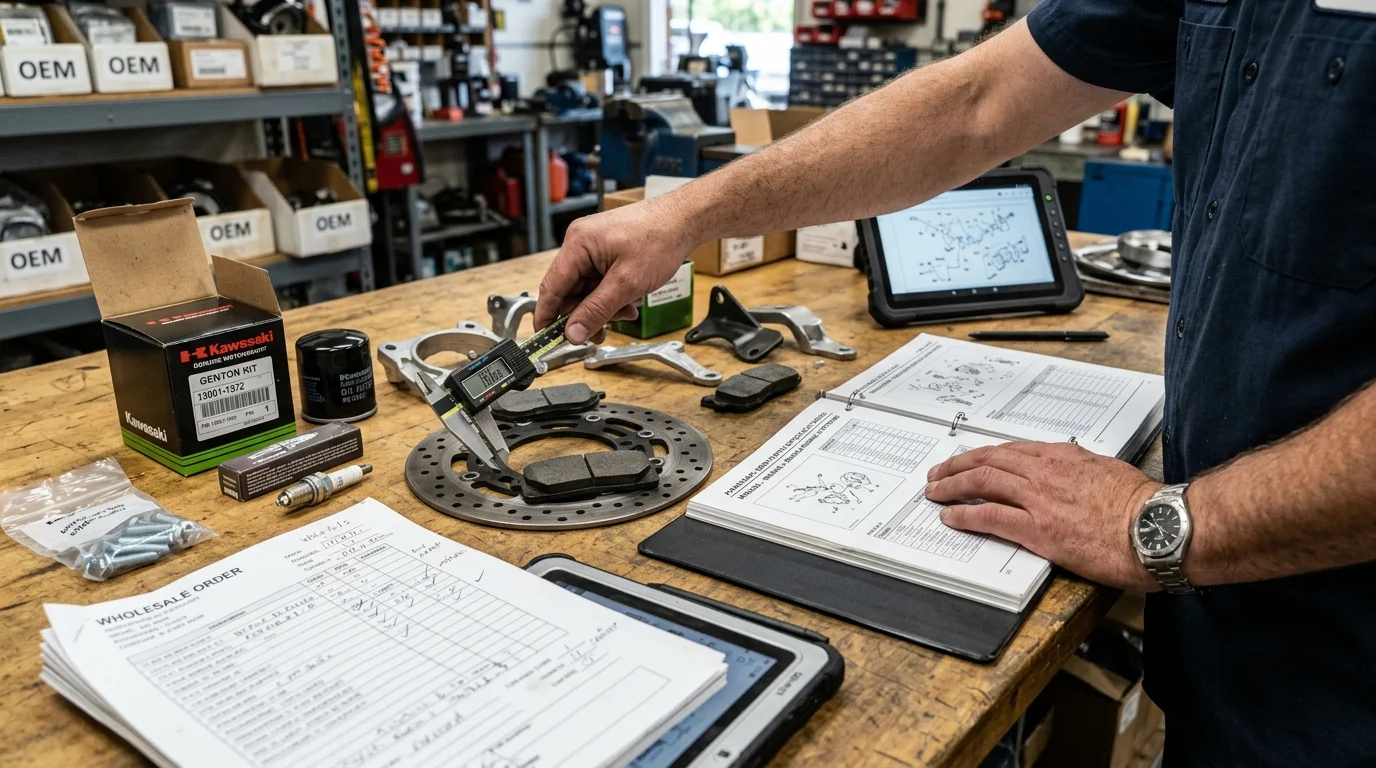
Verifying the authenticity and precise specifications of OEM motorcycle parts is a fundamental operational requirement. Buyers must implement stringent technical audits during the first-article inspection (FAI) phase.
A standard verification protocol dictates that dimensional tolerances must be measured and confirmed to within +/- 0.05mm of the proprietary engineering drawings. Without this level of scrutiny, distributors risk absorbing substandard inventory.
OEM vs aftermarket identification
Authentic OEM parts possess distinct identifiers that separate them from aftermarket replicas. Wholesale buyers must inspect for proprietary casting marks, specific alphanumeric part number stampings, and integrated QR or barcode serialization.
These identifiers are often difficult to replicate accurately and serve as the first line of defense against counterfeit infiltration in the supply chain.
Fitment, materials, and model-year specifications
Fitment and material composition are non-negotiable parameters. Buyers must verify metallurgical properties, ensuring, for example, that a structural bracket utilizes 6061-T6 aerospace-grade aluminum rather than a generic cast alloy.
Additionally, model-year specifications require meticulous attention. Subtle micro-revisions, such as a 2mm shift in mounting points or a revised thread pitch, are common between consecutive production years and can render a part entirely incompatible.
Evaluation criteria and comparison tables
Establishing standardized evaluation criteria allows procurement teams to objectively assess incoming inventory against expected benchmarks. Using matrix comparisons ensures that buyers can clearly communicate expectations to sourcing agents and warehouse auditors.
| Component Tier | Dimensional Tolerance | Average Defect Rate | Warranty Coverage | Typical Cost Premium |
|---|---|---|---|---|
| True OEM | +/- 0.05mm | < 0.8% | 12-24 Months | Baseline (Highest) |
| OES (Supplier) | +/- 0.05mm | < 1.0% | 12 Months | -10% to -15% |
| Premium Aftermarket | +/- 0.15mm | 2.0% – 3.5% | 6-12 Months | -20% to -40% |
| Standard Aftermarket | +/- 0.50mm | > 4.0% | 30-90 Days | -50%+ |
How Distributors Should Evaluate OEM Motorcycle Parts Suppliers
Evaluating suppliers for OEM motorcycle parts requires moving beyond simple per-unit cost analysis to assess long-term operational viability. Distributors must audit production capacity, financial stability, and logistical competence.
A robust supplier evaluation framework targets manufacturing partners capable of maintaining Minimum Order Quantity (MOQ) flexibility between 500 and 2,000 units per SKU. This should be supported by a total production capacity exceeding 50,000 units monthly to accommodate seasonal demand spikes.
Supplier due diligence standards
Due diligence standards mandate rigorous factory audits. Distributors should require ISO 9001 quality management certifications at a minimum, with a strong preference for IATF 16949 compliance, which is the gold standard for automotive and powersports OEM supply chains.
Financial health checks are equally critical to ensure the supplier possesses the capital necessary to procure raw materials in volatile commodities markets without compromising production schedules.
MOQ, pricing, tooling, and lead times
Procurement agreements must explicitly define variables related to tooling, pricing, and fulfillment. Tooling amortization schedules should be negotiated upfront to prevent hidden costs on custom OEM runs.
Lead times for genuine OEM components typically range from 60 to 120 days. These timelines are heavily dependent on the availability of specialized raw materials, such as high-tensile steel alloys or proprietary friction compounds for braking systems.
Warning signs for counterfeit and supply risk
Identifying warning signs early prevents catastrophic supply chain failures. Significant red flags include pricing structures that fall more than 15% below established market OEM baselines, which often indicates the substitution of inferior materials.
Additionally, a lack of comprehensive traceability documentation or a supplier's refusal to permit unannounced third-party factory audits strongly suggests counterfeit operations or unacceptable supply risks.
Which Compliance and Logistics Factors Shape OEM Motorcycle Parts Sourci
Navigating the global distribution of OEM motorcycle parts requires a comprehensive understanding of regulatory compliance and international logistics. Efficient logistical planning directly impacts the bottom line.
Optimizing shipping routes and container utilization can reduce landed costs by 8% to 12%. This optimization is particularly critical when handling dense components like engine blocks or high-volume, fragile items such as ABS plastic fairings.
Certifications, traceability, and technical documents
Compliance documentation ensures legal market entry and mitigates liability. Distributors must secure Material Safety Data Sheets (MSDS) to confirm the absence of prohibited substances, such as asbestos in brake pads.
Furthermore, traceability documents, including batch records and material test reports (MTRs), are essential for executing targeted recalls if a manufacturing defect is identified post-distribution.
Packaging, shipping, and inventory planning
Proper packaging protocols prevent transit damage and inventory loss. High-value metallic parts necessitate Volatile Corrosion Inhibitor (VCI) bags to prevent oxidation during maritime transit.
Inventory planning systems must account for the volumetric weight of OEM bodywork versus the actual weight of dense engine internals, ensuring accurate freight cost calculations and optimal warehouse space allocation.
Regional regulations and channel requirements
Regional regulations dictate specific engineering and compliance standards that OEM parts must meet based on the destination market. Navigating these requirements demands strict adherence to local governing bodies.
| Region | Primary Regulatory Body | Key Component Focus | Compliance Certification Cost Impact |
|---|---|---|---|
| North America | DOT / EPA | Lighting, Emissions, Braking | High (Extensive Testing Required) |
| Europe | ECE (E-Mark) | Exhaust, Safety Glass, Reflectors | Very High (Stringent Audits) |
| Japan | JIS | Material Tensile Strength, Optics | Moderate to High |
| Southeast Asia | Varied (e.g., SNI, TISI) | Tires, Helmets, Basic Emissions | Moderate (Market Specific) |
How Wholesale Distributors Can Build a Reliable OEM Motorcycle Parts
Establishing a reliable OEM motorcycle parts program requires a disciplined, phased approach to procurement and quality control. Wholesale distributors who implement structured sourcing programs consistently outperform the market.
By systematically aligning supplier capabilities with rigorous internal benchmarks, distributors can improve their inventory turnover ratios from an industry average of 3.5 to over 5.0 annually.
Shortlisting, sampling, and qualification steps
The qualification process begins with strategic shortlisting and advances to the Production Part Approval Process (PPAP). Distributors should enforce Level 3 PPAP requirements, demanding comprehensive documentation, including design records, engineering change documents, and initial process studies.
Sampling must involve destructive testing on a statistically significant batch—typically a 5% random pull from the first production run—to verify that mass-produced units perfectly match the approved FAI prototypes.
Decision criteria for cost, compliance, and service
Final decision criteria must utilize a Total Cost of Ownership (TCO) model. This model evaluates the base unit cost alongside freight expenses, anticipated defect rates, and the supplier's historical responsiveness to engineering changes.
By balancing compliance requirements with service-level agreements (SLAs) that guarantee 98% on-time delivery, wholesale distributors can build a resilient OEM supply chain capable of sustaining long-term commercial growth and adapting to shifting market demands.
Key Takeaways
- The most important conclusions and rationale for OEM Motorcycle Parts
- Specs, compliance, and risk checks worth validating before you commit
- Practical next steps and caveats readers can apply immediately
Frequently Asked Questions
How can wholesale buyers confirm motorcycle parts are true OEM?
Check official part numbers, casting marks, QR/barcode serialization, and match them to manufacturer records. During first-article inspection, verify dimensions to the specified tolerance before approving bulk orders.
Why do OEM motorcycle parts cost more than aftermarket options?
OEM parts usually carry a 20% to 35% premium because they offer tighter tolerances, lower defect rates, and stronger warranty support, which can reduce RMAs and total ownership cost.
What supplier checks matter most for OEM motorcycle parts wholesale?
Review factory audit results, monthly production capacity, MOQ flexibility, financial stability, and traceability controls. Prioritize suppliers that can support seasonal volume without compromising authenticity or consistency.
What fitment details should distributors verify before purchasing?
Confirm model-year compatibility, mounting point location, thread pitch, material grade, and dimensional tolerances. Even small revisions between production years can make a genuine-looking part unusable.
What risks come with misclassifying aftermarket parts as OEM?
You may face contract breaches, warranty disputes, liability exposure, and penalties that can reach $10,000 to $50,000 per incident. It also damages trust with dealers and repair networks.