
Introduction
Replacing motorcycle engine valves is a precision job that directly affects compression, power delivery, and long-term reliability. Worn, burned, or poorly sealing valves can cause hard starting, loss of performance, overheating, and in severe cases major internal damage. This guide explains when valve replacement is necessary, what tools and parts you’ll need, and how to remove, inspect, fit, and reassemble the valvetrain correctly. You’ll also learn the key checks that matter most, including valve seat condition, stem wear, spring integrity, and final clearances, so you can approach the work with a clear process before moving into the detailed steps.
Why Motorcycle Engine Valve Replacement Matters
The valvetrain is the mechanical heart of a four-stroke motorcycle engine, dictating volumetric efficiency, thermal management, and compression. Operating under extreme thermodynamic stress, engine valves act as the critical seal between the combustion chamber and the intake/exhaust ports. Over time, the constant impact against the valve seats—combined with high temperatures and carbon fouling—degrades the valve face and stem, necessitating precise replacement.
Reliability and cost benefits
Proactive valve replacement directly impacts powertrain longevity and thermal efficiency. When a valve fails to seal correctly, combustion gases escape past the valve face, resulting in a precipitous drop in volumetric efficiency and power output. More critically, neglecting valve wear risks catastrophic engine failure. A dropped valve in a high-performance engine operating at 12,000 RPM will instantly destroy the piston, cylinder head, and often the connecting rod.
From a financial perspective, preventative maintenance is highly cost-effective. Replacing worn valves and springs typically incurs a parts cost between $150 and $400, depending on the engine configuration and metallurgy. In contrast, a catastrophic valvetrain failure often necessitates a complete engine rebuild, with parts and machining costs easily exceeding $2,500.
Symptoms of valve wear or failure
Identifying valvetrain degradation requires vigilant monitoring of engine behavior and diagnostic metrics. The most prevalent symptom of intake valve wear, particularly in titanium applications, is hard starting when the engine is cold. As the valve face wears (a condition known as "tuliping"), the valve recedes deeper into the cylinder head, which diminishes the valve clearance to zero and holds the valve slightly open during the compression stroke.
Other definitive symptoms include a noticeable loss of compression (e.g., dropping below 120 psi on a high-compression sportbike engine), excessive valvetrain clatter, and persistent backfiring through the intake or exhaust. Technicians should also monitor for excessive oil consumption, which often indicates hardened or compromised valve stem seals allowing oil to bypass the guides into the combustion chamber.
Pre-Replacement Inspection Checklist
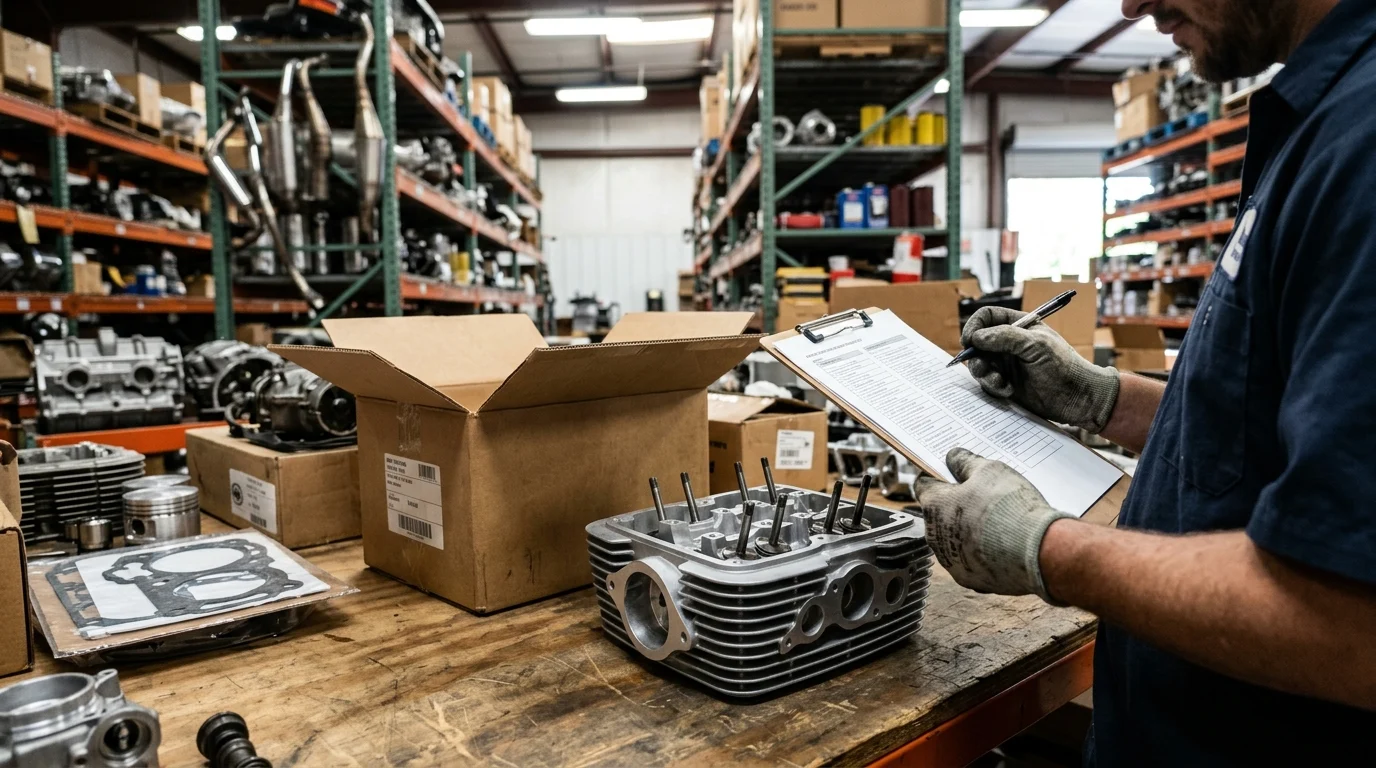
Before disassembling the cylinder head, a systematic diagnostic protocol isolates the exact failure mode and dictates the scope of the required machine work. A comprehensive pre-replacement inspection prevents unnecessary parts expenditure and ensures that underlying issues, such as worn valve guides or distorted seats, are not overlooked.
Components and measurements to inspect
The diagnostic process begins with a cylinder leak-down test; leakage exceeding 10% to 15%—accompanied by audible hissing in the intake throttle body or exhaust header—confirms compromised valve sealing. Once the cylinder head is removed, technicians must measure valve stem runout, which typically carries a strict maximum tolerance of 0.03mm to 0.05mm depending on the manufacturer.
Further inspection involves measuring the valve spring free length to verify it has not yielded under thermal stress, and utilizing a bore gauge to check the internal diameter of the valve guides. The valve margin—the cylindrical edge of the valve head—must also be measured; a margin that has worn too thin (often below 0.5mm) creates a severe risk of the valve head cracking or breaking off under combustion pressures.
Comparing intake and exhaust valve wear
Intake and exhaust valves operate in drastically different environments, leading to distinct wear profiles. Intake valves, frequently constructed from lightweight titanium alloys in modern motocross and sport motorcycles, are highly susceptible to face wear from dust and particulate ingestion. Their operating temperatures are relatively low (300°C to 400°C) due to the cooling effect of the incoming air-fuel charge.
Conversely, exhaust valves are subjected to extreme thermal stress, often operating in environments reaching 700°C to 800°C. They are typically manufactured from stainless steel or Inconel to withstand these temperatures, making them prone to carbon pitting, oxidation, and stem galling rather than rapid face wear.
| Valve Type | Primary Material | Operating Temp | Primary Failure Mode | Typical Stem-to-Guide Clearance Limit |
|---|---|---|---|---|
| Intake | Titanium / Steel alloy | 300°C – 400°C | Face cupping (tuliping) | 0.03mm – 0.04mm |
| Exhaust | Stainless / Inconel | 700°C – 800°C | Carbon pitting, stem galling | 0.04mm – 0.06mm |
Motorcycle Engine Valve Replacement Process
Executing a valve replacement requires clinical cleanliness, specialized tooling, and strict adherence to the manufacturer's torque and clearance specifications. The process involves meticulous disassembly, preparation of the mating surfaces, and precise reassembly to guarantee optimal sealing and valvetrain geometry.
Disassembly, labeling, and cleaning
The disassembly phase mandates the use of a high-quality overhead valve spring compressor to safely depress the springs and remove the retaining cotters (keepers). It is paramount to utilize an organizing tray to label and store every bucket, shim, spring, and retainer in its exact original orientation. Mixing used valvetrain components alters established wear patterns and clearances.
Once disassembled, the bare cylinder head should undergo ultrasonic cleaning or a thorough solvent bath to remove carbon deposits, oil sludge, and gasket material. Technicians must inspect the bare aluminum ports and combustion chambers for micro-fractures, particularly between the valve seats and the spark plug bore.
Preparing and installing new valves
Preparing new valves depends heavily on their metallurgy. Steel valves typically require lapping against the freshly machined valve seats using a fine silicon carbide compound to ensure a perfect 360-degree seal. However, titanium valves feature hardened surface coatings (such as Titanium Nitride) and must NEVER be lapped, as the abrasive compound will instantly destroy the protective coating, leading to rapid failure within hours of operation.
Before installing the valves, the valve seats should be tested for concentricity and contact width using Prussian blue dye. New Viton valve stem seals must be installed over the guides using a dedicated seal driver to prevent tearing the delicate inner lip. The valves, coated in high-pressure assembly lube, are then inserted into the guides, followed by the springs, retainers, and keepers.
Final inspection and torque checks
The final phase of replacement involves reinstalling the camshafts and setting the critical valve lash (clearance). Using a feeler gauge, technicians measure the gap between the cam lobe and the bucket. Adjustments are made by calculating and installing the correct thickness of valve shims to hit the target specifications, which frequently range from 0.10mm to 0.15mm for intakes, and 0.20mm to 0.25mm for exhausts.
Once the clearances are perfected, the camshaft caps must be tightened in a specific sequence to prevent binding or snapping the hollow camshafts. Torque specifications for cam caps are notoriously low—typically between 10 Nm and 14 Nm—necessitating the use of a calibrated, low-range torque wrench.
Quality Factors and Repair Trade-Offs
The longevity of a valve replacement job is dictated by the quality of the components selected and the precision of the machine work performed. Technicians and owners must weigh various trade-offs regarding material selection, machining costs, and the intended application of the motorcycle.
OEM vs aftermarket valves
Original Equipment Manufacturer (OEM) valves ensure guaranteed baseline metallurgy and exact dimensional accuracy. However, the aftermarket sector offers compelling alternatives. For example, many off-road racers opt to replace high-wear OEM titanium intake valves with aftermarket stainless steel conversion kits (e.g., Kibblewhite or ProX).
While stainless steel dramatically increases service life and resists cupping, it is significantly heavier than titanium. This added valvetrain mass necessitates the installation of stiffer aftermarket valve springs—often increasing seat pressure by 15 to 20 lbs—to prevent valve float at high RPMs, which can marginally increase parasitic drag on the camshafts.
When seat machining or guide replacement is needed
Installing new valves into worn or distorted seats guarantees premature failure. If the valve seat contact area is pitted, uneven, or exceeds the maximum width tolerance (typically around 1.2mm to 1.5mm), the seats must be recut by a machine shop using a 3-angle or radius profile. A seat that is too wide traps heat and carbon, while a seat that is too narrow will quickly pound into the aluminum head.
Similarly, if the stem-to-guide clearance exceeds the service limit (e.g., >0.06mm), the new valve will wobble during operation, preventing a consistent seal and rapidly destroying the new stem seal. In such cases, the old guides must be pressed out, new guides pressed in, and meticulously reamed to the exact internal diameter required.
Safety, emissions, and service records
Properly functioning valves are essential for minimizing emissions and maintaining operational safety. Leaking exhaust valves allow unburned hydrocarbons (HC) to escape into the exhaust tract, leading to emissions compliance failures and potential damage to catalytic converters on street-legal motorcycles.
From a safety standpoint, a sudden loss of compression due to valvetrain failure at highway speeds can cause abrupt engine braking or stalling, posing a severe hazard to the rider. Maintaining meticulous service records—including documented shim sizes, leak-down percentages, and parts invoices—not only ensures a traceable maintenance history but also preserves the resale value of the motorcycle.
When to Replace the Valve or Rebuild the Engine
Valvetrain degradation rarely occurs in a vacuum; it is often indicative of broader engine wear. When confronted with failing valves, technicians must evaluate the entire powertrain ecosystem to determine if a targeted cylinder head repair is sufficient, or if a comprehensive engine rebuild is the most logical path forward.
Cost, downtime, and service-life considerations
A standard top-end rebuild—encompassing valve replacement, seat cutting, and a new piston with rings—typically requires 6 to 8 hours of labor. However, if the bottom-end components (crankshaft, connecting rod bearings, transmission bearings) are approaching the end of their service life, performing only a top-end repair is a false economy.
For high-performance dirt bikes, a bottom end is often considered suspect after 150 operating hours; for street motorcycles, the threshold may be 75,000 to 100,000 miles. Bolting a fresh, high-compression cylinder head onto a fatigued bottom end drastically increases the stress on the old connecting rod bearings, frequently triggering a lower engine failure shortly after the valve job.
Estimating post-repair reliability
Estimating post-repair reliability requires a holistic assessment of the engine's condition. Replacing valves without addressing a stretched cam chain, worn chain tensioners, or scored camshaft journals will inevitably lead to secondary failures. Technicians must utilize objective metrics to guide the repair strategy.
| Diagnostic Metric | Indicator for Valve Repair Only | Indicator for Full Engine Rebuild |
|---|---|---|
| Engine Lifecycle | < 50,000 miles (Street) / < 100 hrs (Dirt) | > 75,000 miles (Street) / > 150 hrs (Dirt) |
| Cylinder Leak-Down | 10% – 20% (Hissing isolated to head/ports) | > 20% (Hissing past rings into crankcase) |
| Crankshaft Radial Play | Within spec (< 0.03mm radial movement) | Exceeds spec (> 0.05mm radial movement) |
| Estimated Parts Cost | $200 – $600 | $1,200 – $3,000+ |
Key Takeaways
- The most important conclusions and rationale for Motorcycle Engine
- Specs, compliance, and risk checks worth validating before you commit
- Practical next steps and caveats readers can apply immediately
Frequently Asked Questions
What are the clearest signs my motorcycle engine valves need replacement?
Hard cold starts, compression below about 120 psi, intake or exhaust backfiring, valvetrain clatter, and rising oil use are common signs. A leak-down test over 10–15% strongly suggests valve sealing problems.
Should I replace only the bad valve or the full set?
Usually replace the affected valves in that cylinder, plus inspect springs, guides, seats, and stem seals. If wear is widespread or clearances are tight across multiple valves, a full head refresh is the safer choice.
Do I need machine work when replacing motorcycle engine valves?
Often yes. If the seats are pitted, guides are worn, or runout exceeds spec, the head needs seat cutting, guide service, or both. Simply installing new valves without correcting the seat can cause poor sealing.
Can I reuse old valve springs and stem seals?
Stem seals should be replaced every time. Springs can be reused only if free length and installed pressure are within spec, but many mechanics replace them on higher-mileage or high-RPM engines for reliability.
How much does motorcycle valve replacement usually cost?
Parts often run about $150–$400 for valves, springs, and seals. Total cost rises with machine work and labor, but it is still far cheaper than damage from a dropped valve or failed seat.