
Introduction
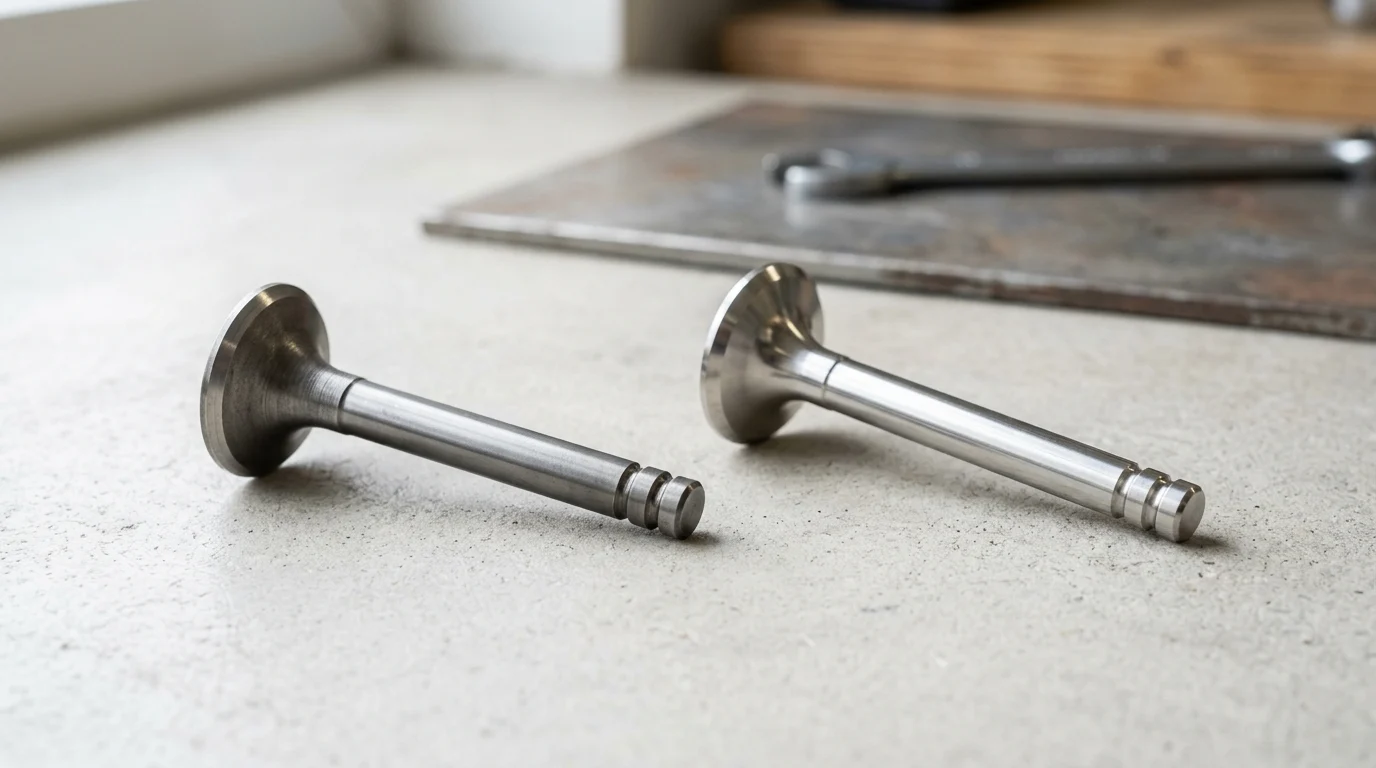
Choosing between alloy steel and stainless steel valves affects more than parts cost: it shapes heat resistance, strength at high RPM, wear behavior, and service life. In motorcycle engines, intake and exhaust valves face different thermal and mechanical loads, so the best material depends on engine speed, tuning goals, and expected maintenance intervals. This comparison explains how alloy steel and stainless steel differ in tensile strength, corrosion resistance, weight, and durability, and where each option tends to perform best. By the end, you’ll have a clear basis for judging OEM choices, aftermarket upgrades, and whether a given valve material suits street use, racing, or long-term reliability.
Why motorcycle valve material matters
Motorcycle engines operate under extreme thermodynamic and mechanical stress, demanding highly specialized metallurgy for internal valvetrain components. Engine valves, responsible for sealing the combustion chamber and regulating gas exchange, endure relentless cycling at high velocities. Because these components function at the intersection of extreme heat, corrosive exhaust gases, and severe mechanical impact, material selection directly dictates engine reliability, thermal efficiency, and maintenance intervals. The choice between standard alloy steel and advanced stainless steel is a foundational engineering decision that impacts both the manufacturing cost and the operational ceiling of the powertrain.
How OEMs and builders evaluate valve materials
Original Equipment Manufacturers (OEMs) and high-performance engine builders evaluate valve materials based on a strict matrix of tensile strength, thermal stability, and overall mass. In modern sportbike engines capable of exceeding 14,000 RPM, the kinetic energy of the valvetrain becomes a critical limiting factor. Engineers must balance the need for high-temperature durability with the imperative to reduce valvetrain mass. A mass reduction of just 10 to 15 percent in the valve itself can significantly raise the RPM threshold before valve float occurs, allowing for more aggressive camshaft profiles, stiffer valve springs, and higher peak horsepower.
What failure risks and lifecycle trade-offs matter
Failure to match the valve material to the engine's operating conditions introduces severe lifecycle risks, including thermal fatigue, stem galling, and catastrophic head separation. Exhaust valves are particularly vulnerable, as they are continuously scoured by superheated combustion gases that can easily exceed 800°C in high-compression or forced-induction engines. If a material's yield strength degrades at these temperatures, the valve head will experience "tuliping"—a plastic deformation that destroys the valve seat seal, leading to drastic compression loss and eventual engine failure. Consequently, the trade-off between the higher upfront cost of premium alloys and the prevention of catastrophic failure is a primary consideration in powertrain lifecycle planning.
Alloy steel vs stainless steel basics
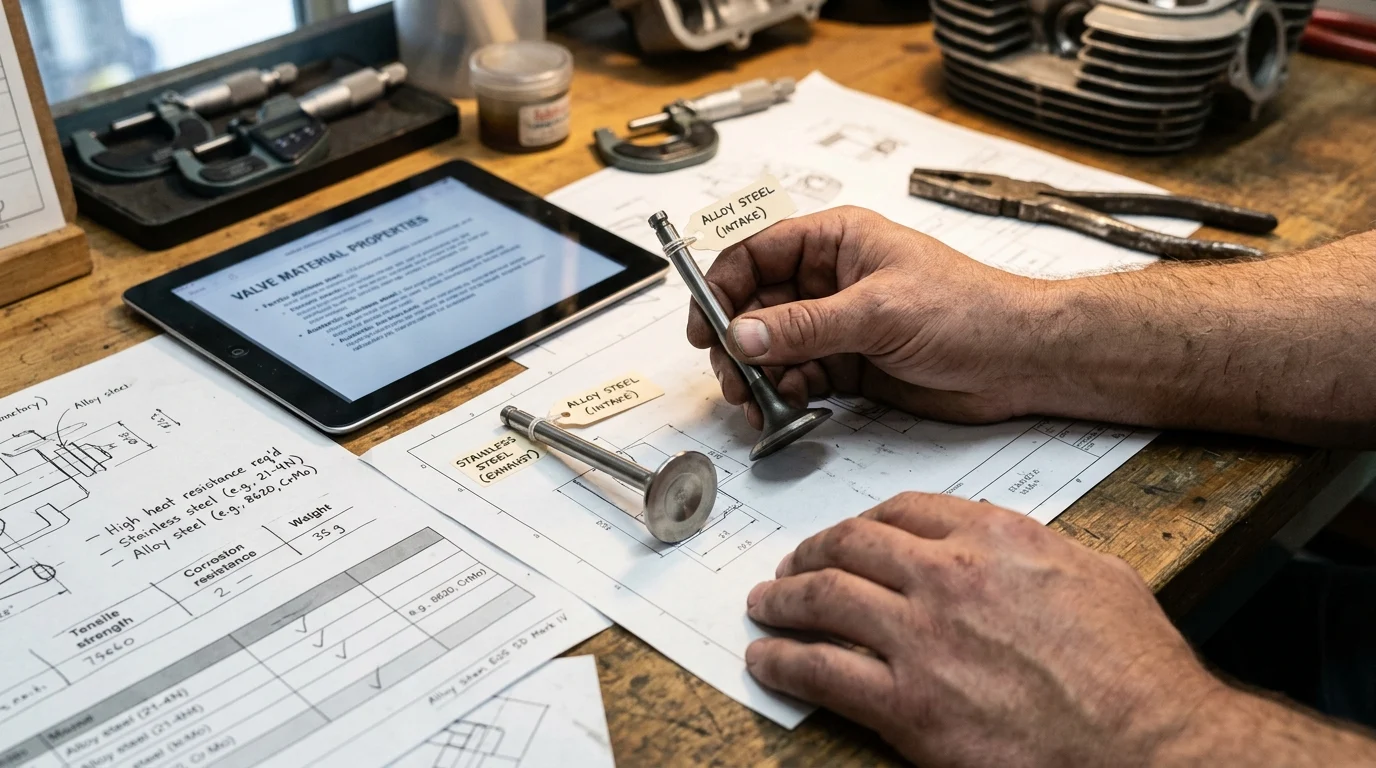
To make informed sourcing and engineering decisions, it is necessary to understand the metallurgical baseline of both standard alloy steels and high-grade stainless steels used in internal combustion engines. While both categories are iron-based, their distinct alloying elements yield vastly different mechanical behaviors under thermal load.
What defines alloy steel and stainless steel valves
Standard alloy steel valves, typically martensitic steels like SUH3 or EN52, contain moderate levels of chromium and silicon to provide basic heat resistance and structural rigidity. These materials are highly magnetic and can be hardened through traditional heat treatment processes. In contrast, stainless steel valves used in high-stress applications are predominantly austenitic. The industry standard is 21-4N (also known as SUH35), which derives its name from its composition: approximately 21% chromium and 4% nickel, alongside significant additions of manganese and nitrogen. This austenitic structure remains non-magnetic and retains its crystalline integrity at temperatures where martensitic steels begin to anneal and lose strength.
Which service conditions affect valve performance
The service environment within a motorcycle engine is sharply divided between the intake and exhaust tracks. Intake valves are continuously cooled by the incoming air-fuel charge, generally operating in a temperature band of 300°C to 400°C. At these temperatures, standard martensitic alloy steels perform exceptionally well, offering excellent wear resistance on the valve stem. Exhaust valves, however, receive no such cooling and act as the primary heat sink for exiting combustion gases. Operating environments up to 850°C require the superior oxidation resistance and high-temperature yield strength inherent to austenitic stainless steels to prevent structural degradation.
How key properties compare
Comparing the physical properties of these materials reveals clear operational boundaries. Martensitic alloy steels excel in surface hardness and wear resistance at lower temperatures, making them highly durable against friction in the valve guides. Austenitic stainless steels, while superior in thermal resistance, are comparatively softer at room temperature and often require specialized surface treatments to prevent rapid stem wear.
| Material Category | Typical Grade | Max Operating Temp | Yield Strength at 700°C | Primary Application |
|---|---|---|---|---|
| Martensitic Alloy Steel | SUH3 / EN52 | ~600°C | Low | Intake Valves, Commuter Engines |
| Austenitic Stainless Steel | 21-4N (SUH35) | ~850°C | High | Exhaust Valves, High-Performance |
Performance differences in real use
Translating metallurgical theory into real-world engine performance requires analyzing how these materials behave over thousands of hours of operation. The rigorous demands of a motorcycle engine amplify the differences in strength, fatigue resistance, and overall cost-effectiveness between alloy and stainless steel.
How strength, heat resistance, and fatigue differ
The most critical divergence between alloy steel and stainless steel occurs in their yield strength at elevated temperatures. Standard alloy steel maintains excellent tensile strength up to approximately 550°C, after which its structural integrity drops precipitously. If subjected to 700°C, an alloy steel valve will quickly suffer from thermal fatigue, stretching under the tension of the valve spring. Austenitic stainless steel like 21-4N maintains over 40% of its ambient yield strength even at 700°C. This exceptional heat resistance prevents valve stretch and ensures that valve lash clearances remain stable, reducing the frequency of necessary valve adjustments over the engine's lifespan.
How manufacturing and surface treatments affect durability
Because austenitic stainless steel is relatively soft, it relies heavily on advanced manufacturing techniques and surface treatments to survive the friction of the valve guide and the impact of the rocker arm. High-quality stainless valves typically feature a Stellite alloy welded to the valve tip and seat face to prevent mushrooming and premature wear. Furthermore, the valve stems are almost universally treated with hard chrome plating or liquid nitriding. A standard hard chrome plating thickness of 0.015 mm to 0.025 mm is applied to the stem to lower the coefficient of friction and prevent galling, ensuring the durability matches or exceeds that of harder martensitic alloy valves.
What total cost comparison should include
When evaluating total cost of ownership or manufacturing BOM (Bill of Materials) costs, stainless steel presents a higher initial barrier. The raw material cost for high-nickel, high-chromium austenitic steel is substantially higher, and the required secondary processes—such as Stellite deposition and chrome plating—add manufacturing complexity. Generally, a 21-4N stainless steel valve commands a 30% to 50% cost premium over a standard SUH3 alloy steel valve. However, in applications exceeding 50 horsepower per liter or operating at high RPMs, the lifecycle cost of stainless steel is lower, as it drastically reduces warranty claims, rebuild frequency, and the risk of catastrophic engine failure.
How to assess quality and fitment
For engine builders and OEM procurement teams, verifying the exact specifications and quality of valve components is essential. Visually, a highly polished alloy steel valve is indistinguishable from a stainless steel one, necessitating rigorous quality assurance protocols and a deep understanding of fitment requirements.
How to verify supplier quality and metallurgy
Verifying supplier quality begins with metallurgical validation. Reputable manufacturers must provide Positive Material Identification (PMI) reports to confirm the exact chemical composition of the valve blanks. For high-stress applications, ultrasonic flaw detection or X-ray inspection is critical to identify internal voids or micro-cracks that could propagate under thermal cycling. Furthermore, builders should request microstructural analysis reports to ensure that the heat treatment process has yielded the correct grain structure, particularly in the critical transition zone between the valve stem and the valve head.
What standards and inspection records to check
Adherence to strict dimensional and surface finish standards separates premium valves from budget alternatives. Suppliers should operate under IATF 16949 quality management systems, specifically tailored for automotive and motorcycle part manufacturing. Inspection records must demonstrate tight control over critical geometries to ensure proper oil retention and heat transfer.
| Inspection Parameter | Testing Method | Typical OEM Tolerance Threshold |
|---|---|---|
| Stem Diameter | Micrometer / Laser Scan | ±0.005 mm |
| Stem Surface Finish | Profilometer | Ra ≤ 0.2 μm |
| Valve Head Runout | Dial Indicator | ≤0.02 mm |
| Tip Hardness (Stellite) | Rockwell Hardness Tester | 50–55 HRC |
How engine application affects material choice
The engine's specific architecture dictates the stringency of these material and fitment requirements. Air-cooled motorcycle engines, such as large-displacement V-twins, suffer from localized hot spots and poor thermal regulation compared to liquid-cooled counterparts. In these air-cooled applications, exhaust valves are subjected to severe thermal spikes, making stainless steel an absolute necessity. Conversely, liquid-cooled, low-compression engines offer a highly stable thermal environment, allowing builders to safely utilize tighter stem-to-guide clearances and standard alloy steel valves without risking premature wear or thermal expansion binding.
How to choose the right valve material
Selecting the optimal valve material requires a pragmatic assessment of the engine's intended use, performance targets, and budget constraints. Neither material is universally superior; rather, each serves a specific engineering niche within the motorcycle industry.
When alloy steel is the better choice
Standard alloy steel (martensitic) remains the most logical and cost-effective choice for commuter motorcycles, low-stress utility engines, and the intake side of most naturally aspirated powertrains. If an engine's redline is restricted to under 8,000 RPM and the compression ratio remains below 10:1, the thermal and mechanical loads will rarely exceed the operational limits of SUH3 or EN52 steel. In these applications, the natural hardness of alloy steel provides excellent longevity, and the lower manufacturing cost allows OEMs to maintain competitive vehicle pricing without sacrificing reliability.
When stainless steel is the better choice
Stainless steel becomes mandatory when performance parameters push beyond standard thresholds. Engine builds targeting redlines over 10,000 RPM, utilizing forced induction (turbocharging or supercharging), or running aggressive nitrous oxide setups generate excessive exhaust gas temperatures. In these environments, austenitic stainless steel (21-4N) is the only viable option for exhaust valves. The material's ability to resist oxidation and maintain structural rigidity prevents the valve head from distorting under extreme cylinder pressures, ensuring the engine maintains peak compression and power output during severe track or racing use.
How to build a specification and sourcing plan
To secure the correct components, procurement teams must build a comprehensive specification and sourcing plan. An effective Request for Quotation (RFQ) should explicitly state the required material grade (e.g., SUH35/21-4N), the specific surface treatments (such as a minimum 0.015 mm hard chrome plating), and the required tip hardness (e.g., 50–55 HRC). By establishing clear metallurgical and dimensional tolerances upfront, engine builders can confidently source valves that provide the precise balance of thermal resistance, mechanical durability, and cost-efficiency required for their specific motorcycle application.
Key Takeaways
- The most important conclusions and rationale for motorcycle valve alloy steel vs stainless steel
- Specs, compliance, and risk checks worth validating before you commit
- Practical next steps and caveats readers can apply immediately
Frequently Asked Questions
Which valve material is better for motorcycle exhaust valves?
Austenitic stainless steel, typically 21-4N, is usually better for exhaust valves because it resists oxidation and retains strength up to about 850°C.
Are alloy steel valves good enough for intake valves?
Yes. Martensitic alloy steels like SUH3 or EN52 work well for intake valves, where temperatures are lower and stem wear resistance matters more.
Why do high-RPM motorcycles often use stainless steel valves?
They need better high-temperature strength and reliability. Stainless steel helps exhaust valves resist tuliping, sealing loss, and fatigue in engines that run hotter and harder.
Can stainless steel valves wear faster at the stem?
Yes. Austenitic stainless steels are softer at room temperature, so they often need surface treatments or proper guide pairing to control stem wear.
What happens if I use the wrong valve material in a hot engine?
You increase the risk of tuliping, poor seat sealing, compression loss, stem galling, and in severe cases, valve head failure.