
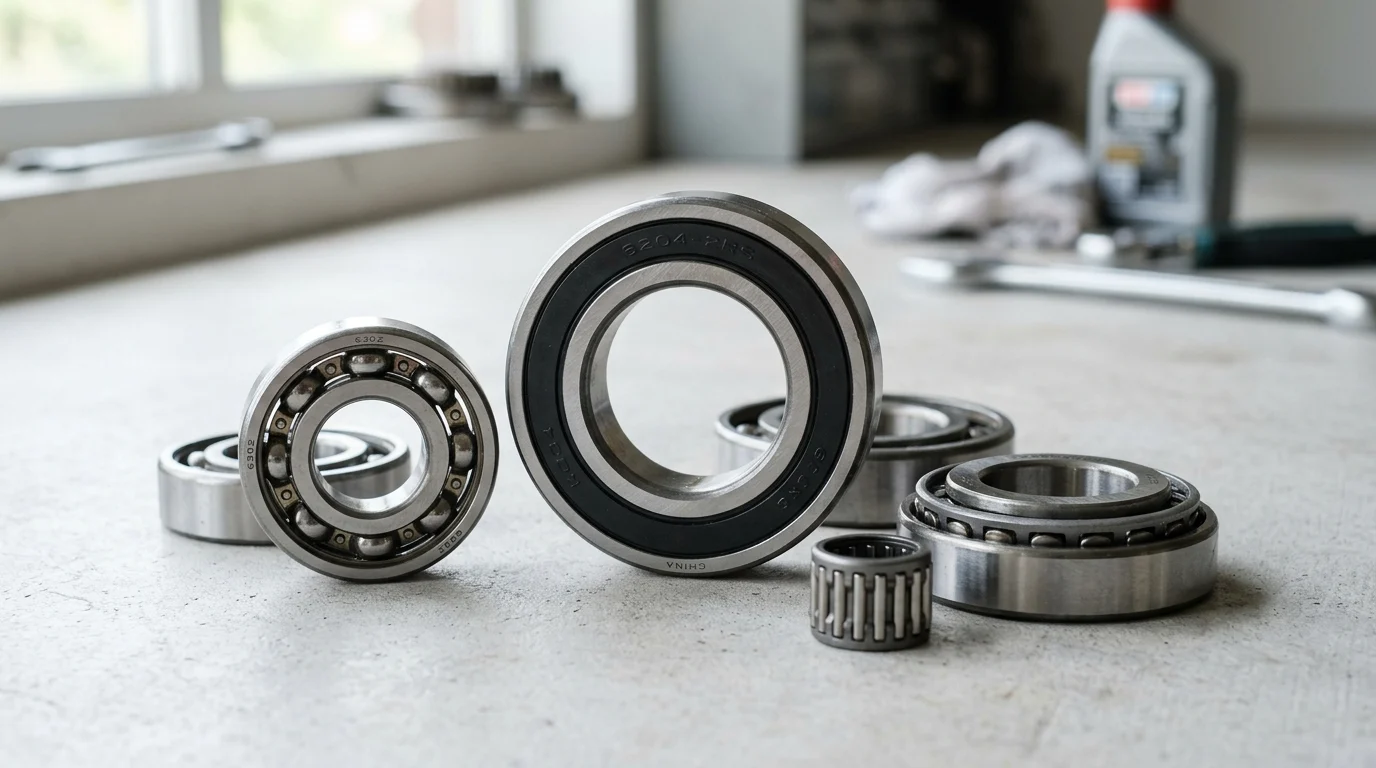
Introduction
The right motorcycle bearings do more than keep wheels spinning smoothly—they influence handling precision, rolling resistance, load capacity, and long-term reliability. Choosing correctly means understanding how bearing type, material quality, sealing, lubrication, and riding conditions work together under real-world stress from speed, braking, and cornering. A poor match can lead to friction, vibration, premature wear, and even hub damage, while the proper specification supports stable performance and longer service life. This article explains the key factors that matter when selecting motorcycle bearings, so you can compare options confidently and make decisions that suit both performance goals and durability needs.
How Motorcycle Bearings Affect Performance and Durability
Motorcycle bearings serve as the critical interface between static suspension components and rotating wheel assemblies, dictating the efficiency of kinetic energy transfer. These precision components are tasked with minimizing rolling friction while supporting the entire mass of the motorcycle and rider. At highway speeds, standard motorcycle wheel bearings routinely operate at rotational velocities exceeding 1,500 to 2,000 RPM, necessitating strict adherence to geometric tolerances and material specifications.
When specified correctly, high-quality bearings reduce parasitic drag and ensure precise wheel alignment, which translates directly to stable handling and optimal suspension response. Conversely, substandard or degrading bearings introduce microscopic play and friction, compromising the structural integrity of the hub and severely degrading the motorcycle’s dynamic performance.
Why bearings matter in motorcycle wheels
Wheel bearings must endure complex multi-axis forces. During straight-line acceleration, they handle radial loads proportional to the vehicle’s weight. During aggressive cornering or hard braking, these components are also subjected to immense axial (thrust) loads. For instance, a typical 600cc sportbike can apply upwards of 1,500 N of radial load on the front wheel bearings during maximum deceleration.
Furthermore, bearings directly influence unsprung weight and rolling resistance. High-precision bearings with optimized internal geometry maintain exact wheel alignment under load, ensuring that brake rotors remain perfectly parallel to the brake pads. Any deflection caused by worn bearings can lead to brake drag, uneven tire wear, and a perceptible loss of steering precision.
Common failure modes and their effects
Premature bearing failure typically manifests through spalling, brinelling, or galling. Spalling occurs when surface fatigue causes microscopic flaking of the raceway or rolling elements, usually due to exceeding the dynamic load rating or operating with inadequate lubrication. Brinelling—indentations on the raceway—often results from massive impact loads, such as striking a pothole, which forces the balls into the races.
Contamination remains the leading catalyst for failure. If water or abrasive silica breaches the bearing seals, the lubricant can wash out or transform into a grinding paste. Industry testing indicates that a mere 0.002% water concentration in the bearing grease can reduce the component’s fatigue life by up to 48%, leading to rapid overheating, catastrophic seizure, and potential hub destruction.
Key Motorcycle Bearing Specifications
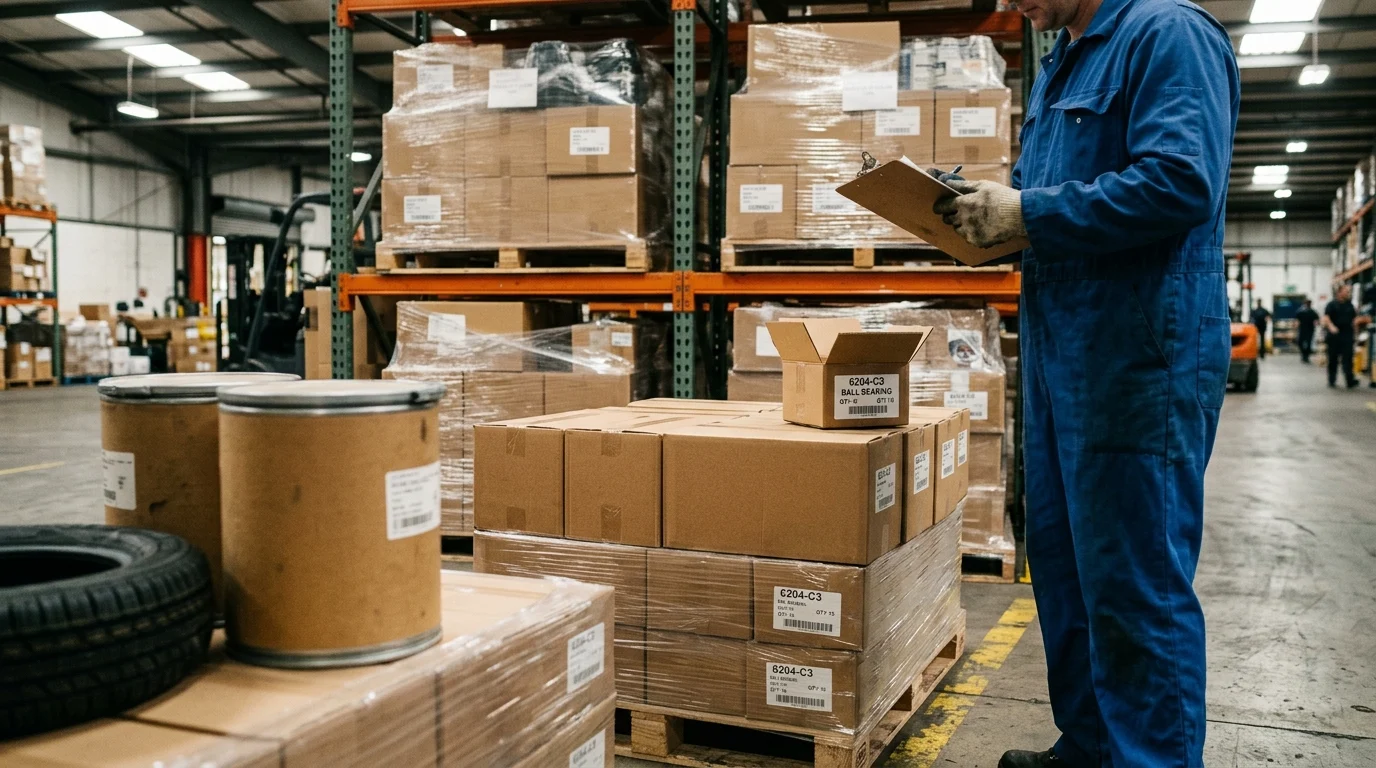
Specifying the correct motorcycle bearing requires a deep understanding of standardized mechanical ratings and geometric designations. Bearings are not universally interchangeable; they must be matched to the exact dimensional and operational requirements of the motorcycle’s specific application.
Load rating, speed, and internal clearance
Engineers rely on dynamic load ratings (C) and static load ratings (C0) to determine a bearing’s suitability. The dynamic load rating calculates the constant radial load a bearing can endure for one million revolutions before exhibiting fatigue. Speed ratings dictate the maximum RPM before thermal limits are breached; a standard 6204 wheel bearing, for example, boasts a limiting speed of roughly 15,000 RPM when lubricated with grease.
Internal clearance is equally critical. Motorcycle wheel bearings frequently utilize a C3 internal clearance designation. Unlike standard (CN) clearance, C3 provides a marginally larger radial internal clearance—typically between 11 and 25 micrometers for a 20mm bore bearing. This extra tolerance accommodates the thermal expansion that occurs as the bearing heats up during high-speed operation and compensates for the slight compression of the outer ring when press-fitted into an aluminum wheel hub.
Deep groove, angular contact, and tapered roller types
Deep groove radial bearings are the industry standard for motorcycle wheels. They are exceptionally versatile, designed primarily to support heavy radial loads while accommodating moderate axial loads in both directions. Their simplified design allows for high-speed operation with minimal friction.
Angular contact bearings are occasionally utilized in high-performance or heavy-duty applications where simultaneous high radial and axial loads are present. However, for steering stems and swingarm pivots, tapered roller bearings are the preferred architecture. Tapered roller bearings feature conical rollers capable of managing massive thrust loads (axial forces) generated during extreme braking and cornering, making them indispensable for maintaining rigid steering geometry.
Sealed vs shielded bearing designs
The choice of closure dictates both friction coefficients and contamination resistance. Open bearings lack seals and rely entirely on external lubrication, making them unsuitable for exposed motorcycle wheels. Shielded bearings (designated as ZZ) use non-contact metal shields that prevent large debris ingress and offer exceptionally low friction, but they cannot stop water or fine dust.
Sealed bearings (designated as 2RS, DDU, or LLU) utilize synthetic rubber lips that make physical contact with the inner ring. While this contact introduces a slight increase in rolling resistance, it is mandatory for motorcycle wheels to prevent water and particulate intrusion.
| Closure Type | Designation | Friction Level | Dust Resistance | Water Resistance | Max Speed Limit Drop |
|---|---|---|---|---|---|
| Open | None | Minimal | Poor | None | 0% |
| Metal Shield | ZZ | Low | Good | Poor | ~0% |
| Contact Seal | 2RS / LLU | Moderate | Excellent | Excellent | 20-30% |
| Non-Contact Seal | VV / LLB | Low | Very Good | Moderate | ~5% |
How to Evaluate Bearing Quality
Evaluating bearing quality extends beyond brand recognition; it requires analyzing metallurgical properties and manufacturing tolerances. Premium bearings represent a minimal upfront investment that yields massive dividends in reliability and safety.
Manufacturing and quality control indicators
High-tier manufacturers utilize vacuum-degassed SAE 52100 chrome steel for both the rings and rolling elements. This specific high-carbon alloy undergoes rigorous heat treatment to achieve a Rockwell hardness (HRC) of 60-64, ensuring exceptional wear resistance and dimensional stability under extreme pressure.
Quality is also quantified by the ABEC (Annular Bearing Engineering Committee) scale. While a higher ABEC rating denotes tighter dimensional tolerances, ABEC-3 or ABEC-5 grades are generally optimal for motorcycle applications. For an ABEC-5 bearing, the radial runout tolerance is restricted to approximately 0.0035 mm. Furthermore, premium bearings feature superior raceway surface finishes, with a roughness average (Ra) maintained below 0.2 microns to minimize friction and heat generation.
OEM, aftermarket, and racing bearing options
The market offers standard OEM replacements, premium aftermarket upgrades, and specialized racing variants. OEM bearings provide guaranteed fitment and baseline reliability, but premium aftermarket bearings from top-tier manufacturers (such as SKF, NTN, or Koyo) often feature superior proprietary grease formulations and advanced seal designs (like low-friction labyrinth seals).
For professional racing applications, ceramic hybrid bearings are a popular upgrade. These bearings utilize standard steel races paired with silicon nitride (Si3N4) ceramic balls. Ceramic balls are up to 40% lighter than their steel counterparts, significantly reducing centrifugal forces and internal friction at high RPM. While ceramic hybrids can lower rolling resistance by 20-30%, they typically command a price premium of 300% to 500% over standard steel bearings and are generally unnecessary for street applications.
How to Select the Right Motorcycle Bearings
Applying the correct bearing to a specific motorcycle requires a systematic evaluation of environmental factors, precise dimensional matching, and strict adherence to mechanical best practices during installation.
Operating conditions and contamination exposure
Environmental factors dictate the necessary defense mechanisms of the bearing. Street motorcycles operating in dry, paved conditions can utilize standard contact seals (2RS) which balance protection with acceptable rolling resistance. In these environments, particulate exposure is generally limited to ambient road dust.
Conversely, off-road, motocross, and adventure motorcycles face severe contamination. Mud, sand, and submerged water crossings expose the bearings to abrasive particulates exceeding 50 microns in diameter. These applications demand heavy-duty, multi-lip contact seals and high-viscosity, water-resistant synthetic grease to prevent premature failure. Riders frequently operating in wet conditions should prioritize bearings packed with marine-grade polyurea-thickened grease.
Step-by-step selection framework
A rigorous selection framework prevents specification errors. The process begins with identifying the exact dimensions: Inner Diameter (ID), Outer Diameter (OD), and Width. For example, a common 6204 bearing measures 20x47x14 mm. Next, the dynamic load requirement must be verified against the motorcycle’s gross vehicle weight rating (GVWR).
Finally, the internal clearance and seal type must be selected based on the operating environment.
| Application Profile | Recommended Bearing Type | Internal Clearance | Ideal Seal Configuration |
|---|---|---|---|
| Standard Street / Commuter | Deep Groove Radial | C3 | 2RS (Standard Contact) |
| Track / Road Racing | Deep Groove / Ceramic Hybrid | C3 or C4 | VV (Non-Contact) or ZZ |
| Motocross / Off-Road | Deep Groove Radial | Standard (CN) | Multi-lip Contact (LLU/DDU) |
| Heavy Touring (Axial Load) | Tapered Roller (Steering/Hub) | Application Specific | Heavy-Duty Contact |
Installation and handling best practices
Improper installation accounts for a significant percentage of premature bearing failures. Driving a bearing into a hub by applying force to the inner ring transfers the entire impact load through the rolling elements, instantly brinelling the raceways and ruining the bearing before it sees a single mile of use. Always use a bearing driver that applies force exclusively to the outer ring when pressing into a hub.
Thermal expansion techniques offer the safest installation method. By freezing the replacement bearing to -10°C and gently heating the aluminum wheel hub to approximately 80°C, the resulting thermal contraction and expansion allow the bearing to drop into the bore with minimal mechanical force. Standard press-fit tolerances for motorcycle hubs typically require a 0.02 mm to 0.04 mm interference fit, making thermal manipulation highly effective.
Final Buying Decision for Motorcycle Bearings
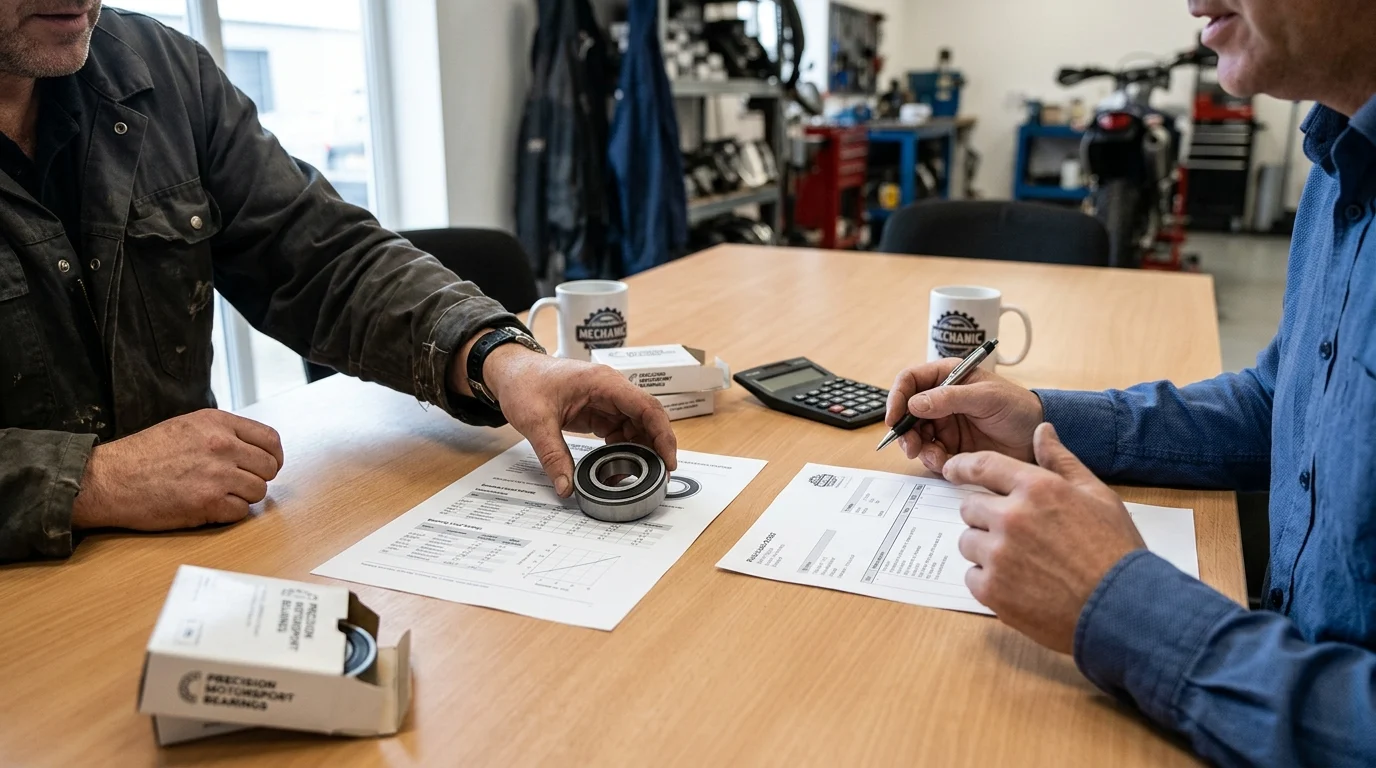
The ultimate procurement decision must align the bearing’s technical specifications with the rider’s operational requirements and budget constraints. While bearings are relatively inexpensive components, the secondary costs associated with their failure can be astronomical.
Balancing price, service life, and downtime risk
Evaluating the total cost of ownership is essential. A premium, top-tier bearing might cost $15 to $25, whereas a generic, unbranded alternative can be sourced for as little as $3 to $5. However, the premium bearing is engineered to deliver a service life exceeding 30,000 miles under normal conditions, supported by high-grade metallurgy and superior seal integrity.
In contrast, sub-standard bearings are prone to catastrophic failure as early as 5,000 miles. Beyond the inconvenience of downtime, a seized wheel bearing can spin inside the aluminum hub, permanently destroying a wheel that costs upwards of $500 to replace. Factoring in labor costs or the risk of a high-speed lockup, the price delta between generic and premium bearings is negligible.
How to choose the best fit for your needs
Matching the bearing to the specific application ensures optimal performance. Track day enthusiasts should look toward low-friction architectures, utilizing C3 clearances and non-contact seals to extract every fraction of horsepower, accepting the trade-off of more frequent replacement intervals.
For daily commuters and adventure riders, durability supersedes minute friction gains. Prioritize ABEC-3 or ABEC-5 rated deep groove steel bearings from established manufacturers, equipped with robust dual-contact seals (2RS) and high-quality synthetic grease. By prioritizing dimensional accuracy, appropriate load ratings, and uncompromising seal quality, riders can guarantee maximum safety and long-term durability for their motorcycle’s rolling assemblies.
Key Takeaways
- The most important conclusions and rationale for Motorcycle Bearings
- Specs, compliance, and risk checks worth validating before you commit
- Practical next steps and caveats readers can apply immediately
Frequently Asked Questions
Which bearing type is best for most motorcycle wheel applications?
Deep groove ball bearings are the standard choice because they handle high radial loads, moderate axial loads, and high wheel RPM with low friction.
When should I choose C3 clearance for motorcycle bearings?
Choose C3 when the bearing runs hot or is press-fitted into an aluminum hub. The extra internal clearance helps prevent preload after thermal expansion.
Should I use sealed or shielded motorcycle bearings?
Sealed bearings are usually better for wheels because they resist water and dust. Shielded types suit cleaner environments but offer less contamination protection.
What signs show a motorcycle wheel bearing needs replacement?
Replace it if you notice wheel play, rough spinning, humming noise, heat buildup, uneven tire wear, or reduced steering precision.
Why source motorcycle bearings from a factory supplier like VETOR GROUP?
A factory supplier can offer stable quality control, OEM customization, competitive pricing, wide model compatibility, and faster global delivery for B2B orders.