ATVs and dirt bikes operate under extreme conditions—high RPM, continuous vibration, dust intrusion, and heavy shock loads. The bearing components inside these machines determine whether critical assemblies (wheel hubs, transmission, suspension, and steering) survive or fail prematurely. For global procurement teams, distributors, and OEM buyers, selecting the wrong bearing type can mean costly field failures, warranty claims, and reputational damage.
Industry data shows that bearing failure is among the top three maintenance issues reported by ATV owners, with crank bearing failures often occurring without prior warning—particularly in early-model machines (2004–2005). Yet systematic bearing selection remains poorly understood outside engineering circles.
This guide provides a structured framework for evaluating and choosing bearings suited to high-speed ATV and dirt bike operations. It covers bearing taxonomy, material properties, performance metrics, and compatibility considerations, enabling buyers to make evidence-based purchasing decisions aligned with their target market’s demands.
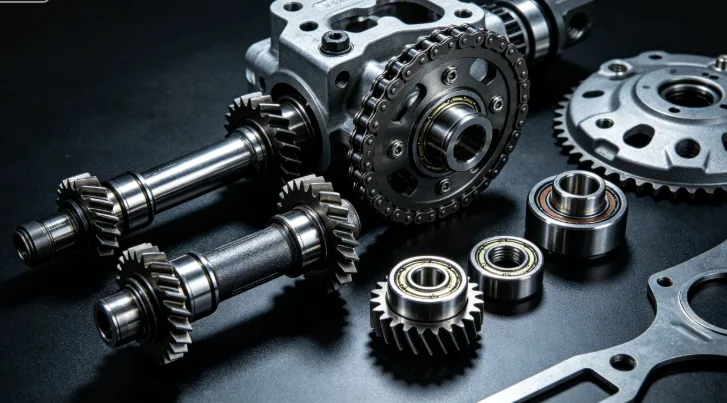
Understanding Bearing Types for ATV and Dirt Bike Applications
Why Bearing Type Matters for High-Speed Operations
Bearing type directly governs how well a component handles radial and axial loads at elevated speeds. A mismatch between bearing design and operating conditions increases friction, generates excess heat, and accelerates wear—ultimately shortening service intervals and component lifespan.
Ball Bearings
Ball bearings are the most common choice for high-speed ATV and dirt bike applications. Their design uses spherical rolling elements to minimize friction between rotating and stationary assemblies. At speeds exceeding 5,000 RPM—typical in sport-class ATVs—ball bearings provide smooth rotation with low drag.
Key performance characteristics of ball bearings:
- Load capacity: Low to medium (suitable for recreational ATVs and trail riding)
- Maximum speed: High (superior to roller types at equivalent sizes)
- Durability: Medium (adequate for non-extreme conditions)
- Maintenance requirement: Low (sealed variants require minimal intervention)
Ball bearings work best in wheel hub assemblies, steering stems, and transmission input shafts where radial loads dominate and speed is the primary operational demand.
Roller Bearings
Roller bearings replace spherical balls with cylindrical rollers, increasing the contact surface area between the rolling element and the raceway. This design shift dramatically im
Key performance characteristics of roller bearings:
- Load capacity: Medium to high (suitable for utility ATVs, heavy-hauling, and agricultural vehicles)
- Maximum speed: Moderate (limited by roller-induced centrifugal forces)
- Durability: High (resistant to shock loading and contamination)
- Maintenance requirement: Moderate (periodic inspection recommended)
Roller bearings are commonly found in ATV suspension components, winch assemblies, and transmission output shafts where high torque loads and shock stress are routine.
Tapered Roller Bearings
Tapered roller bearings accommodate combined radial and axial loads, making them indispensable in ATV and dirt bike wheel hub assemblies. The tapered geometry allows the bearing to manage thrust forces generated during cornering, acceleration, and braking.
Key performance characteristics of tapered roller bearings:
- Load capacity: Very high (exceeding 800 pounds in standard industrial grades)
- Maximum speed: Moderate to high (speed rating depends on lubrication and preload)
- Durability: Excellent (redesigned inner race geometries in modern ATV applications reduce failure rates)
- Maintenance requirement: Moderate to high (proper preload adjustment is critical)
Tapered roller bearings are the recommended choice for off-road raproves load-bearing capacity but introduces higher friction at extreme speeds.cing ATVs and dirt bikes subjected to combined loads from aggressive terrain and high-speed maneuvers.
Double Row Ball Bearings
Double row ball bearings house two rows of ball elements within a single housing, effectively doubling load capacity while maintaining a compact cross-section. This design is common in trailer hubs and heavy-duty ATV wheel assemblies.
For buyers evaluating double row configurations, the trade-off is a slightly larger housing diameter versus significantly enhanced load distribution—critical for vehicles carrying payloads or towing.
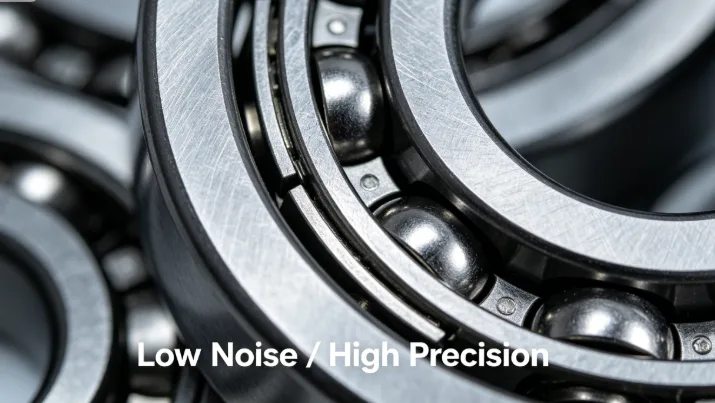
Bearing Materials: Steel vs. Ceramic
Steel Bearings
Chrome steel (SAE 52100) remains the dominant bearing material in the ATV and dirt bike aftermarket. Steel bearings offer a balance of strength, machinability, and cost that suits most recreational and utility applications.
However, steel bearings present known failure modes in high-stress ATV environments:
- Crank bearing seizure: Many owners report catastrophic crank bearing failures without prior symptom indication, particularly in models produced between 2004 and 2005.
- Metal particle contamination: Steel bearing wear generates metallic debris in lubricating oil, accelerating wear in adjacent components.
- Thermal sensitivity: Steel expands measurably under sustained high-temperature operation, altering bearing preload and clearance.
Typical steel bearing service life in aggressive off-road conditions ranges from 200 to 500 operating hours before replacement is advisable, depending on maintenance quality and operating environment.
Ceramic Bearings
Silicon nitride (Si₃N₄) ceramic hybrid bearings have gained adoption in performance ATV and motocross applications. The material properties of ceramic balls offer measurable advantages over steel in several key areas:
| Property | Ceramic (Si₃N₄) | Steel (Chrome) |
|---|---|---|
| Weight | 60% of steel at equivalent size | Baseline |
| Friction coefficient | 40% lower than steel | Baseline |
| Service life | 3–5× longer than steel | Baseline |
| Max operating temperature | 800°C | 150–200°C |
| Corrosion resistance | Inherently inert | Requires external treatment |
Ceramic bearings reduce friction drag sufficiently to potentially yield a 0.5 HP improvement on a 250cc four-stroke motocross engine—an advantage documented in competitive motocross applications.
For global buyers sourcing for premium market segments (North America, Western Europe, Japan), ceramic hybrid bearings represent a high-margin, differentiated product category. For budget-sensitive markets (Southeast Asia, Africa, Eastern Europe), standard chrome steel bearings remain the practical default.
Key Performance Metrics: How to Evaluate Bearing Specifications
Load Capacity
Bearing load capacity, typically rated in kilonewtons (kN) or pounds-force (lbf), indicates the maximum mechanical stress a bearing can endure without permanent deformation. For ATV applications, buyers should verify both static load rating (load applied when stationary) and dynamic load rating (load during operation).
As a practical benchmark, ATV wheel hub bearings generally require dynamic load ratings of 15–30 kN depending on vehicle weight and intended use. Dirt bike wheel bearings typically fall in the 10–20 kN range.
Speed Rating
Speed rating, expressed as limiting speed (in RPM), accounts for centrifugal forces acting on rolling elements at elevated angular velocities. Exceeding the limiting speed causes premature wear, heat buildup, and lubricant degradation.
Critical speed thresholds for ATV and dirt bike bearing applications:
- Recreational trail riding: 3,000–6,000 RPM (standard sealed bearings adequate)
- Sport/performance riding: 6,000–10,000 RPM (high-precision grade recommended)
- Racing/high-speed motocross: 10,000+ RPM (consider ceramic hybrids with enhanced heat dissipation)
Seal Efficiency
Bearing seals prevent lubricating grease loss and exclude contaminants (dust, water, mud) from entering the raceway. In ATV and dirt bike applications, seal integrity is paramount—off-road environments expose bearings to mud, sand, and repeated water crossings.
Two primary seal types dominate ATV bearing applications:
Contact seals (rubber or metal lip) provide superior contamination exclusion but introduce friction drag. They are preferred in high-contamination environments such as mud rallies and desert racing.
Non-contact seals (labyrinth or shield designs) minimize friction but offer limited protection against fine particulate intrusion. They suit relatively clean operating environments or applications where maximum speed is the primary concern.
Buyers sourcing for markets with extreme seasonal conditions—monsoon climates in South Asia, winter mud and ice in Northern Europe—should prioritize high-efficiency contact seals as a standard specification.
Compatibility with Popular ATV and Dirt Bike Models
Bearing compatibility is not universal across manufacturers. Differing suspension geometry, wheel hub dimensions, and transmission designs mandate model-specific bearing specifications.
Common ATV Applications
| Model | Bearing Position | Common Size | Recommended Type |
|---|---|---|---|
| Honda TRX450R | Wheel hub (front/rear) | 25×52×15mm | Tapered roller or high-speed ball |
| Yamaha Raptor 700 | Wheel hub, swing arm | 20×47×14mm / 25×47×12mm | Sealed ball, ceramic hybrid |
| Can-Am Outlander 1000 | Wheel hub (all wheels) | 30×55×18mm | Double row ball or tapered roller |
| Polaris Sportsman 570 | Wheel hub, front console | 25×47×12mm / 20×42×12mm | Sealed ball bearing |
Common Dirt Bike Applications
| Model | Bearing Position | Common Size | Recommended Type |
|---|---|---|---|
| Kawasaki KX250 | Wheel hub, swing arm pivot | 15×35×11mm / 20×30×10mm | High-speed ball bearing |
| Yamaha YZ450F | Wheel hub, steering head | 17×40×12mm / 20×42×12mm | Ceramic hybrid, tapered roller |
| Honda CRF450R | Wheel hub, suspension linkage | 15×35×11mm / 17×40×12mm | High-speed sealed ball |
| KTM 250 SX-F | Wheel hub, rear shock linkage | 15×35×11mm / 20×42×12mm | Precision-grade ceramic |
Buyers should verify exact bearing dimensions and specifications against the OEM parts catalog for the specific model year and market destination. Regional variants may use different specifications due to vehicle homologation requirements.
Step-by-Step Bearing Selection Process for Global Buyers
Choosing the correct bearing for a specific ATV or dirt bike application requires a systematic evaluation of five variables:
-
Identify the application position (wheel hub, transmission, suspension, steering) and the primary load type (radial only, axial only, or combined).
-
Determine operating speed requirements based on vehicle class (recreational, sport, or racing) and typical usage patterns in the target market.
-
Assess environmental severity — contamination levels, temperature ranges, and exposure to water or chemicals in the end-user market.
-
Evaluate material options against budget constraints and market positioning. For premium market segments, ceramic hybrids command higher margins. For cost-sensitive markets, sealed steel bearings remain the practical choice.
-
Verify dimensional compatibility with the specific vehicle models served in the target geography. Cross-reference OEM bearing numbers and ensure supply can support multiple market specifications.
This five-step framework reduces selection errors and supports consistent quality across diverse product lines serving multiple regional markets.
Market Implications for Global Buyers
The bearing aftermarket for powersports vehicles is projected to grow at a compound annual growth rate of 4.4% through 2035, driven primarily by increasing ATV ownership in emerging markets and rising demand for performance upgrades in established markets.
Key market dynamics shaping procurement strategy:
- North America: Private label brands now exceed 50% market share in several aftermarket categories, increasing price competition for standard bearing lines.
- Europe: E-Mark certification is mandatory for bearing products sold in EU member states—buyers must ensure supplier certifications cover applicable directives.
- Asia-Pacific: Growth is concentrated in utility-category ATV applications, where durability and load capacity outweigh speed performance.
- Middle East and Africa: Extreme temperature operation requires bearings with enhanced thermal tolerance and robust seal designs.
Aligning bearing product mix with these regional demand patterns enables buyers to optimize inventory composition and target higher-margin specialist segments.
FAQ
What is the best bearing type for high-speed ATV wheel hub applications?
Tapered roller bearings are generally recommended for high-speed ATV wheel hub applications because they handle combined radial and axial loads from cornering forces. For sport-class ATVs prioritizing maximum RPM, high-precision sealed ball bearings with ceramic hybrid options provide lower friction and higher speed ratings. The optimal choice depends on the specific vehicle model, intended use (racing vs. trail), and budget.
How much friction reduction can ceramic bearings provide compared to steel?
Ceramic hybrid bearings reduce friction by up to 40% compared to standard chrome steel bearings, according to comparative studies in powersports applications. This friction reduction can yield measurable performance gains—for example, motocross teams have documented 0.5 HP improvements on 250cc four-stroke engines after switching to ceramic hybrid wheel bearings.
What bearing maintenance is required for ATV and dirt bike applications?
Sealed bearings require minimal maintenance—periodic visual inspection for seal integrity and checking for abnormal play or roughness during rotation. For open or shielded bearings, regular relubrication according to the manufacturer’s service interval is necessary. In dusty or wet operating environments, more frequent inspection intervals (every 50–100 operating hours) are advisable regardless of bearing type.
How do I verify bearing compatibility with a specific vehicle model?
Verify compatibility by cross-referencing the OEM bearing part number found in the vehicle’s service manual against the supplier’s product catalog. Key dimensional parameters include bore diameter (d), outer diameter (D), and width (B). The bearing series (e.g., 6000, 6200, 6300) indicates load and speed ratings. When sourcing for multiple markets, account for regional specification differences—Japanese market ATV models may use different bearing specifications than North American variants of the same model.
What certifications should I require from bearing suppliers for global markets?
For global powersports bearing supply, at minimum verify ISO 9001 (quality management) and IATF 16949 (automotive quality, if supplying to OEM assembly plants). For European market entry, ensure products carry E-Mark certification where applicable. For North American sales, SAE standards compliance may be required by major retail channel partners. Request third-party test reports validating dynamic load rating, limiting speed, and seal efficiency before committing to volume orders.