
Introduction
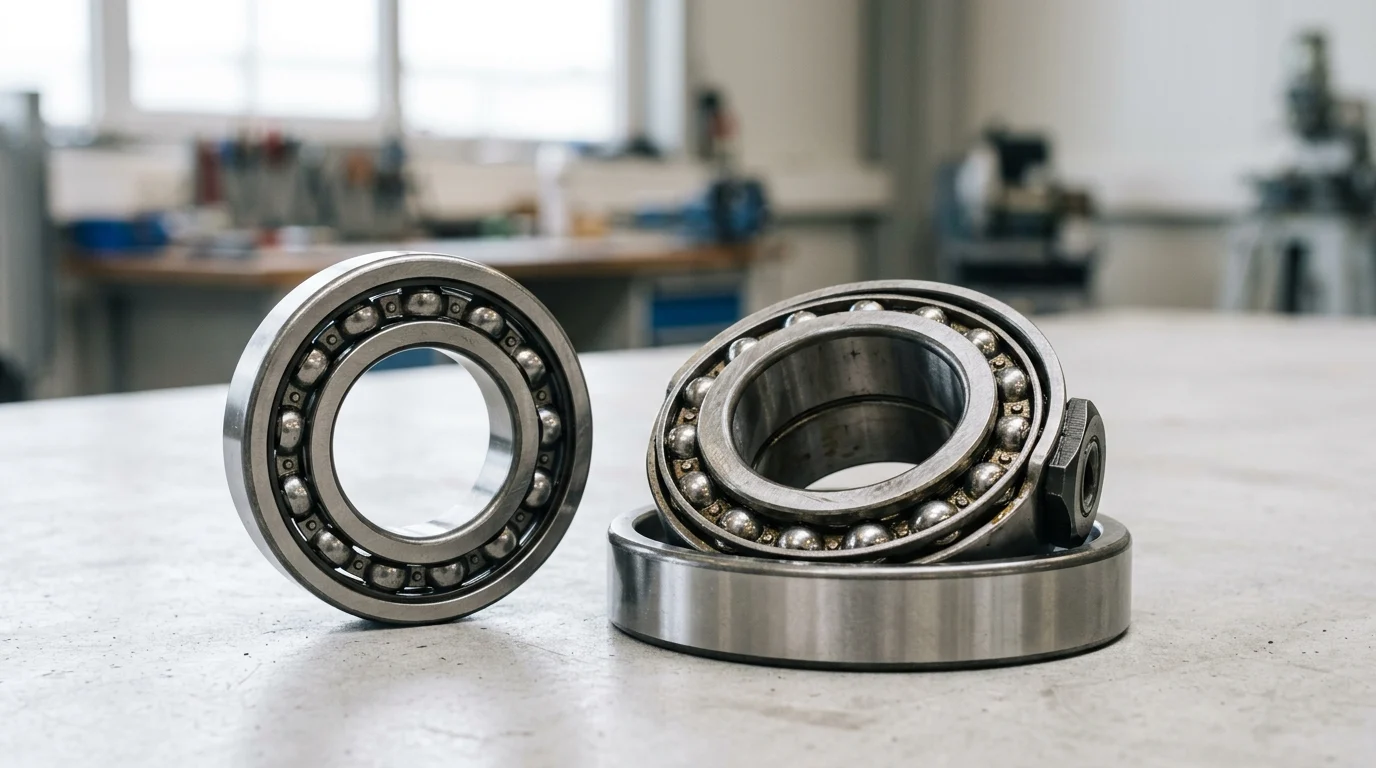
In factory equipment, small alignment errors can trigger heat buildup, edge loading, lubricant breakdown, and premature bearing failure—problems that often escalate into costly unplanned stops. Self-aligning bearings are designed to tolerate shaft deflection and housing misalignment by adjusting to changing operating conditions instead of forcing perfect geometry. This article explains how that design reduces mechanical stress, extends service life, and lowers the frequency of emergency maintenance. It also shows where self-aligning bearings deliver the most value, what failure modes they help prevent, and why they are a practical reliability upgrade in demanding production environments.
Why Self-Aligning Bearings Matter for Downtime Reduction
Unplanned downtime remains one of the most severe profitability drains in modern continuous-process manufacturing, costing industrial facilities billions of dollars globally each year. A significant vector for mechanical failure in these environments is shaft deflection and structural misalignment. Standard rigid bearings are engineered to operate under precise alignment conditions, but industrial realities—ranging from thermal expansion and heavy dynamic loads to structural settling—frequently compromise these ideal parameters.
Self-aligning bearings offer a mechanical countermeasure to these structural imperfections. By allowing the inner ring and rolling elements to pivot independently of the outer ring, these components absorb dynamic shifts that would otherwise destroy rigid alternatives. Understanding the mechanics and strategic application of self-aligning bearings is critical for reliability engineers tasked with maximizing equipment uptime and extending maintenance intervals.
How misalignment failures disrupt production
Rigid bearings, such as standard deep groove ball bearings or cylindrical roller bearings, demand strict alignment tolerances between the shaft and the housing. When alignment deviates, the rolling elements are forced against the raceway edges. This phenomenon, known as edge loading, exponentially increases localized stress and heat generation, accelerating metal fatigue and lubricant degradation.
Industry data indicates that misalignment accounts for up to 20% of all premature industrial bearing failures. A deflection of just 0.002 radians (approximately 0.11 degrees) can slash a standard rigid bearing's L10 operational life by over 50%. As micro-spalling develops into macro-spalling along the raceway, vibration levels spike, eventually forcing an unscheduled production halt to replace the failed component.
Where they deliver the most operational value
Self-aligning bearings deliver the highest return on investment in applications characterized by long shafts, weak housing rigidity, or significant distance between bearing supports. Equipment such as industrial fans, agricultural harvesters, textile machinery, and heavy-duty bulk material conveyors are prime candidates.
In these applications, dynamic forces or thermal expansion inevitably warp the shaft during operation. By utilizing self-aligning bearings, facilities eliminate the need for hyper-precise, time-consuming alignment procedures during installation and protect the rotating assembly from the unpredictable structural flexing that occurs under peak operational loads.
How Self-Aligning Bearings Reduce Equipment Downtime
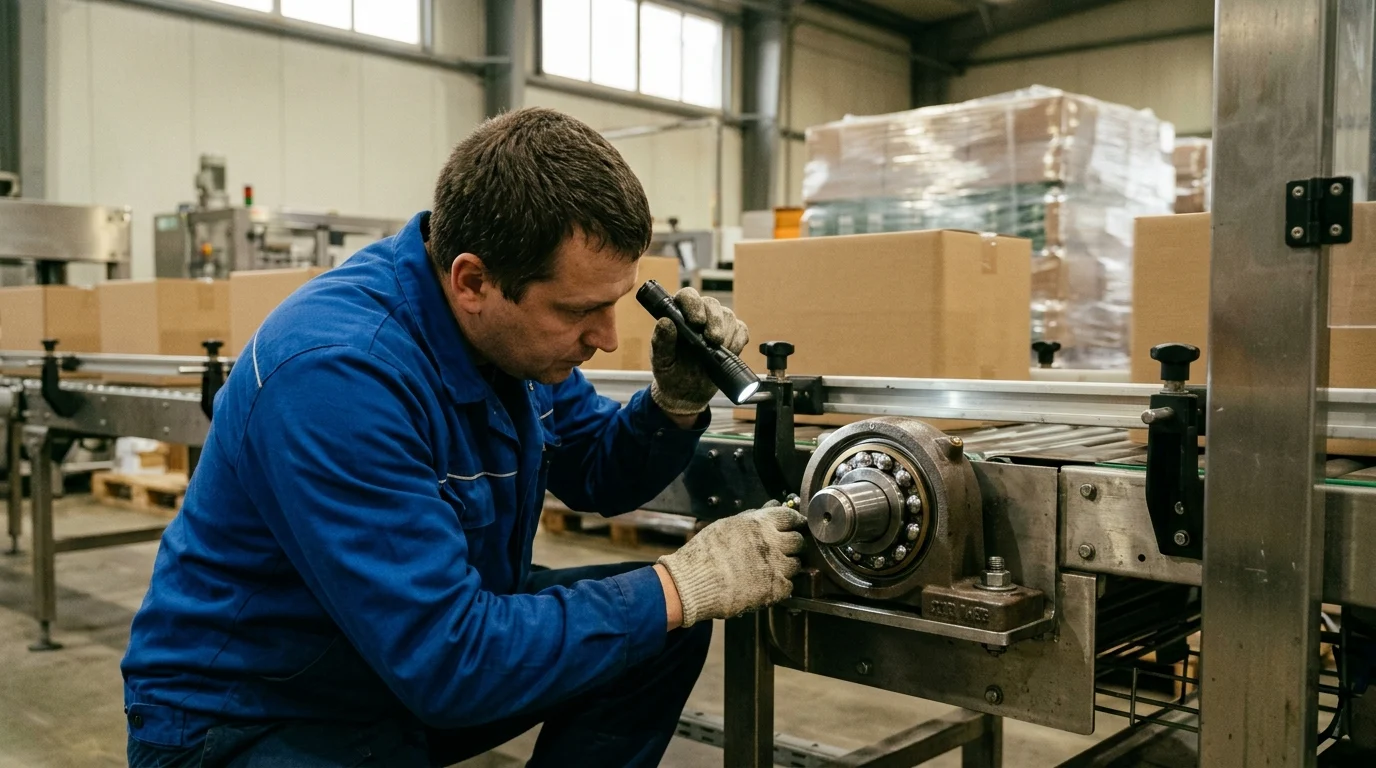
The fundamental advantage of self-aligning bearings lies in their internal geometry. Unlike standard bearings that force the shaft to conform to a rigid centerline, self-aligning variants adjust continuously to the shaft's actual position, mitigating the destructive forces of friction and edge loading.
Which design features absorb shaft misalignment
The defining design feature of a self-aligning bearing is its continuous, spherical outer ring raceway. The center of curvature of this raceway intersects with the central axis of the bearing itself. This geometry permits the inner ring, the rolling elements, and the cage assembly to swivel as a single unit within the outer ring.
Depending on the specific bearing series and clearance class, this internal swivel capability can accommodate initial static misalignment or dynamic shaft deflection of up to 3.0 degrees without introducing any additional frictional load. This is a stark contrast to rigid bearings, which begin to bind and generate excessive heat at deflections as minor as 0.1 degrees.
How they compare with rigid bearing types
Evaluating self-aligning bearings against rigid alternatives requires understanding the trade-offs between load capacity, friction, and misalignment tolerance. While rigid bearings excel in high-precision, perfectly aligned environments, self-aligning bearings trade some radial load capacity for flexibility.
| Specification | Deep Groove Ball Bearing (Rigid) | Self-Aligning Ball Bearing | Spherical Roller Bearing |
|---|---|---|---|
| Misalignment Tolerance | < 0.1 degrees | Up to 3.0 degrees | Up to 2.0 degrees |
| Radial Load Capacity | Moderate | Low to Moderate | Very High |
| Axial Load Capacity | Moderate | Low | Moderate to High |
| Friction / Heat | Low | Very Low | Moderate to High |
As illustrated, self-aligning ball bearings generate the lowest friction, making them ideal for high-speed, light-load applications with shaft deflection. Conversely, spherical roller bearings provide the massive load capacities required for heavy industry while still offering substantial misalignment compensation.
Key downtime and service life comparison points
From a downtime perspective, the primary metric is the L10 service life—the time at which 10% of a population of bearings will show signs of fatigue. In an application with 1.5 degrees of shaft deflection, a rigid bearing's L10 life drops to near zero, practically guaranteeing an imminent breakdown.
A self-aligning bearing in the exact same deflected condition maintains its full calculated L10 life. Furthermore, because the bearing does not fight the shaft deflection, it operates at lower internal temperatures. Reducing operational heat by just 10°C to 15°C can double the effective life of the lubricating grease, significantly extending the intervals between required preventive maintenance shutdowns.
How to Select the Right Self-Aligning Bearing
Selecting the correct self-aligning bearing is an engineering balancing act. Engineers must match the internal geometry and rolling element type to the specific kinetic and environmental demands of the application to ensure prolonged uptime.
How to assess load, speed, contamination, and temperature
Proper specification begins with calculating the equivalent dynamic bearing load (P) and comparing it against the bearing's dynamic load rating (C). Because self-aligning ball bearings utilize point contact, their load ratings are inherently lower than those of roller bearings. Speed is the next critical variable; bearings must be selected where the operational RPM falls comfortably below the manufacturer's thermal reference speed.
Environmental factors dictate the sealing and material requirements. High-contamination zones, such as cement plants, necessitate integral contact seals (like RS or 2RS variants) to prevent particulate ingress. Temperature is equally critical; standard bearing steel undergoes metallurgical transformation at extreme heat. Operating environments exceeding 120°C require bearings with specialized heat-stabilized rings (e.g., S0 or S1 designations) to prevent dimensional expansion and catastrophic seizing.
When to choose spherical roller vs self-aligning ball bearings
The choice between a spherical roller bearing and a self-aligning ball bearing comes down to the nature of the load and the required operational speed. Spherical roller bearings utilize barrel-shaped rollers that provide line contact with the raceways. This grants them immense radial load capacity and the ability to handle heavy shock loads, making them the default choice for mining crushers, paper machine rolls, and heavy conveyors.
Self-aligning ball bearings, utilizing spherical balls, maintain point contact. This results in significantly lower internal friction. They are the optimal choice for applications characterized by high speeds, lighter radial loads, and a need for minimal heat generation, such as industrial fans, blowers, and textile spinning spindles.
Which quality and supplier criteria to verify
Procurement and quality assurance play a direct role in minimizing downtime. Engineers should verify that bearings meet minimum ABEC precision classes (ABEC 3 or higher is recommended for critical industrial machinery) and are manufactured in ISO 9001-certified facilities. Material certification is also vital; standard industrial bearings should be forged from high-purity, vacuum-degassed 52100 bearing steel (or its regional equivalent) to ensure maximum fatigue resistance.
Supply chain resilience is another critical selection factor. While standard open self-aligning bearings are readily available, custom-sealed variants or specific clearance classes (like C3 or C4) can carry minimum order quantities (MOQs) and lead times of 6 to 8 weeks. Partnering with suppliers who maintain local inventory of these specialized SKUs prevents prolonged equipment offline status during emergency replacements.
How to Implement Self-Aligning Bearings for Maximum Uptime
Even the highest-quality self-aligning bearing will fail prematurely if subjected to improper installation or neglected during its operational lifecycle. Maximizing uptime requires stringent adherence to mounting protocols and proactive health monitoring.
Best practices for installation and alignment
Self-aligning bearings, particularly spherical roller bearings, are frequently mounted on tapered shafts using adapter sleeves. This method allows for precise control over the bearing's internal clearance. During installation, the bearing is driven up the tapered sleeve, which expands the inner ring and reduces the radial internal clearance.
Mechanics must use specialized spanner wrenches and feeler gauges to measure this clearance reduction accurately. For example, a medium-sized spherical roller bearing might require an initial unmounted clearance of 0.075 mm, which must be systematically reduced during mounting to a residual operating clearance of no less than 0.03 mm. Overtightening eliminates this internal clearance completely, leading to immediate thermal runaway and bearing lockup upon machine startup.
How condition monitoring and failure analysis improve reliability
Integrating self-aligning bearings into a plant-wide condition monitoring program transforms maintenance from a reactive scramble into a scheduled, controlled process. Because self-aligning bearings mask some of the vibration typically caused by misalignment, specialized monitoring techniques are required to detect early-stage wear.
| Monitoring Technology | Primary Defect Detected | Warning Horizon Before Failure |
|---|---|---|
| High-Frequency Acoustic Emission | Micro-spalling, insufficient lubrication | 3 to 6 months |
| Vibration Analysis (Velocity) | Unbalance, structural looseness | 1 to 3 months |
| Thermography (Infrared) | Elevated friction, overloading | 1 to 4 weeks |
| Oil Debris Analysis | Advanced raceway/element wear | 2 to 4 weeks |
By tracking high-frequency vibration bands (e.g., 5 kHz to 30 kHz), reliability teams can detect the acoustic emissions of micro-spalling months before the bearing actually fails. Coupling this data with root cause failure analysis (RCFA) of extracted bearings ensures that chronic issues—such as incorrect lubricant viscosity or undetected structural settling—are permanently engineered out of the system.
How to Evaluate the Business Case for Self-Aligning Bearings
Transitioning from rigid to self-aligning bearings is an engineering decision that must be justified financially. Plant managers require clear evidence that the increased upfront component cost will yield a disproportionate reduction in operational expenses.
Which cost model to use for ROI assessment
The most accurate framework for evaluating this upgrade is Total Cost of Ownership (TCO). In standard industrial applications, the direct purchase price of a bearing represents only 10% to 15% of its total lifecycle cost. The remaining 85% to 90% is consumed by lubrication, maintenance labor, energy consumption (friction), and the severe financial penalty of lost production downtime.
For example, in a critical continuous process like a pulp and paper mill, unplanned downtime can easily exceed $10,000 per hour. If a standard rigid bearing fails twice a year due to housing distortion, the annual downtime cost dwarfs the component price. A self-aligning bearing may carry a 30% to 40% premium in initial purchase price, but by eliminating those two annual failure events, it delivers a massive, immediate return on investment.
When an upgrade is justified
An upgrade to a self-aligning bearing is financially justified when the Mean Time Between Failures (MTBF) of the current rigid bearing falls below acceptable thresholds—typically under 12 months—specifically due to shaft deflection, base settling, or unavoidable misalignment.
Furthermore, if maintenance logs indicate that technicians are spending excessive hours attempting precision laser alignment on flexible structural frames that simply cannot hold tolerance, upgrading to a self-aligning solution is warranted. The upgrade not only stabilizes the MTBF but also reallocates valuable maintenance labor hours away from futile alignment tasks and toward proactive, predictive plant optimization.
Key Takeaways
- The most important conclusions and rationale for Self-Aligning Bearings
- Specs, compliance, and risk checks worth validating before you commit
- Practical next steps and caveats readers can apply immediately
Frequently Asked Questions
What problem do self-aligning bearings solve in factories?
They compensate for shaft and housing misalignment, reducing edge loading, heat, and premature bearing failure that can trigger unplanned stops.
Where are self-aligning bearings most useful?
They work best in equipment with long shafts, flexible housings, or thermal growth, such as fans, conveyors, textile machines, and agricultural equipment.
How much misalignment can a self-aligning bearing handle?
Depending on type and clearance, self-aligning ball bearings can handle up to about 3.0° of misalignment, far more than rigid bearings.
Should I choose a self-aligning ball bearing or a spherical roller bearing?
Use self-aligning ball bearings for higher-speed, lighter-load applications; choose spherical roller bearings for heavier loads and tougher industrial duty.
Can self-aligning bearings reduce installation time?
Yes. They are more forgiving of minor mounting errors, so alignment is faster and less exacting, which helps shorten maintenance windows.