
Should You Choose Sealed or Open Bearings for Dusty Environments?
Dusty environments pose significant challenges for bearing performance and longevity. The choice between sealed and open bearings directly impacts equipment reliability, maintenance costs, and operational efficiency in industrial settings. Understanding the fundamental differences between these bearing types helps engineers make informed decisions for specific applications. 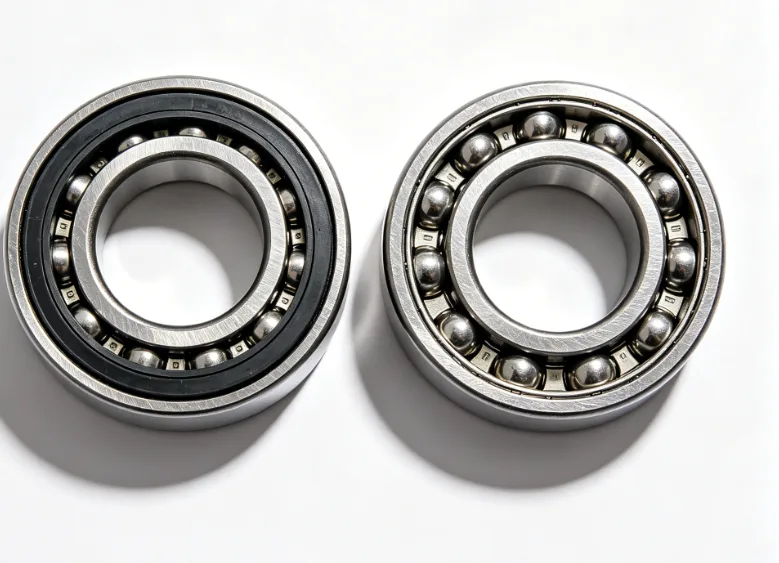
Understanding Bearing Seals and Their Function
Bearing seals serve as protective barriers that prevent contaminants from entering the bearing interior. These components create a physical separation between the rolling elements and external particles. Seal materials include rubber, polyurethane, and metal, each offering different performance characteristics.
Open bearings lack any protective barriers around the rolling elements. This design allows direct contact between the bearing internals and surrounding environment. Without seals, these bearings require external lubrication systems and housing designs to manage contamination. Open bearings excel in applications where heat dissipation is critical.
Dust Contamination Effects on Bearing Performance
Dust particles cause three primary failure mechanisms in bearings: abrasion, corrosion, and lubricant degradation. Abrasive particles damage rolling surfaces, creating premature fatigue failures. According to industry research, contamination accounts for approximately 36% of all bearing failures in industrial applications. Understanding these mechanisms guides proper bearing selection for dusty environments.
Fine particles smaller than 10 micrometers can penetrate bearing clearances and cause micro-abrasion. Larger particles create indentations that serve as stress concentration points. Both scenarios significantly reduce bearing service life. External protection strategies become essential when operating in environments with elevated particulate levels.
Sealed Bearings: Advantages and Limitations
Sealed bearings offer immediate protection without requiring additional housing modifications. The integrated seals are installed during manufacturing, ensuring consistent quality and performance. These bearings typically include pre-lubricated grease that remains effective for extended periods. Sealed designs eliminate the need for external lubrication systems in many applications.
The primary limitation of sealed bearings involves heat dissipation during high-speed operation. Seals create friction that generates additional heat within the bearing cavity. Maximum speeds are typically reduced compared to open designs with equivalent dimensions. Additionally, sealed bearings cannot be relubricated, limiting their service life in demanding applications.
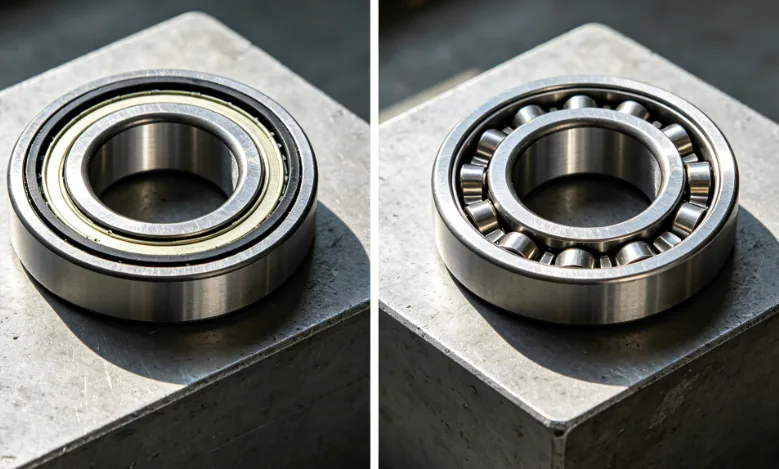
Common sealed bearing types include deep groove ball bearings with rubber seals on both sides. These Deep Groove Ball Bearing – yifeng are widely used in agricultural equipment, food processing, and material handling systems. The self-sealing design provides reliable protection against dust and moisture infiltration.
Open Bearings: When They Remain the Better Choice
Open bearings provide superior heat dissipation through direct contact between rolling elements and ambient air. High-speed applications often require open designs to prevent thermal damage. CNC machining centers, pharmaceutical equipment, and clean room applications frequently specify open bearings. The absence of seal friction enables higher rotational speeds and reduced operating temperatures.
Applications requiring frequent lubrication benefit from open bearing designs. Cylindrical roller bearings in heavy machinery often use open configurations with automated lubrication systems. These Cylindrical Roller Bearing – yifeng handle high radial loads in conveyor systems and gearboxes where contamination management occurs through external housing design.
Open bearings allow visual inspection of rolling elements and raceways during maintenance intervals. This capability supports predictive maintenance strategies in critical industrial applications. Engineers can assess bearing condition without disassembly, enabling accurate service life predictions and scheduled replacements.
Environmental Severity Classification
The severity of dusty environments varies significantly across industrial sectors. ISO 4406 provides classification codes for solid particle contamination levels in lubricants. These classifications help engineers specify appropriate bearing protection levels. Understanding your specific environmental classification guides seal selection criteria.
Environmental categories range from clean room conditions (class 0-100) to heavily contaminated industrial settings (class 25+). Mining, quarrying, and agricultural operations typically fall into the highest contamination categories. Each application requires assessment of airborne particle size distribution, concentration levels, and exposure duration.
Angular Contact Bearings in Contaminated Conditions
Angular contact ball bearings combine radial and axial load capacity in a single design. These bearings require careful seal consideration due to their complex geometry. The asymmetric contact angles create specific sealing challenges that differ from radial bearings. Proper seal selection ensures consistent performance under combined loading conditions.
When specifying Angular Contact Ball Bearing – yifeng for dusty environments, engineers must balance contamination protection with mechanical performance. Hybrid designs incorporating ceramic rolling elements offer improved performance in marginal lubrication conditions. These advanced bearings provide extended service life in challenging applications.
Self-Aligning Bearings for Misalignment Conditions
Self-aligning ball bearings accommodate shaft deflection and mounting errors without compromising performance. These bearings feature a double-row design with spherical outer ring geometry. The self-aligning capability becomes particularly valuable when combined with contamination protection in industrial equipment.
Applications involving shaft deflection or vibration benefit from Self-Aligning Ball Bearing – yifeng with appropriate sealing. The internal design allows limited misalignment while maintaining seal integrity. These bearings are commonly specified in agricultural machinery, textile equipment, and ventilation systems.
Automotive Applications in Harsh Conditions
Wheel bearings in automotive applications face unique contamination challenges from road debris, water, and dust. Sealed designs have become standard in modern vehicle suspension systems. These Automotive Wheel Bearing – yifeng must maintain performance over extended service intervals while withstanding severe environmental exposure. For cybersecurity considerations in connected vehicles, the NIST Cybersecurity Guidelines offer valuable starting points for industrial equipment manufacturers.
The transition from serviceable to sealed wheel bearings reflects decades of seal technology advancement. Modern automotive wheel bearings typically use multi-lip seal designs providing both contamination protection and grease retention. These sealed assemblies are designed for the expected service life of the vehicle.
Pillow Block Bearings for Industrial Equipment
Pillow block bearings provide mounted bearing solutions for conveyor systems and industrial machinery. These units typically incorporate lip seals or clearance shields for contamination protection. The Pillow Block Bearing – yifeng housing design influences seal effectiveness and heat dissipation characteristics.
Industrial pillow blocks often feature labyrinth seals for enhanced protection in dusty conditions. These non-contact seal designs provide superior contamination exclusion without friction-related heat generation. Labyrinth seals are particularly effective in sawmill, woodworking, and grain processing applications.
Needle Roller Bearings: Compact Solutions
Needle roller bearings offer high load capacity in minimal radial space. These compact designs present unique sealing challenges due to their length-to-diameter ratio. Seal integration requires careful design to maintain the precision tolerances essential for bearing performance.
When selecting Needle Roller Bearing – yifeng for contaminated environments, engineers should consider integral seal designs. Many needle bearing manufacturers offer sealed variants with rubberized rollers or flanges. These integrated solutions provide reliable protection in applications like hydraulic motors, gear pumps, and automatic transmissions.
Selection Checklist for Dusty Environments
Making the final bearing selection requires systematic evaluation of multiple factors. The following checklist summarizes key considerations for dusty environment applications:
- Contamination particle size and concentration levels
- Required bearing service life and maintenance intervals
- Operating speed and temperature requirements
- Load magnitude and direction (radial, thrust, or combined)
- Available housing design and lubrication options
- Environmental conditions (temperature, moisture, chemicals)
- Installation and replacement accessibility
- Total cost of ownership including maintenance labor
Maintenance Strategies for Extended Bearing Life
Regardless of bearing type, proper maintenance practices significantly impact service life in dusty environments. Regular inspection intervals should be established based on operating conditions. Vibration analysis and temperature monitoring provide early warning of impending failures. These predictive maintenance techniques are widely documented in industrial reliability literature, including resources from en.wikipedia.org which covers various technical maintenance methodologies.
Housing design modifications can enhance open bearing performance in contaminated applications. Effective strategies include positive pressure lubrication, filtered air vents, and improved shaft sealing. Combining these techniques with appropriate bearing selection creates robust systems capable of reliable operation in challenging environments.
Cost Comparison: Sealed vs. Open Bearings
Initial cost differences between sealed and open bearings typically favor open designs. However, total cost of ownership analysis often reverses this conclusion. Sealed bearings eliminate ongoing lubrication costs and reduce maintenance labor. The pre-lubricated design removes the need for external lubrication systems in many applications.
Open bearings may offer lower initial costs but require housing modifications, lubrication systems, and more frequent maintenance attention. Production downtime associated with bearing replacement should factor heavily into the economic analysis. For critical equipment in dusty environments, sealed bearings frequently prove more economical over their service life.
Conclusion
Choosing between sealed and open bearings for dusty environments requires balancing multiple technical and economic factors. Sealed bearings provide immediate, reliable protection ideal for moderate contamination levels and extended service requirements. Open bearings suit high-speed applications with effective external contamination management. Systematic evaluation of environmental conditions, performance requirements, and total cost of ownership guides optimal selection. For industrial web content accessibility compliance, referring to WCAG Standards ensures proper documentation practices.
Frequently Asked Questions
How long do sealed bearings last in dusty environments?
Sealed bearing service life depends on contamination severity, operating conditions, and load factors. Under moderate contamination, sealed bearings typically operate 2-4 times longer than open designs without protection. Severe conditions may require sealed bearings with enhanced protection ratings.
Can sealed bearings be cleaned and relubricated?
Most sealed bearings are not designed for disassembly or relubrication. Attempting to clean and relubricate sealed bearings can damage seal components and introduce contamination. Replace sealed bearings when lubricant degradation occurs.
What seal materials work best for abrasive dust?
Polyurethane seals provide excellent abrasion resistance compared to standard nitrile rubber. For severe abrasion, consider triple-lip seal designs or contact-free labyrinth seals. Consult bearing manufacturers for application-specific recommendations.
Do sealed bearings generate more heat than open bearings?
Yes, sealed bearings typically generate 5-15% more heat due to seal friction. This heat increase reduces maximum allowable operating speeds by 10-20% compared to equivalent open designs. High-speed applications may require thermal analysis to confirm suitability.
How do I determine the contamination level in my application?
ISO 4406 particle counting provides standardized contamination classification. Oil samples from similar equipment reveal particulate levels. Air quality monitoring helps quantify airborne contamination. Consult with bearing manufacturers for application-specific classification assistance.