
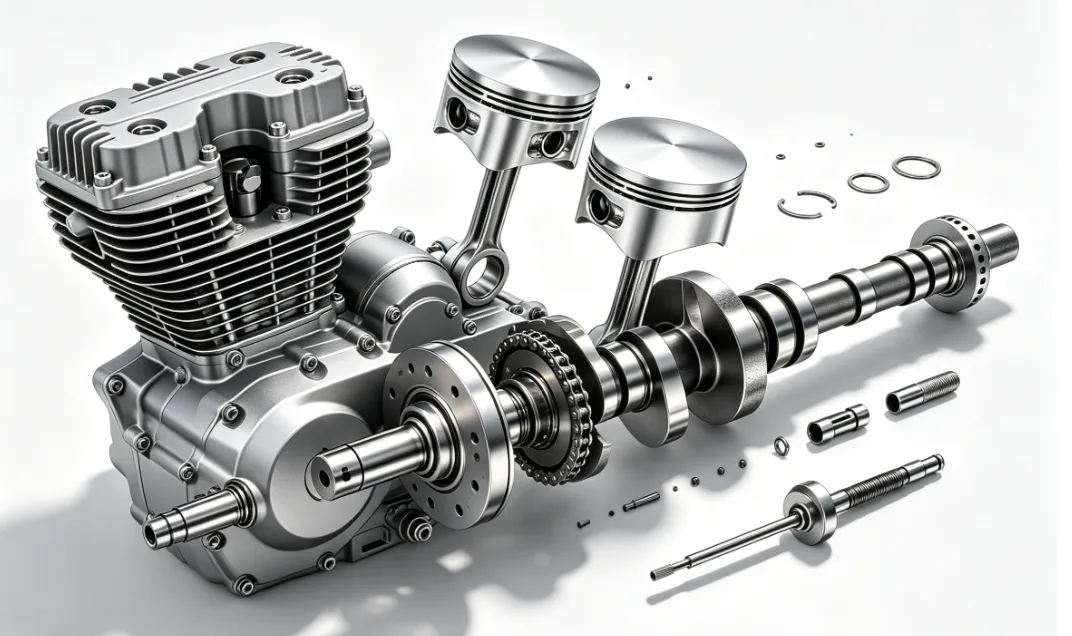
 Top 8 Motorcycle Engine Parts That Affect Fuel Efficiency
Motorcycle engine parts play a critical role in determining fuel efficiency, engine performance, and operating costs. Understanding which motorcycle engine components directly influence fuel consumption helps riders, repair shops, distributors, and manufacturers optimize engine performance while reducing fuel waste.
Modern motorcycles rely on precise air-fuel combustion, efficient mechanical movement, and minimal energy loss. Even small defects in key engine parts can significantly reduce fuel economy and increase maintenance expenses over time.
Article Outline
- Why Motorcycle Engine Parts Affect Fuel Efficiency
- Key Factors That Influence Motorcycle Fuel Consumption
- Top 8 Motorcycle Engine Parts That Affect Fuel Efficiency
- Comparison Table of Fuel-Efficiency-Critical Components
- Maintenance Tips for Better Fuel Economy
- Conclusion
- FAQs
Why Motorcycle Engine Parts Affect Fuel Efficiency
Fuel efficiency depends on how effectively motorcycle engine parts convert fuel energy into mechanical power.
Every component inside the combustion and transmission system influences fuel usage. Poorly maintained engine components can increase friction, reduce combustion efficiency, and force the engine to consume more fuel to produce the same power output.
According to industry estimates, neglected engine maintenance may reduce fuel economy by 10%–30% depending on riding conditions and engine type.
For manufacturers and aftermarket suppliers, understanding fuel-efficiency-related components helps improve product selection and maintenance planning.
Common motorcycle product categories include:
- Motorcycle engine valves
- Motorcycle gaskets
- Bearings
- Motorcycle lighting systems
- ATV and dirt bike parts
Relevant component resources include:
Key Factors That Influence Motorcycle Fuel Consumption
Three primary factors determine motorcycle fuel efficiency: combustion quality, mechanical resistance, and engine tuning.
Fuel economy decreases when:
- Air-fuel mixture becomes unbalanced
- Compression pressure drops
- Internal friction increases
- Ignition timing becomes inefficient
- Air intake becomes restricted
The following motorcycle engine parts have the greatest impact on these factors.
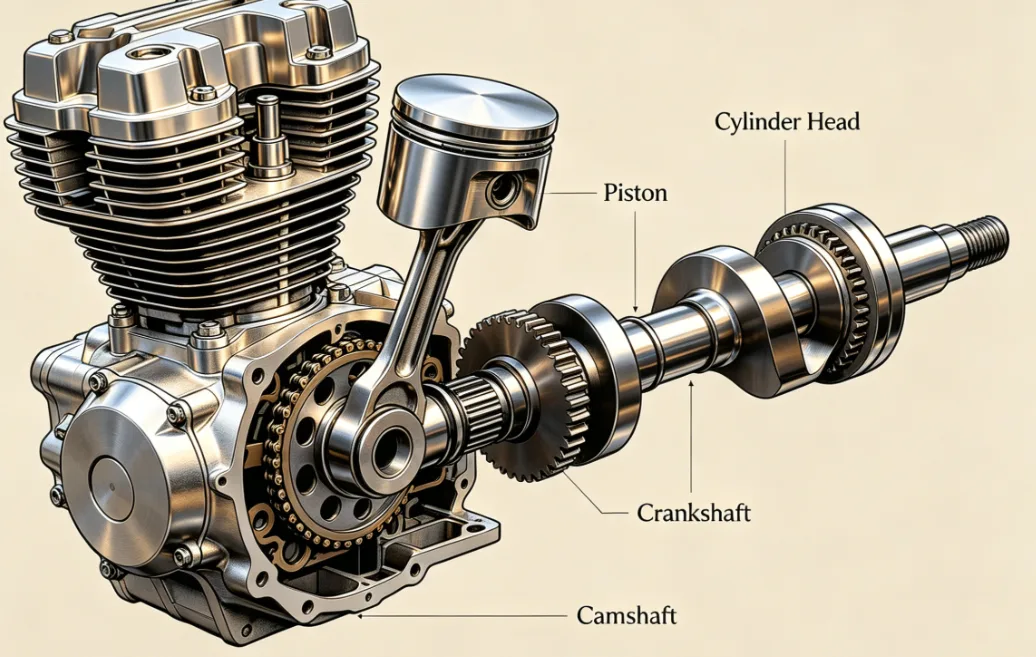 1. Motorcycle Engine Valves
Motorcycle engine valves directly control airflow into and out of the combustion chamber.
Intake valves allow fresh air-fuel mixture to enter the cylinder, while exhaust valves release combustion gases.
When valves become worn, bent, or improperly adjusted, combustion efficiency decreases.
Common symptoms include:
- Reduced fuel economy
- Engine power loss
- Hard starting
- Increased exhaust emissions
High-quality motorcycle valve components help maintain proper sealing and airflow characteristics, improving combustion efficiency and fuel utilization.
2. Motorcycle Gaskets
Motorcycle gaskets maintain compression and prevent leakage within the engine system.
Cylinder head gaskets, intake gaskets, and exhaust gaskets all contribute to engine efficiency.
A damaged gasket can cause:
- Compression loss
- Air leaks
- Coolant leakage
- Poor combustion
Even small compression losses may increase fuel consumption because the engine must work harder to generate power.
Reliable motorcycle gasket systems help preserve optimal engine sealing performance.
3. Piston Rings
Piston rings are essential for maintaining cylinder compression and reducing oil consumption.
Worn piston rings allow combustion gases to escape into the crankcase, reducing engine efficiency.
Fuel-efficiency-related symptoms include:
- Increased fuel consumption
- Excessive exhaust smoke
- Reduced acceleration
- Lower compression readings
According to engine maintenance specialists, compression loss is one of the most common causes of declining motorcycle fuel economy.
4. Fuel Injector or Carburetor
The fuel delivery system has a direct influence on fuel-air mixture accuracy.
Fuel injectors on modern motorcycles precisely meter fuel based on engine operating conditions.
Older motorcycles commonly use carburetors.
Problems such as:
- Injector clogging
- Incorrect fuel pressure
- Carburetor misadjustment
can result in excessive fuel consumption.
Fuel Delivery System Comparison
| Component | Fuel Efficiency Impact |
|---|---|
| Clean Fuel Injector | Excellent |
| Dirty Fuel Injector | Poor |
| Properly Tuned Carburetor | Good |
| Worn Carburetor | Poor |
5. Air Filter
A clean air filter improves combustion efficiency by ensuring proper airflow.
Restricted airflow causes rich fuel mixtures that consume more fuel.
Common causes of air filter restriction include:
- Dust accumulation
- Mud contamination
- Oil buildup
Routine inspection and replacement help maintain optimal fuel economy.
The U.S. Department of Energy identifies proper airflow management as a key factor in combustion efficiency.
Reference: https://www.energy.gov
6. Spark Plug
Spark plugs affect ignition quality and fuel combustion efficiency.
Weak or inconsistent spark generation may leave fuel partially unburned.
Symptoms of worn spark plugs include:
- Poor fuel economy
- Rough idling
- Misfires
- Slow acceleration
Modern iridium spark plugs generally provide longer service life and more stable ignition performance compared with traditional copper plugs.
7. Crankshaft Bearings
Crankshaft bearings influence internal engine friction and rotational efficiency.
Bearings support the crankshaft and allow smooth rotation under load.
Excessive bearing wear increases friction and energy loss.
Common bearing-related issues include:
- Increased vibration
- Mechanical drag
- Higher operating temperatures
- Reduced fuel efficiency
Quality industrial bearing solutions contribute to smoother engine operation and reduced energy loss.
8. Exhaust System Components
Exhaust system efficiency affects engine breathing and overall fuel consumption.
Proper exhaust flow helps remove combustion gases effectively.
Restrictions caused by:
- Carbon buildup
- Damaged mufflers
- Blocked catalytic converters
can increase pumping losses and reduce engine efficiency.
A properly functioning exhaust system improves combustion balance and supports optimal fuel economy.
Fuel Efficiency Impact Comparison Table
Some motorcycle engine parts have a greater effect on fuel consumption than others.
| Motorcycle Engine Part | Fuel Efficiency Impact | Maintenance Priority |
|---|---|---|
| Engine Valve | Very High | High |
| Fuel Injector | Very High | High |
| Piston Ring | Very High | High |
| Gasket | High | High |
| Air Filter | Medium-High | High |
| Spark Plug | Medium-High | Medium |
| Bearings | Medium | Medium |
| Exhaust Components | Medium | Medium |
Maintenance Tips for Better Motorcycle Fuel Efficiency
Regular maintenance is the most effective way to preserve motorcycle fuel economy.
Recommended maintenance practices include:
- Inspect engine valves according to manufacturer schedules.
- Replace worn gaskets immediately.
- Clean fuel injectors regularly.
- Change air filters as needed.
- Monitor spark plug condition.
- Check engine compression periodically.
- Inspect crankshaft bearings during major service intervals.
- Maintain proper tire pressure to reduce overall load.
For complete engine maintenance programs, many distributors source related products such as:
Conclusion
The motorcycle engine parts that most significantly affect fuel efficiency are engine valves, gaskets, piston rings, fuel injectors, air filters, spark plugs, crankshaft bearings, and exhaust components.
These components directly influence combustion quality, airflow management, compression pressure, and mechanical efficiency. Regular inspection and preventive maintenance help riders maximize fuel economy, reduce emissions, and extend engine service life.
For motorcycle manufacturers, repair centers, and aftermarket distributors, selecting reliable engine components remains one of the most effective strategies for improving long-term fuel efficiency.
FAQs
Which motorcycle engine part has the greatest effect on fuel efficiency?
Engine valves, fuel injectors, and piston rings generally have the greatest influence because they directly affect combustion efficiency, compression pressure, and fuel-air mixture quality. Problems in these components often produce noticeable increases in fuel consumption.
Can a dirty air filter really reduce motorcycle fuel economy?
Yes. A clogged air filter restricts airflow entering the engine, causing an overly rich fuel mixture. This imbalance reduces combustion efficiency and may significantly increase fuel consumption over time.
How often should motorcycle engine valves be inspected?
Inspection intervals vary by manufacturer and engine design. Many motorcycles require valve clearance checks every 10,000 to 25,000 kilometers, while high-performance engines may need more frequent inspection.
Do worn bearings affect motorcycle fuel consumption?
Yes. Excessively worn crankshaft bearings increase friction and mechanical resistance. The engine must generate additional power to overcome this resistance, which can negatively affect fuel efficiency and performance.
What is the easiest way to improve motorcycle fuel efficiency?
The simplest improvements usually include replacing dirty air filters, maintaining proper tire pressure, servicing spark plugs, and ensuring the fuel delivery system operates correctly. These maintenance actions often provide immediate fuel-economy benefits.