
10 Common Bearing Problems in Industrial Machinery
Bearing problems in industrial machinery are among the leading causes of unexpected downtime, reduced equipment efficiency, and increased maintenance costs. Understanding common bearing failures and their root causes helps maintenance teams extend bearing life, improve machine reliability, and reduce operational risks.
According to industry studies, bearing-related issues contribute significantly to motor and rotating equipment failures across manufacturing, agricultural, mining, and automation sectors. Early detection and corrective action can prevent costly production interruptions and equipment damage.
Article Outline
- Why Bearing Problems Matter in Industrial Machinery
- Overview of Common Bearing Failure Causes
- 10 Common Bearing Problems in Industrial Machinery
- Bearing Failure Symptoms and Diagnostic Methods
- Bearing Maintenance Best Practices
- Bearing Problem Prevention Checklist
- Conclusion
- FAQs
Why Bearing Problems Matter in Industrial Machinery
Bearing failures directly affect equipment reliability and production efficiency.
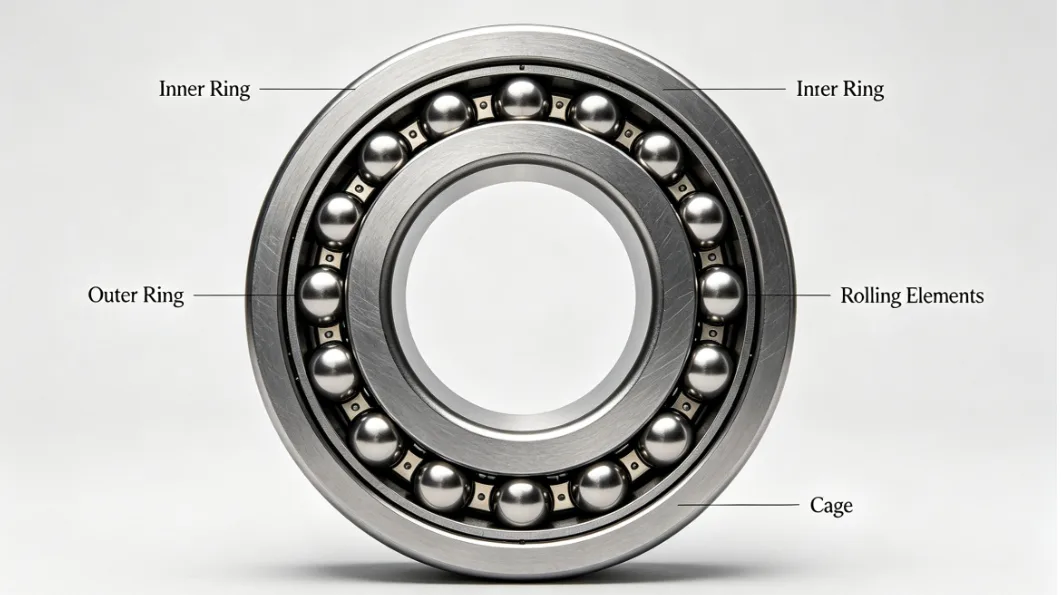
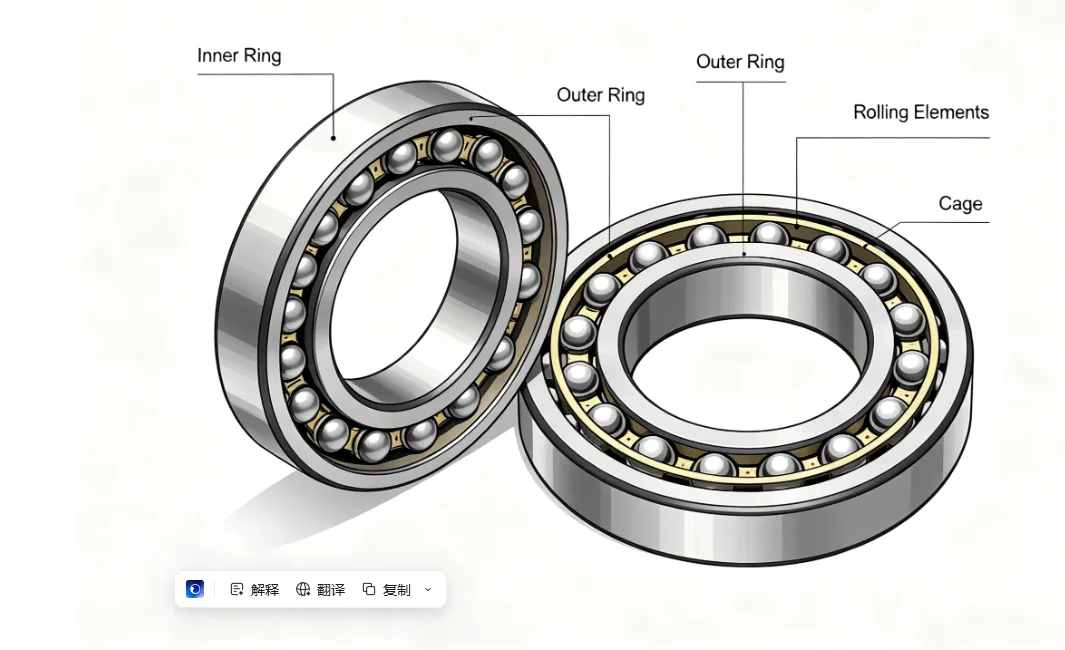
Industrial bearings support rotating shafts while reducing friction and handling radial or axial loads. When bearing problems occur, machinery may experience vibration, overheating, excessive noise, reduced precision, and unexpected shutdowns.
Industries such as manufacturing, agriculture, automotive production, and material handling rely heavily on reliable bearing performance. Selecting suitable industrial bearings and implementing proper maintenance practices can significantly improve equipment uptime.
For organizations sourcing bearings for industrial equipment, understanding bearing specifications and application requirements is essential. Relevant products include deep groove ball bearings, self-aligning bearings, and other precision bearing solutions available from VETOR’s industrial bearing products. (yifeng)
Overview of Common Bearing Failure Causes
Most bearing failures result from preventable operational or maintenance issues.
According to bearing industry research, the most common failure factors include:
| Failure Cause | Estimated Impact |
|---|---|
| Improper Lubrication | Very High |
| Contamination | High |
| Misalignment | High |
| Improper Installation | High |
| Excessive Load | Medium-High |
| Electrical Damage | Medium |
| Corrosion | Medium |
Many of these issues can be identified before catastrophic failure through vibration analysis, temperature monitoring, and routine inspections.
1. Improper Lubrication
Insufficient or incorrect lubrication is the most common bearing problem in industrial machinery.
Lubrication reduces friction and prevents metal-to-metal contact between rolling elements and raceways. Using the wrong grease, applying too little lubricant, or over-greasing can all shorten bearing service life.
Common lubrication-related symptoms include:
- Increased operating temperature
- Metal wear particles
- Higher vibration levels
- Premature bearing failure
The U.S. National Institute of Standards and Technology (NIST) recommends proper lubrication management as a critical component of predictive maintenance programs.
External Reference:
- NIST Manufacturing Resources: https://www.nist.gov/manufacturing
2. Bearing Contamination
Contamination frequently causes premature bearing wear and surface damage.
Dust, moisture, metal particles, and chemicals can enter bearing assemblies through damaged seals or poor maintenance practices.
Contaminated bearings often develop:
- Abrasive wear
- Surface pitting
- Increased friction
- Reduced fatigue life
Proper sealing systems and clean installation environments significantly reduce contamination risks.
3. Shaft Misalignment
Misalignment creates uneven load distribution that accelerates bearing wear.
Even small angular or parallel misalignment can generate excessive stress concentrations.
Common causes include:
- Improper installation
- Shaft deflection
- Housing deformation
- Thermal expansion
For applications where alignment challenges exist, self-aligning ball bearings can help compensate for limited shaft misalignment. (yifeng)
Misalignment Effects
| Condition | Potential Result |
|---|---|
| Angular Misalignment | Edge loading |
| Parallel Misalignment | Uneven wear |
| Dynamic Misalignment | Increased vibration |
| Severe Misalignment | Early failure |
4. Improper Bearing Installation
Incorrect installation practices frequently damage bearings before operation even begins.
Using excessive force, incorrect mounting tools, or improper shaft fits can create microscopic damage that later develops into fatigue failures.
Recommended installation practices include:
- Use proper mounting tools.
- Verify shaft tolerances.
- Follow manufacturer specifications.
- Maintain a clean installation environment.
The ISO standards for rolling bearings emphasize proper mounting procedures to maximize bearing life.
External Reference:
- ISO Bearing Standards: https://www.iso.org
5. Excessive Load Conditions
Overloading shortens bearing fatigue life and increases the risk of catastrophic failure.
Industrial equipment occasionally operates beyond design specifications because of:
- Production increases
- Process changes
- Impact loading
- Improper equipment selection
According to bearing engineering calculations, fatigue life decreases significantly as load increases beyond rated capacity. (yifeng)
6. Corrosion and Moisture Damage
Corrosion weakens bearing surfaces and accelerates material degradation.
Industrial environments containing humidity, water exposure, or corrosive chemicals are particularly challenging.
Common corrosion indicators include:
- Rust formation
- Surface discoloration
- Increased roughness
- Lubricant contamination
Preventive measures include sealed bearings, corrosion-resistant materials, and proper storage practices.
7. Electrical Erosion
Electrical current passing through bearings can damage raceways and rolling elements.
This issue commonly occurs in:
- Electric motors
- Variable frequency drive (VFD) systems
- Industrial automation equipment
Electrical discharge machining (EDM) effects create characteristic fluting patterns that increase vibration and noise.
According to bearing application specialists, insulated or hybrid ceramic bearings can reduce electrical damage risks. (yifeng)
8. Excessive Vibration
High vibration levels accelerate bearing fatigue and structural wear.
Sources of vibration include:
- Rotor imbalance
- Misalignment
- Mechanical looseness
- Resonance conditions
Modern predictive maintenance programs use vibration monitoring systems to detect developing bearing defects before failure occurs.
External Reference:
- U.S. Department of Energy Motor Systems Resources: https://www.energy.gov
9. Bearing Fatigue and Spalling
Fatigue failure is a natural wear mechanism that develops over time.
Repeated stress cycles eventually create cracks beneath the bearing surface.
Typical fatigue symptoms include:
- Surface spalling
- Material flaking
- Increased vibration
- Audible noise
Fatigue life depends on load, lubrication quality, contamination levels, and operating conditions. (yifeng)
10. Improper Bearing Selection
Selecting the wrong bearing type often leads to recurring reliability issues.
Factors that should be evaluated include:
- Radial load requirements
- Axial load requirements
- Operating speed
- Environmental conditions
- Misalignment tolerance
The bearing selection process should match operating conditions with bearing design characteristics. Common options include:
| Bearing Type | Best Application |
|---|---|
| Deep Groove Ball Bearing | General industrial equipment |
| Self-Aligning Bearing | Misalignment conditions |
| Cylindrical Roller Bearing | Heavy radial loads |
| Tapered Roller Bearing | Combined loads |
For additional guidance, manufacturers can review bearing selection recommendations from VETOR’s industrial bearing selection guide. (yifeng)
Bearing Failure Symptoms and Diagnostic Methods
Early diagnosis significantly reduces bearing replacement costs and downtime.
Common warning signs include:
- Unusual noise
- Rising temperatures
- Excessive vibration
- Lubricant leakage
- Reduced machine efficiency
Predictive maintenance technologies often include:
- Vibration analysis
- Thermal imaging
- Ultrasound testing
- Oil analysis
These techniques help maintenance teams identify developing defects before complete bearing failure occurs.
Bearing Maintenance Best Practices
Preventive maintenance remains the most effective strategy for reducing bearing problems.
Recommended practices include:
- Follow lubrication schedules.
- Monitor vibration trends.
- Inspect seals regularly.
- Maintain equipment alignment.
- Store spare bearings properly.
- Replace damaged bearings promptly.
Organizations that implement condition-based maintenance programs generally achieve longer bearing service life and lower maintenance costs.
For equipment requiring complementary components, manufacturers often source related products such as engine valves, gasket systems, and industrial lighting components through integrated supply chains. (yifeng)
Bearing Problem Prevention Checklist
A structured maintenance checklist helps prevent most bearing failures.
✓ Verify proper lubrication
✓ Monitor operating temperatures
✓ Conduct vibration analysis
✓ Check alignment regularly
✓ Protect bearings from contamination
✓ Inspect seals and housings
✓ Confirm load conditions remain within specifications
✓ Replace worn bearings proactively
Conclusion
Most bearing problems in industrial machinery are preventable through proper selection, installation, lubrication, and monitoring.
The ten bearing issues discussed in this guide—lubrication failure, contamination, misalignment, installation errors, overloading, corrosion, electrical erosion, vibration, fatigue, and improper selection—represent the majority of bearing-related failures found in industrial operations. Companies that adopt predictive maintenance and follow industry best practices can significantly improve equipment reliability while reducing downtime and repair costs.
FAQs
What is the most common cause of bearing failure in industrial machinery?
Improper lubrication is widely considered the leading cause of bearing failure. Insufficient lubrication, contaminated grease, or incorrect lubricant selection increases friction and wear, ultimately shortening bearing life and causing premature equipment failure.
How can maintenance teams detect bearing problems early?
Early detection usually involves vibration analysis, temperature monitoring, ultrasound testing, and lubricant analysis. These predictive maintenance techniques can identify developing defects before severe damage occurs, reducing repair costs and downtime.
How often should industrial bearings be inspected?
Inspection frequency depends on equipment criticality, operating conditions, and maintenance strategy. Critical production equipment may require monthly inspections, while less demanding applications may follow quarterly or semiannual schedules.
Can bearing contamination be completely eliminated?
Complete elimination is difficult, but contamination risks can be significantly reduced through proper seals, clean installation procedures, controlled maintenance environments, and regular inspection of lubrication systems.
Are self-aligning bearings suitable for all industrial applications?
No. Self-aligning bearings are designed primarily for applications experiencing shaft or housing misalignment. Other bearing types may provide better performance for high-speed, heavy-load, or precision positioning applications depending on operating requirements.