
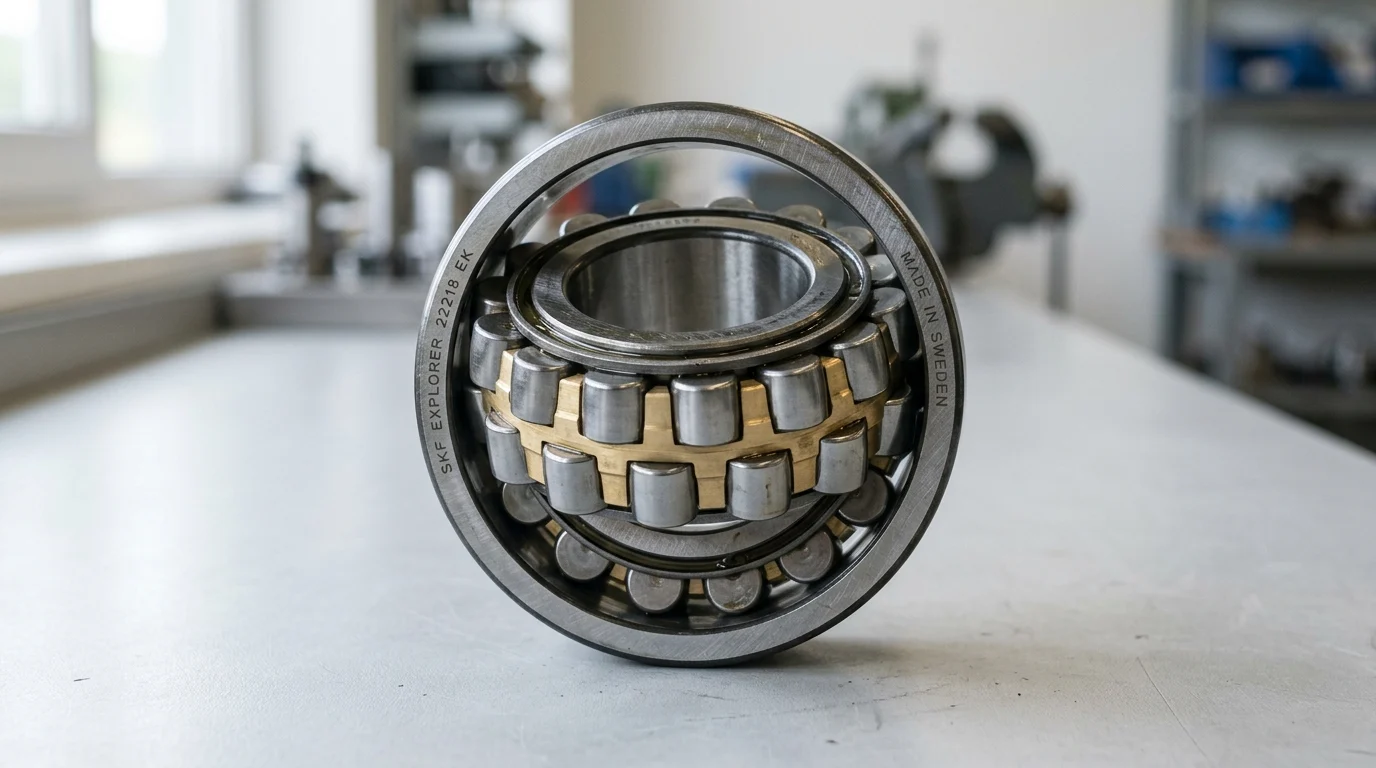
Introduction
In 2026, industrial bearing maintenance is no longer a routine shop-floor task but a core reliability strategy tied to uptime, energy use, and equipment life. This guide explains the maintenance practices that matter most in modern plants, from lubrication control and contamination prevention to condition monitoring and failure analysis. You’ll see how better bearing care reduces unplanned stoppages, limits wasteful friction, and supports more predictable maintenance planning across critical rotating assets. The sections that follow focus on practical best practices, common failure risks, and the operational decisions that help maintenance teams protect performance in increasingly automated industrial environments.
Why Industrial Bearing Maintenance Matters in 2026
As industrial facilities transition toward fully digitized, autonomous operations in 2026, the strategic importance of industrial bearing maintenance has reached unprecedented levels. Bearings serve as the critical mechanical interface in virtually all rotary equipment, absorbing massive radial and axial loads while facilitating smooth power transmission. The modernization of manufacturing necessitates a departure from reactive maintenance paradigms in favor of highly calibrated, data-driven stewardship.
The economic implications of bearing failure extend far beyond the cost of the component itself. In modern high-speed production environments, a single catastrophic bearing failure can halt an entire continuous-process line, resulting in significant supply chain disruptions. Consequently, plant managers and reliability engineers are re-evaluating their maintenance frameworks to prioritize precision. They are leveraging advanced metallurgy insights, automated lubrication systems, and continuous condition monitoring to protect these vital assets.
Uptime, energy efficiency, and asset life
The direct correlation between industrial bearing health and overall plant efficiency is a primary driver for advanced maintenance protocols. When bearing surfaces degrade, the resulting increase in friction demands higher torque from drive motors. Poorly maintained bearings can increase mechanical energy consumption by 5% to 15% in heavy rotary equipment, directly impacting facility energy expenditures and sustainability metrics.
Furthermore, optimizing the L10 life—the calculated lifespan at which 10% of a given population of identical bearings will show signs of fatigue—requires strict adherence to operational parameters. By maintaining optimal lubrication films and strict alignment tolerances, facilities can frequently extend the actual service life of an industrial bearing to exceed its calculated L10 life by up to 300%. This maximizes asset utilization and defers capital expenditures on replacement hardware.
Operating trends increasing maintenance demands
The operating environment of 2026 presents severe challenges that accelerate bearing wear and necessitate rigorous maintenance. Industrial machinery is increasingly subjected to higher rotational speeds, heavier payloads, and extreme environmental conditions to maximize throughput. For instance, operating temperatures in modern steel and paper mills frequently exceed 150°C (302°F), a threshold that severely stresses both the bearing metallurgy and the applied lubricants.
Under these conditions, the Arrhenius rate rule applies to lubricant degradation, dictating that the oxidation rate of base oils approximately doubles for every 10°C rise in operating temperature above 70°C. This thermal reality forces maintenance teams to drastically shorten relubrication intervals or transition to high-performance synthetic lubricants. Coupled with the rise of 24/7 autonomous manufacturing cycles that eliminate traditional offline maintenance windows, these operating trends require dynamic, sensor-integrated maintenance strategies capable of evaluating bearing health without interrupting production.
Core Industrial Bearing Maintenance Best Practices
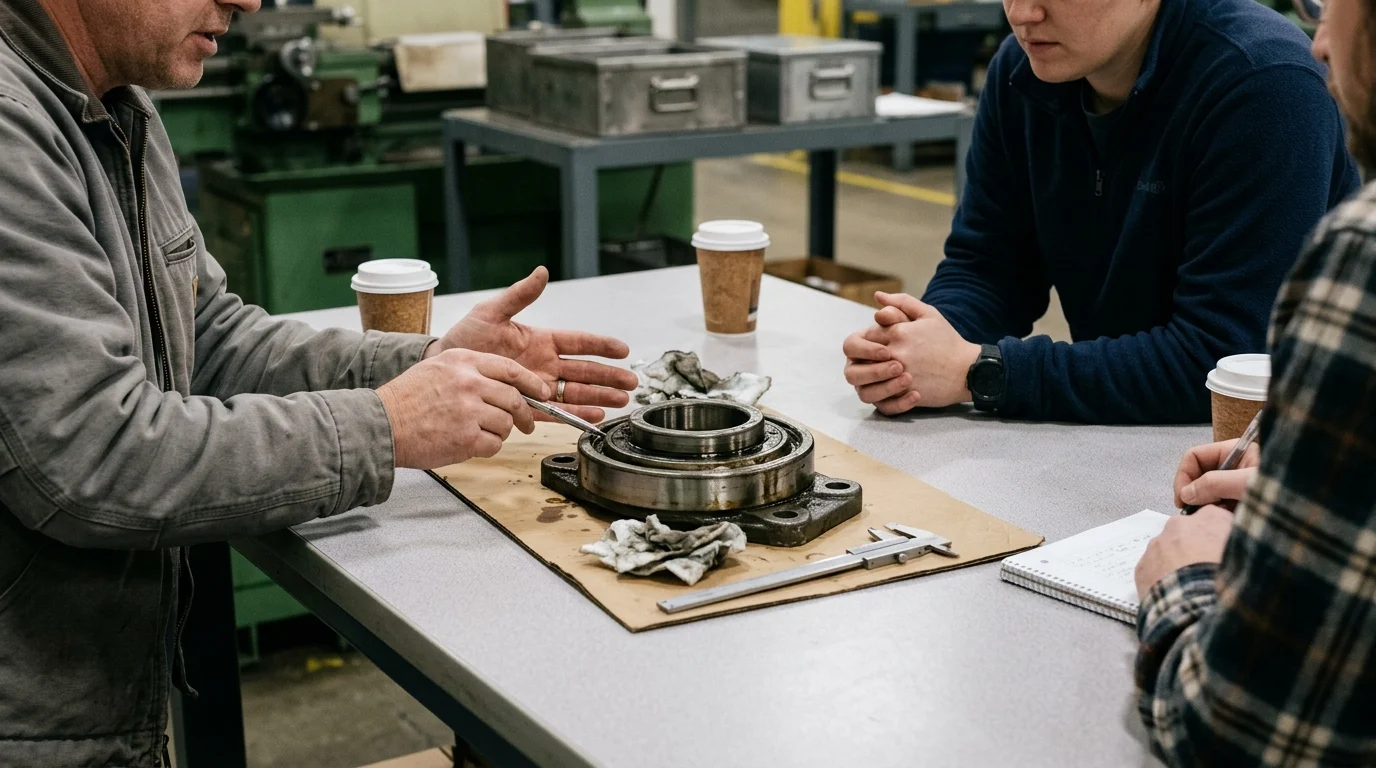
Establishing a resilient industrial bearing maintenance program requires a comprehensive understanding of both the failure mechanisms that threaten component integrity and the methodological frameworks available to mitigate them. A best-in-class approach relies on categorizing assets by criticality and applying the appropriate maintenance strategy to optimize the balance between intervention costs and reliability.
Common failure modes and service scope
According to ISO 15243 standards, industrial bearing failure modes are broadly categorized into fatigue, wear, corrosion, electrical erosion, plastic deformation, and fracture. Despite advancements in bearing steel purity, premature failures remain highly prevalent due to operational and maintenance shortfalls. Industry data indicates that approximately 36% of premature bearing failures are attributed to improper lubrication—whether over-lubrication, under-lubrication, or the use of incorrect viscosity grades.
Furthermore, 14% of failures are caused by solid or liquid contamination, while another 16% stem from improper mounting and handling techniques. The scope of modern bearing service must directly address these vulnerabilities. Comprehensive service protocols now mandate strict contamination control during storage, precise calculation of grease replenishment volumes, and the use of specialized tooling to prevent localized plastic deformation (brinelling) during installation.
Preventive vs predictive vs reliability-centered maintenance
The evolution of maintenance philosophies has yielded three primary strategies, each with distinct operational and financial profiles. Preventive maintenance relies on time-based or usage-based schedules, replacing bearings or replenishing lubricants at fixed intervals regardless of actual condition. While superior to reactive run-to-failure approaches, it often results in the premature disposal of healthy components or fails to catch accelerated wear between cycles.
Predictive maintenance (PdM) utilizes continuous condition monitoring to detect the onset of failure. By measuring high-frequency vibration bands (typically between 1,000 Hz and 20,000 Hz) and acoustic emissions, PdM can identify subsurface micro-spalling up to six months before a catastrophic failure occurs. Reliability-Centered Maintenance (RCM) represents the highest tier, blending these strategies based on rigorous risk assessments to ensure the most cost-effective technique is applied to each specific machine.
| Maintenance Strategy | Core Methodology | Implementation Cost Profile | Typical ROI Timeframe |
|---|---|---|---|
| Preventive (PM) | Time/usage-based intervention | Low to Moderate ($10k-$50k) | 12-18 months |
| Predictive (PdM) | Condition monitoring (vibration, thermal) | High ($50k-$150k) | 18-24 months |
| Reliability-Centered (RCM) | Risk-based hybrid approach | Very High (>$150k) | 24-36 months |
Inspection, Lubrication, and Handling Procedures
The tactical execution of bearing maintenance heavily dictates the longevity of the component. Precision in inspection, meticulous lubrication management, and strict adherence to mechanical handling protocols form the triad of physical bearing care. Deviations in any of these three areas rapidly compromise the micro-geometry of the bearing raceways and rolling elements.
Inspection intervals, methods, and acceptance criteria
Establishing appropriate inspection intervals requires baseline data regarding the machine's speed, load, and historical failure rates. Advanced inspection methods in 2026 rely heavily on spectral vibration analysis, infrared thermography, and ultrasonic testing. Thermography is particularly effective for identifying friction-induced heat anomalies, while ultrasonic tools can detect high-frequency friction indicative of early-stage lubrication starvation.
Acceptance criteria must be rigidly defined to prevent subjective decision-making. For example, utilizing ISO 10816 standards for machine vibration, a peak-to-peak vibration velocity exceeding 7.1 mm/s on a medium-sized motor typically indicates an unacceptable condition requiring immediate investigation. Maintenance teams must establish specific alert and alarm thresholds in their computerized maintenance management systems (CMMS) to trigger automated work orders when these parameters are breached.
Lubricant selection, relubrication, and contamination control
The elastohydrodynamic lubrication film that separates rolling elements from raceways is astonishingly thin, typically measuring only 0.1 to 3 microns in thickness. Because this film is critical to preventing metal-to-metal contact, selecting a lubricant with the correct base oil viscosity at the operating temperature is paramount. Engineers must calculate the required kinematic viscosity (kappa value) to ensure adequate film thickness under dynamic loads.
Contamination control is equally critical, as particulate matter larger than the lubrication film thickness will bridge the gap, causing three-body abrasive wear. Particles as small as 5 microns can severely damage the bearing surfaces over time. Best practices dictate filtering lubricating oils to ISO 4406 cleanliness codes of 16/14/11 or better, utilizing desiccant breathers on reservoirs, and employing dedicated, color-coded grease guns to prevent cross-contamination of incompatible grease thickeners.
Installation, alignment, mounting, and dismounting
Improper mounting is a leading cause of early bearing mortality. Bearings must be installed with precise interference fits to prevent fretting corrosion on the shaft or within the housing. Driving a bearing onto a shaft using brute force transmits shock loads through the rolling elements, causing true brinelling—permanent indentations on the raceways that immediately generate high vibration and initiate fatigue spalling.
Thermal expansion techniques are the industry standard for safe mounting. Induction heating ensures uniform expansion of the inner ring, allowing it to slide effortlessly onto the shaft. However, strict temperature limits must be observed; heating standard rolling bearings above 120°C (248°F) alters the metallurgical structure of the steel, permanently reducing its hardness and load-carrying capacity. For dismounting, hydraulic pullers and specialized extraction tools are required to safely remove bearings without damaging the shaft journals.
Compliance, Data, and Cost Management
In a mature industrial ecosystem, technical procedures must be underpinned by robust compliance frameworks and rigorous data management. The ability to track a bearing's lifecycle from procurement to disposal not only satisfies regulatory and quality standards but also provides the vital datasets required to continuously refine total cost of ownership (TCO) models.
ISO standards, documentation, and traceability
Adherence to international standards, particularly ISO 9001 for quality management and ISO 55000 for physical asset management, provides a structured approach to bearing maintenance. These frameworks require meticulous documentation of all maintenance interventions, including the exact torque specifications applied, the batch numbers of lubricants used, and the environmental conditions during installation.
Traceability has been revolutionized by the integration of RFID tags and laser-etched QR codes directly on bearing components. This digital traceability allows technicians to instantly access manufacturing tolerances, internal clearance specifications, and historical vibration signatures via mobile devices. Industry benchmarks indicate that implementing comprehensive digital traceability reduces diagnostic time by an average of 40% during root cause failure analysis, significantly accelerating the return to normal operations.
Cost comparison and performance evaluation
Evaluating the financial efficacy of a bearing maintenance program requires shifting focus from the initial purchase price of the component to its Total Cost of Ownership (TCO). A premium industrial bearing may cost 30% more upfront than a budget alternative, but if its superior metallurgy and sealing technology double the operational lifespan, the reduction in labor and downtime yields a vastly superior return on investment.
| Cost Category | Reactive Maintenance Profile | Predictive Maintenance Profile | Financial Impact Example |
|---|---|---|---|
| Bearing Hardware | 15% of total lifecycle cost | 25% of total lifecycle cost | Premium bearings cost up to 30% more upfront but last twice as long |
| Labor & Overtime | 35% of total lifecycle cost | 15% of total lifecycle cost | Overtime rates double during emergency weekend repairs |
| Lost Production | 50% of total lifecycle cost | 60% of total lifecycle cost | $22,000/min downtime cost in critical automotive lines |
The most significant variable in performance evaluation is the cost of unplanned downtime. In high-volume sectors such as automotive manufacturing, unplanned downtime costs average $22,000 per minute. Given that bearing failure accounts for approximately 20% of all rotating equipment failures, the financial justification for investing in predictive technologies and premium components is easily quantified through avoided downtime.
Implementation and Scaling
Transitioning from localized maintenance successes to a plant-wide, standardized bearing reliability program is a complex organizational challenge. It requires strategic alignment between corporate leadership, reliability engineers, and frontline technicians. Successful implementation relies on structured prioritization and a phased rollout methodology that proves value before demanding massive capital expenditure.
Prioritization framework for maintenance leaders
Maintenance leaders must initiate scaling efforts by conducting a comprehensive Asset Criticality Assessment (ACA). This framework evaluates every rotating asset based on safety implications, environmental risk, production impact, and repair costs. By applying a standard 1-to-5 criticality scale, management can objectively allocate resources where they mitigate the most risk.
Best practices dictate that facilities should focus 80% of their predictive condition-monitoring budgets and advanced training on Tier 1 and Tier 2 assets—those where a bearing failure causes immediate plant shutdown or poses a severe safety hazard. Lower-tier assets, such as redundant cooling fans or non-critical conveyors, can often be managed effectively with optimized preventive routes or even strategic run-to-failure plans, ensuring that maintenance budgets are deployed with maximum efficiency.
Roadmap for plant-wide rollout
A successful plant-wide rollout of advanced bearing maintenance practices should follow a phased roadmap rather than a simultaneous facility-wide overhaul. Phase one involves establishing a pilot program on a single critical production line. A standard pilot program requires 90 to 120 days to establish accurate baseline vibration, acoustic, and thermal signatures for the newly monitored bearings.
Once the pilot demonstrates measurable ROI—typically through the early detection of a fault that prevents a catastrophic failure—the program enters phase two: horizontal expansion across similar asset classes. The final phase involves full integration of bearing condition data into the plant's Enterprise Asset Management (EAM) system, enabling automated procurement of replacement bearings and automated scheduling of specialized labor based on predictive health scores. This systematic scaling ensures cultural adoption by the maintenance staff and provides management with continuous, verifiable returns on their reliability investments.
Key Takeaways
- The most important conclusions and rationale for Industrial Bearing
- Specs, compliance, and risk checks worth validating before you commit
- Practical next steps and caveats readers can apply immediately
Frequently Asked Questions
Why is bearing maintenance more critical in 2026?
Because automated, high-speed plants have less downtime tolerance. A single bearing failure can stop a full production line, raise energy use, and disrupt supply schedules.
What causes most premature industrial bearing failures?
Improper lubrication is the top cause, followed by contamination and poor mounting. Use the correct lubricant, keep seals and storage clean, and install with proper tools.
How often should industrial bearings be relubricated?
It depends on speed, load, temperature, and contamination risk. In hot environments, lubricant degrades faster, so shorten intervals and verify with condition data when possible.
Should plants use preventive or predictive bearing maintenance?
Predictive maintenance is usually better for critical assets because it tracks actual condition. Use preventive schedules for lower-risk equipment or where sensors are not practical.
How can maintenance teams extend industrial bearing service life?
Maintain correct lubrication film, control contamination, verify alignment, and monitor vibration and temperature. These steps can reduce friction and help bearings exceed calculated L10 life.