
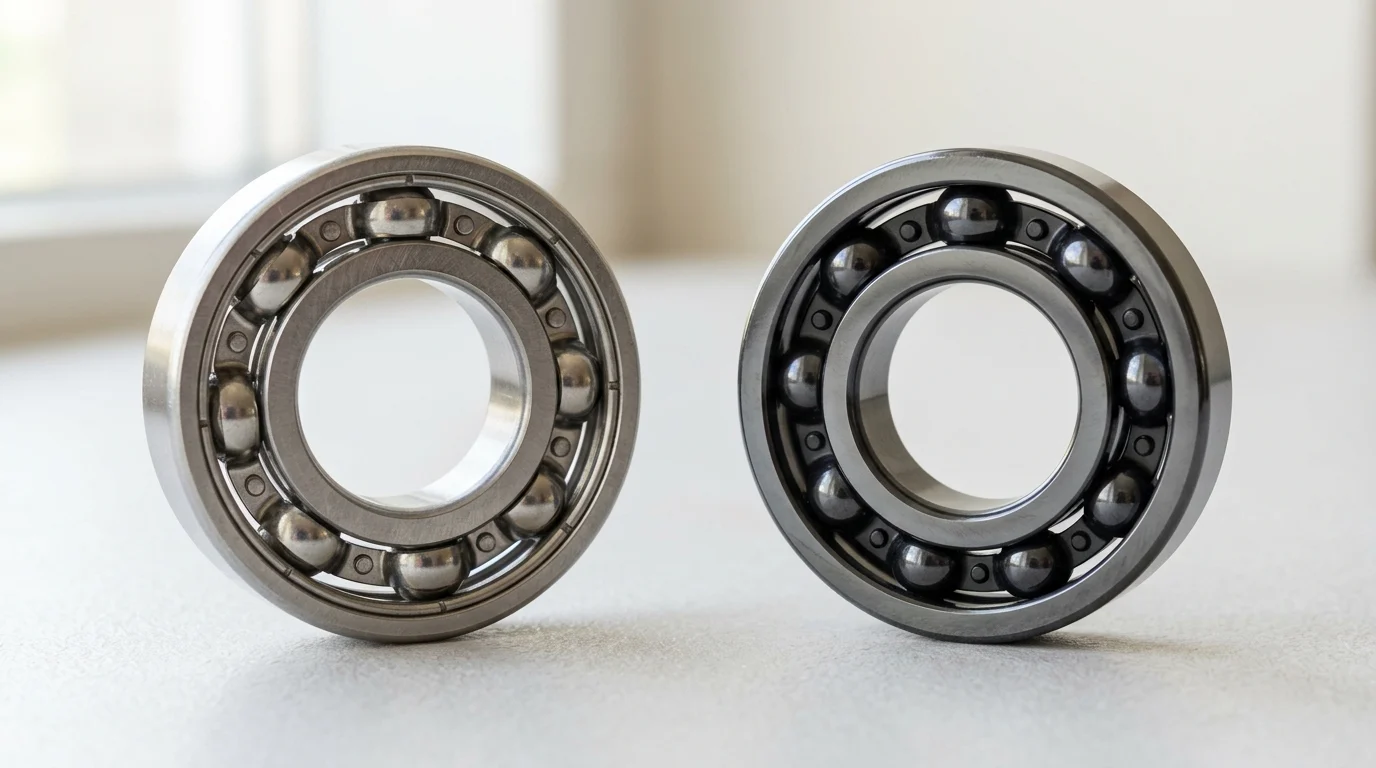
Introduction
At very high rotational speeds, bearing material is no longer a minor specification; it directly affects heat buildup, running accuracy, service life, and failure risk. This comparison of stainless steel and ceramic bearings focuses on what changes as speed rises, including centrifugal load, friction, lubrication behavior, and thermal stability. You will see where stainless steel remains practical, why ceramic hybrid designs often extend speed limits, and which trade-offs matter most in cost, durability, and maintenance planning. With that context in place, the rest of the article examines the performance limits, application fit, and selection factors that determine the better choice for high-speed systems.
Why Stainless Steel vs Ceramic Bearings Matter
In high-speed industrial applications, ranging from precision machine tool spindles to advanced turbomachinery, the selection of rolling elements dictates the absolute limits of system performance. As rotational speeds push past 100,000 RPM in modern engineering environments, traditional bearing materials face severe mechanical and thermal bottlenecks.
The debate between stainless steel bearings and ceramic bearings (specifically ceramic hybrid variants) represents a fundamental decision in mechanical design. Engineers must weigh centrifugal forces, heat generation, and tribological wear to optimize high-speed rotational systems. A miscalculation in material specification can lead to catastrophic failure, severe spindle damage, and unacceptable operational inefficiencies.
Speed, Heat, Precision, and Downtime
High-speed rotational systems are strictly governed by their dN value, calculated by multiplying the bearing bore diameter in millimeters by the maximum rotational speed in RPM. Standard stainless steel bearings typically reach their operational ceiling around a dN value of 1.0 × 10⁶ to 1.2 × 10⁶. Beyond this threshold, the internal friction and resulting thermal expansion cause severe lubrication breakdown and dimensional distortion.
Ceramic hybrid bearings, utilizing silicon nitride (Si3N4) rolling elements paired with steel raceways, can routinely achieve dN values exceeding 2.0 × 10⁶. This capability directly translates to faster machining cycles, higher throughput in centrifuges, and greater efficiency in aerospace turbines. Furthermore, the inherent thermal stability of ceramics mitigates micro-welding at the contact patch, maintaining strict geometric precision even under marginal lubrication conditions.
Lifecycle Cost and Maintenance Priorities
The initial procurement cost of a bearing is often a fraction of the total financial impact it has on an industrial system. Unplanned downtime in high-volume manufacturing environments, such as semiconductor fabrication or automotive machining, can incur costs ranging from $5,000 to over $15,000 per hour. Consequently, extending the Mean Time Between Failures (MTBF) is a critical objective for plant engineers.
While ceramic bearings command a premium purchase price, their lifecycle economics often justify the investment in high-speed applications. Their resistance to adhesive wear and ability to operate at lower temperatures significantly extend the lifespan of internal greases and oils. By reducing the frequency of maintenance intervals and minimizing the risk of sudden thermal runaway, advanced bearing materials shift the focus from component unit cost to comprehensive lifecycle reliability.
Material and Performance Differences
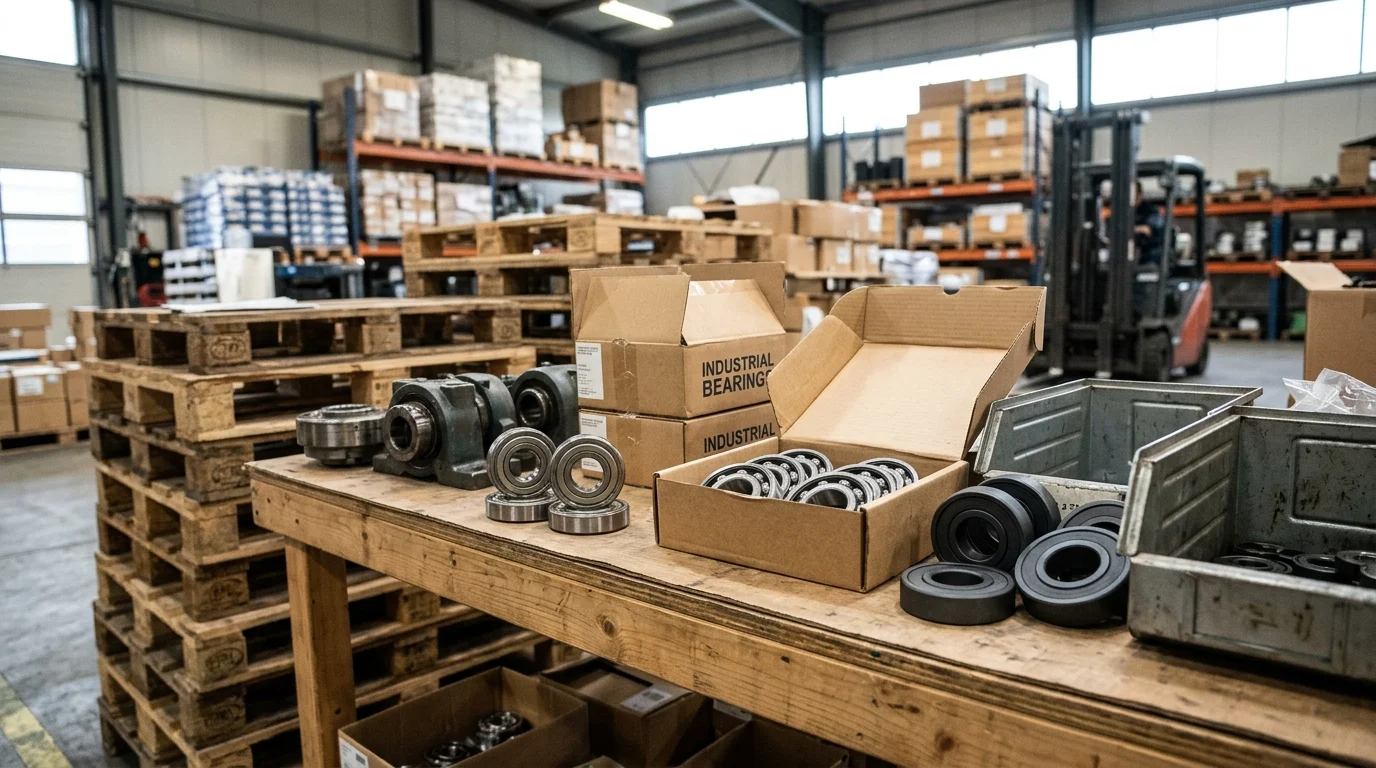
The operational disparities between stainless steel and ceramic bearings stem directly from their distinct metallurgical and crystalline structures. Understanding these material properties is essential for predicting bearing behavior under extreme rotational velocities and marginal lubrication.
How Stainless Steel and Ceramic Bearings Differ
Stainless steel bearings for high-speed use are predominantly manufactured from martensitic alloys like AISI 440C or specialized nitrogen-alloyed steels (e.g., Cronidur 30). These metals offer a balanced combination of corrosion resistance, fatigue strength, and ease of machining. However, they possess a relatively high density of approximately 7.8 g/cm³, which generates substantial centrifugal force at the outer raceway during high-speed rotation.
In contrast, high-performance ceramic bearings utilize silicon nitride (Si3N4) for the rolling elements. Si3N4 boasts a density of roughly 3.2 g/cm³, representing a nearly 60% reduction in mass compared to 440C steel. This dramatic drop in mass drastically reduces the centrifugal loads exerted on the outer ring, which is the primary driver of friction, heat, and fatigue in ultra-high-speed scenarios.
Key Properties for High-Speed Performance
Beyond density, hardness and elastic modulus dictate how a bearing deforms under load. Silicon nitride exhibits a Vickers hardness (HV) of 1400 to 1700, making it more than twice as hard as heat-treated 440C stainless steel, which typically maxes out at HV 600 to 700. This extreme hardness prevents surface deformation but requires highly precise raceway matching to avoid stress concentrations.
| Property | AISI 440C Stainless Steel | Silicon Nitride (Si3N4) |
|---|---|---|
| Density (g/cm³) | 7.8 | 3.2 |
| Hardness (Vickers, HV) | 600 – 700 | 1400 – 1700 |
| Modulus of Elasticity (GPa) | 200 | 314 |
| Thermal Expansion (10⁻⁶/°C) | 10.5 | 3.2 |
| Max Operating Temp (°C) | ~250 (alloy dependent) | >1000 (material limit) |
Furthermore, the thermal expansion coefficient of Si3N4 is roughly one-third that of stainless steel. In high-speed applications where heat generation is inevitable, ceramic balls expand significantly less than steel balls. This characteristic prevents the loss of internal clearance, averting the risk of bearing seizure during rapid acceleration or sustained maximum-RPM operations.
Performance, Failure Modes, and Cost Comparison
Translating material properties into practical engineering metrics reveals distinct operating envelopes for stainless steel and ceramic bearings. Selecting the optimal bearing requires a rigorous analysis of load capacities, anticipated failure modes, and the overarching financial implications of the deployment.
Speed, Friction, and Load Capacity Comparison
In terms of raw static load capacity, stainless steel bearings generally outperform their ceramic hybrid counterparts by 20% to 30%. The lower elastic modulus of steel allows for a larger contact ellipse between the ball and the raceway under heavy static loads, distributing stress more effectively. However, in high-speed dynamic applications, static load capacity becomes secondary to kinematic behavior.
Due to the reduced mass of ceramic balls, the dynamic forces at high RPMs are substantially mitigated. The combination of lower centrifugal force and smoother surface finish (often polished to a surface roughness of Ra < 0.01 microns) results in significantly lower internal friction. Consequently, a high-speed spindle equipped with ceramic hybrids will typically operate 10°C to 20°C cooler than an identical system running stainless steel bearings, preserving lubricant integrity and extending operational limits.
Failure Modes and Operating Trade-Offs
Failure modes diverge sharply between the two materials. Stainless steel bearings typically degrade through subsurface fatigue, eventually leading to spalling or flaking of the raceway. Under inadequate lubrication, steel-on-steel contact induces galling, micro-welding, and rapid thermal runaway, which can destroy a spindle shaft entirely.
Ceramic materials, while exceptionally hard, exhibit lower fracture toughness than steel. While high-grade Si3N4 has a fracture toughness of approximately 6.0 MPa·m¹/² (excellent for a ceramic), it remains susceptible to brittle fracture under severe shock loads or heavy vibrations. Therefore, in applications subjected to heavy impact or where vibration levels routinely exceed 2.5 mm/s RMS, engineers must carefully evaluate whether the brittle nature of ceramics poses an unacceptable risk.
Total Cost of Ownership
The Total Cost of Ownership (TCO) equation must balance upfront capital expenditure against operational longevity. Standard high-precision stainless steel bearings are mass-produced and benefit from economies of scale. Conversely, ceramic hybrid bearings typically command a price multiplier of 3x to 5x over their steel equivalents due to complex powder metallurgy, sintering, and diamond-polishing processes.
| Metric | Stainless Steel (ABEC 7/9) | Ceramic Hybrid (ABEC 7/9) |
|---|---|---|
| Relative Upfront Cost | 1x (Baseline) | 3x – 5x |
| Typical Lubrication Life | Baseline | 2x – 5x longer |
| Shock Load Tolerance | Excellent | Moderate to Low |
| High-Speed dN Limit | ~1.2 × 10⁶ | > 2.0 × 10⁶ |
Despite the steep initial cost, the TCO for ceramic bearings often proves superior in continuous, high-speed applications. Because ceramic balls do not cold-weld to steel raceways, they can survive brief periods of lubricant starvation that would instantly destroy a steel bearing. This resilience, combined with a lubrication life that can be up to 5 times longer, frequently offsets the initial procurement premium within the first year of operation.
How to Choose the Right Bearing
Specifying a bearing for a high-speed system is an exercise in constraint management. Engineers must navigate a complex matrix of thermal, mechanical, and logistical variables to ensure the chosen component meets both performance criteria and production schedules.
Application Factors That Guide Selection
Environmental and operational factors form the baseline for selection. If the application involves continuous ambient temperatures exceeding 250°C, or requires operation in a vacuum or highly corrosive chemical environment, standard stainless steel and even standard ceramic hybrids (which still use steel raceways and standard retainers) will fail. Such extremes necessitate full ceramic bearings or highly specialized high-temperature superalloys.
Lubrication strategy is equally critical. For systems utilizing simple grease packing, ceramic hybrids offer a distinct advantage by generating less heat and reducing grease oxidation. However, if the system employs active oil-air or oil-mist lubrication capable of carrying away substantial heat, high-grade nitrogen-alloyed stainless steel bearings might achieve the required speeds without the premium cost of ceramics.
Step-by-Step Selection Process
The specification process requires a methodical, step-by-step approach. First, calculate the maximum required dN value to establish the baseline kinematic requirement. If the target exceeds 1.2 × 10⁶ dN, ceramic hybrids or advanced cage designs become highly recommended, if not mandatory.
Second, evaluate the dynamic and static load profiles, paying particular attention to intermittent shock loads. If the application involves heavy interrupted cutting (such as in aggressive milling operations), the shock-absorbing characteristics of stainless steel may outweigh the speed benefits of ceramics. Finally, determine the required precision class; high-speed applications demand ABEC 7 (ISO P4) or ABEC 9 (ISO P2) tolerances to prevent eccentricities that cause destructive vibrations at high RPMs.
Procurement and Validation Checks
Procurement realities and quality validation are the final hurdles in bearing selection. Supply chain dynamics differ significantly between the two material types. High-precision 440C stainless steel bearings are generally available with standard lead times of 2 to 4 weeks, with reasonable Minimum Order Quantities (MOQs).
Conversely, specialized ceramic hybrid bearings, particularly those requiring custom preload configurations or specific phenolic resin cages, can easily stretch lead times to 12 to 16 weeks and may carry strict MOQs from premium manufacturers. Upon delivery, validation is paramount. High-speed components must undergo rigorous inspection, ensuring radial runout remains strictly below 2 microns, as any geometric deviation will be exponentially amplified by the extreme rotational velocities.
Key Takeaways
- The most important conclusions and rationale for stainless steel bearing vs ceramic bearing
- Specs, compliance, and risk checks worth validating before you commit
- Practical next steps and caveats readers can apply immediately
Frequently Asked Questions
When should I choose ceramic hybrid bearings over stainless steel bearings?
Choose ceramic hybrids when dN exceeds about 1.2×10⁶, speeds are very high, or heat control is critical. They run cooler and maintain precision better.
Are stainless steel bearings good enough for high-speed applications?
Yes, if speeds stay within roughly 1.0–1.2×10⁶ dN and loads, lubrication, and temperatures are well controlled. They are often the more economical option.
Why do ceramic bearings run cooler at high RPM?
Silicon nitride balls are much lighter than steel, so they create less centrifugal force and friction at speed. That reduces heat generation and lubricant stress.
Do ceramic bearings last longer than stainless steel bearings?
In high-speed service, often yes. Lower heat, reduced adhesive wear, and better performance under marginal lubrication can extend grease life and maintenance intervals.
Are full ceramic bearings the same as ceramic hybrid bearings?
No. Ceramic hybrid bearings use ceramic balls with steel races, while full ceramic bearings use ceramic races too. Hybrids are the more common choice for high-speed industrial equipment.