
Introduction
Exporting motorcycle parts is not just about finding low-cost suppliers; it requires matching product specifications, compliance requirements, and supplier reliability to the needs of each target market. Differences in vehicle models, regional standards, and aftermarket demand can quickly affect margins, delivery performance, and customer trust. This article explains how to evaluate sourcing channels, verify supplier capability, manage quality and documentation, and reduce common risks in cross-border procurement. By the end, readers will have a practical framework for building a more consistent, scalable motorcycle parts supply strategy for export markets.
Why Source Motorcycle Parts for Export Markets Strategically
Procuring motorcycle components for international distribution requires a precise alignment of technical specifications, supplier capabilities, and regional market dynamics. The global two-wheeler aftermarket and OEM supply chain represents a multi-billion-dollar sector, driven by a highly fragmented landscape of manufacturers, trading companies, and specialized fabricators. Success in this vertical relies on a strategic approach to sourcing that moves beyond transactional purchasing to establish resilient, scalable supply lines.
Strategic sourcing addresses the fundamental complexities of the motorcycle parts trade, including rigorous quality control, intellectual property management, and volatile raw material pricing. By systematically analyzing demand patterns and structural risks, procurement teams can optimize their supplier portfolios to maintain competitive margins while adhering to strict international quality standards.
Export demand patterns for motorcycle parts
Global demand for motorcycle components is heavily segmented by geographic region and vehicle application. In Southeast Asia and Latin America, the market is dominated by high-volume, low-displacement commuter motorcycles (typically 100cc to 150cc). In these regions, procurement strategies must focus on economies of scale, often requiring Minimum Order Quantities (MOQs) exceeding 2,000 units per SKU to achieve target pricing. Conversely, the North American and European markets exhibit strong demand for heavy-duty cruisers, sportbikes, and adventure motorcycles (600cc and above), where demand patterns favor low-volume, high-margin precision parts with MOQs frequently set between 100 and 500 units.
Seasonal fluctuations also dictate inventory planning. Markets experiencing distinct monsoon or winter seasons see cyclical spikes in demand for specific consumables, such as weather-resistant brake pads, high-tread tires, and sealed electrical relays. Anticipating these patterns allows buyers to negotiate off-peak production runs with suppliers, securing lead-time advantages and potential cost reductions of 5% to 8%.
Key commercial risks in export sourcing
Exporting motorcycle parts introduces significant commercial vulnerabilities, primarily centered around intellectual property (IP), quality fade, and supply chain disruptions. Counterfeit components, particularly in the aftermarket segment for dominant brands like Honda, Yamaha, and Bajaj, present severe legal and reputational risks. Sourcing teams must implement rigorous supplier vetting to ensure they are not inadvertently purchasing illicitly branded goods.
Financial exposure is another critical risk, largely driven by raw material volatility. Motorcycle parts rely heavily on aluminum alloys, steel, and synthetic rubber. A 10% fluctuation in global aluminum prices can instantly erode profit margins on cast components like engine cases and alloy wheels if contracts lack appropriate index-linked price adjustment clauses. Furthermore, reliance on a single geographic manufacturing hub exposes buyers to tariff shifts and localized logistical bottlenecks, necessitating a geographically diversified sourcing strategy.
What Buyers Should Define Before Sourcing
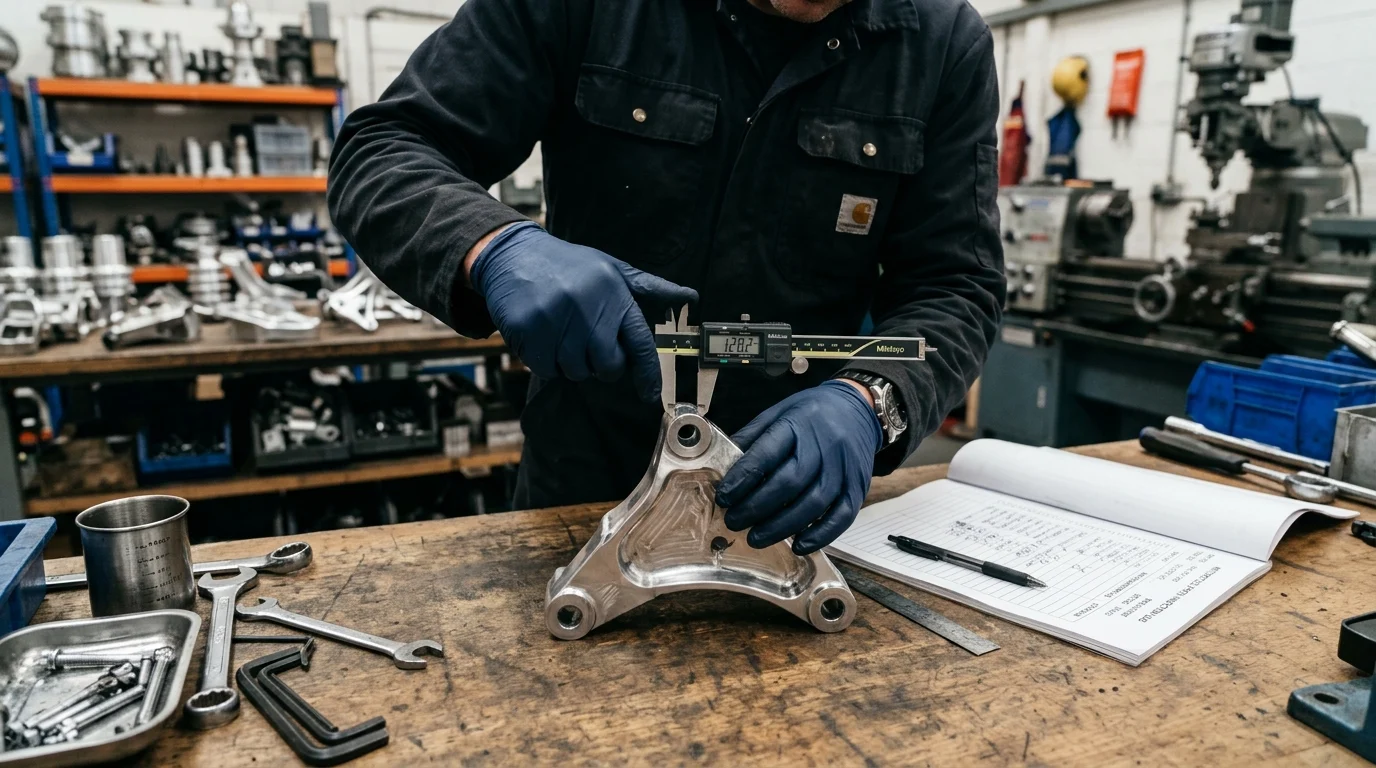
Before initiating contact with potential suppliers, procurement teams must establish an exhaustive technical dossier for every component. Ambiguity in product specifications is the leading cause of manufacturing defects and shipment rejections in the motorcycle parts industry. A strictly defined technical baseline ensures that all subsequent vendor evaluations, cost analyses, and quality control inspections are anchored to objective metrics.
Parts classification by application and quality level
Motorcycle components must be categorized not only by their functional system but also by their required quality tier. Parts generally fall into critical systems (engine, transmission, braking), structural components (frame, suspension), and peripheral accessories (fairings, mirrors). Each category demands distinct manufacturing capabilities and material grades.
| Component Category | Typical Material / Grade | Critical Manufacturing Tolerance | Required Supplier Certification |
|---|---|---|---|
| Engine Cylinders | Cast Iron / A356 Aluminum | ± 0.01 mm | IATF 16949 |
| Brake Rotors | High-Carbon 420 Stainless Steel | ± 0.05 mm | ISO 9001, ECE R90 |
| Drive Chains | High-Carbon Alloy Steel | Tensile strength > 30 kN | ISO 9001 |
| Plastic Fairings | Injection-Molded ABS | ± 1.00 mm | ISO 9001 |
Establishing the quality level—ranging from economy aftermarket replacements to premium performance upgrades—dictates the acceptable material standards and defect tolerances. High-performance applications require advanced metallurgical properties, whereas economy parts prioritize cost-efficient alloys and higher production throughput.
Specifications, interchangeability, and documentation
A comprehensive request for quotation (RFQ) package must include precise 2D engineering drawings, 3D CAD models, and exhaustive material specifications. Relying solely on OEM cross-reference numbers is insufficient, as aftermarket suppliers frequently alter internal geometries to bypass patents or reduce tooling costs. Documentation should explicitly state acceptable material compositions, surface finish requirements (e.g., anodizing thickness in microns), and performance testing parameters.
Interchangeability is a vital concept in motorcycle parts sourcing. Many manufacturers utilize shared platforms across multiple vehicle models. For example, a single stator coil or brake caliper design might service five different models produced between 2015 and 2023. Mapping these interchangeability matrices allows buyers to consolidate SKUs, aggregate purchasing volumes, and negotiate superior pricing tiers based on combined annual demand.
Comparing OEM and aftermarket options
Procurement professionals must navigate the complex trade-offs between Original Equipment Manufacturer (OEM) parts, Original Equipment Supplier (OES) parts, and independent aftermarket alternatives. OEM parts guarantee exact fitment and compliance but carry premium pricing, often yielding lower gross margins for the importer. OES components—manufactured by the same factories producing the OEM parts but sold without the motorcycle brand’s logo—offer a lucrative middle ground, typically costing 15% to 25% less than their OEM counterparts.
Independent aftermarket parts present the highest margin potential, frequently costing 30% to 50% less than OEM equivalents. However, this cost reduction requires the buyer to assume full responsibility for quality assurance and fitment validation. Sourcing aftermarket components necessitates robust internal engineering resources to verify that the supplier’s reverse-engineered designs do not compromise vehicle safety or performance.
How to Evaluate Motorcycle Parts Suppliers
The supplier selection process in the motorcycle parts industry requires rigorous due diligence to separate capable manufacturers from generic trading companies. A structured evaluation framework mitigates the risk of partnering with vendors who lack the necessary technical infrastructure, financial stability, or quality management systems to sustain long-term export volumes.
Supplier qualification criteria
Evaluating a motorcycle parts supplier begins with verifying their quality management certifications. While ISO 9001 is a foundational requirement, suppliers holding IATF 16949 certification demonstrate a commitment to automotive-grade quality standards, which is highly desirable for critical components like braking and suspension systems. The audit process must also assess the supplier’s in-house capabilities versus their reliance on subcontractors. Facilities that outsource critical processes, such as heat treatment or CNC machining, introduce additional layers of quality risk and lead-time variability.
Financial health and production capacity are equally critical. Buyers should verify the supplier’s annual turnover, export percentage, and major market exposure. A supplier producing 500,000 engine valves annually with 80% exported to European markets is generally a safer partner for an EU-based importer than a facility heavily reliant on domestic sales. Furthermore, assessing the supplier’s defect rate history—targeting a metric of less than 1.5% for mechanical components—provides insight into their process control maturity.
How to compare quotations beyond price
Evaluating supplier quotations strictly on the ex-works (EXW) unit price frequently leads to inaccurate cost projections. A Total Cost of Ownership (TCO) model must be employed to capture all hidden expenditures. This includes amortized tooling costs, which can range from $2,000 for simple plastic injection molds to over $15,000 for complex aluminum die-casting tools. Buyers must clarify tool ownership, maintenance responsibilities, and guaranteed shot lifespans.
Additionally, quotations must be analyzed for material surcharges, minimum order quantity penalties, and packaging costs. A supplier offering a unit price that is 10% lower but requires a 50% higher MOQ may negatively impact the buyer’s cash flow and inventory holding costs. Comparing the financial terms, such as the required deposit percentage and payment milestones (e.g., 30% advance, 70% against Bill of Lading), is also essential for optimizing working capital.
A sourcing process to reduce defects and delays
Implementing a stringent quality assurance protocol is mandatory to prevent defective parts from entering the export supply chain. This process begins with the First Article Inspection (FAI). Before mass production commences, the supplier must provide initial samples for rigorous dimensional, material, and fitment testing. Mass production must only be authorized after formal FAI sign-off.
During production runs, utilizing Acceptable Quality Limit (AQL) standards ensures consistency. For motorcycle components, a standard inspection might utilize AQL 1.5 for major defects (e.g., dimensional out-of-tolerance) and AQL 4.0 for minor defects (e.g., superficial cosmetic scratches). Pre-shipment inspections (PSI) conducted by independent third-party agencies provide a final safeguard, verifying that the batch meets all specified criteria before the container is sealed and ownership is transferred.
Compliance, Packaging, and Logistics Essentials
Exporting motorcycle parts involves navigating a complex web of international trade regulations, specialized packaging requirements, and logistical hurdles. Failure to strictly adhere to destination-market compliance standards or improper handling during transit can result in severe financial penalties, confiscated shipments, and critical supply chain bottlenecks.
Compliance, labeling, and traceability requirements
Motorcycle components are heavily regulated due to their impact on vehicle safety and environmental emissions. Importers must ensure that parts meet the specific homologation standards of the destination country. For the United States, parts such as lighting, mirrors, and brake hoses must comply with Department of Transportation (DOT) FMVSS standards. In the European Union, the E-mark certification is mandatory; for instance, headlamps must meet ECE R113 specifications, while brake friction materials require ECE R90 approval.
Labeling and traceability are equally enforced. Components and their retail packaging must clearly display country of origin markings, batch numbers, and manufacturer identification codes. Implementing robust lot traceability allows importers to execute targeted product recalls in the event of a discovered defect, isolating the issue to a specific production run (e.g., a batch of 5,000 brake master cylinders) rather than recalling an entire year’s inventory.
Packaging, shipping modes, and Incoterms
Motorcycle parts are susceptible to physical damage, corrosion, and theft during international transit. Machined steel and cast iron components must be treated with rust inhibitors and sealed in Volatile Corrosion Inhibitor (VCI) bags to withstand the high-humidity environment of ocean freight. Fragile items, such as plastic fairings and instrument clusters, require custom-molded EPS foam or heavy-duty corrugated compartmentalization to prevent crush damage.
| Incoterm | Primary Responsibility Transfer | Best Used For | Typical Cost Impact on Buyer |
|---|---|---|---|
| EXW (Ex Works) | At the supplier’s factory floor | Highly controlled, consolidated logistics | High logistics cost, low unit price |
| FOB (Free On Board) | When goods pass the ship’s rail | Standard ocean freight shipments | Moderate logistics cost, baseline unit price |
| FCA (Free Carrier) | At a named delivery place/terminal | Air freight or mixed-mode transport | Moderate logistics cost, baseline unit price |
| DDP (Delivered Duty Paid) | At the buyer’s destination facility | Turnkey, hands-off procurement | Zero direct logistics cost, highest unit price |
Selecting the appropriate Incoterm dictates the division of risk and logistical costs. FOB remains the industry standard for ocean freight, allowing the buyer to control the international ocean carrier selection and negotiate freight rates directly, while placing the burden of export clearance and port delivery on the supplier.
Common customs and delivery failure points
Customs clearance delays frequently stem from inaccurate documentation, specifically the misclassification of Harmonized System (HS) codes. Motorcycle parts generally fall under Chapter 87 (e.g., 8714.10 for motorcycles, including mopeds, parts, and accessories). However, generic components like standard bearings or fasteners may be classified under different chapters, potentially attracting different tariff rates. Incorrect classification can lead to audits and punitive fines.
Delivery failures also occur due to poor container loading practices. Improper weight distribution or insufficient dunnage can cause pallet collapse during rough seas. When containers arrive damaged or held up in customs, buyers face exorbitant demurrage and detention fees, which can accumulate at a rate of $150 to $300 per day, rapidly eroding the profitability of the shipment.
How to Build a Scalable Sourcing Strategy
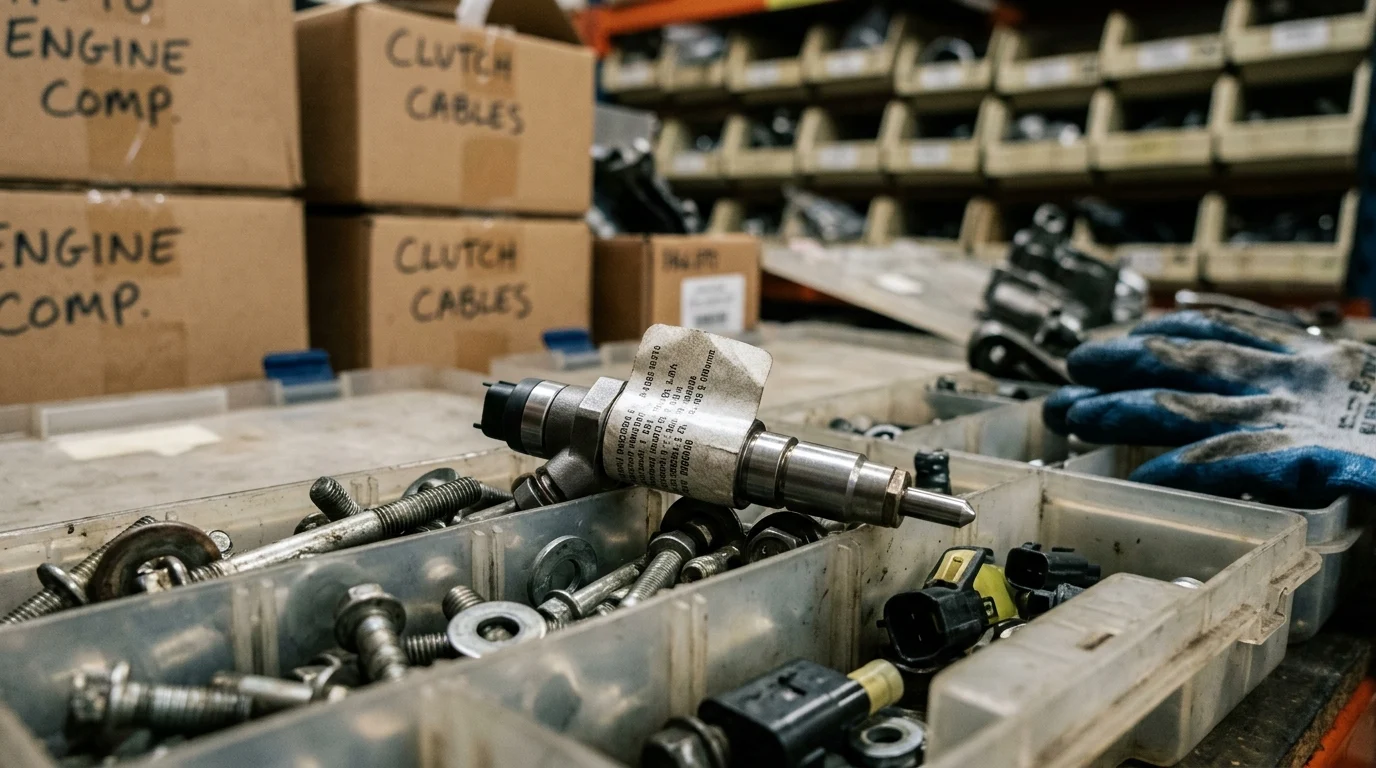
As procurement volumes scale, organizations must transition from reactive purchasing to proactive supply chain management.
Key Takeaways
- The most important conclusions and rationale for motorcycle parts
- Specs, compliance, and risk checks worth validating before you commit
- Practical next steps and caveats readers can apply immediately
Frequently Asked Questions
What should I define before requesting motorcycle parts quotes?
Prepare an RFQ with part drawings, material grades, tolerances, target market, packaging needs, and compliance requirements. Clear specs reduce defects and speed up supplier evaluation.
How can I reduce quality risks when sourcing motorcycle parts for export?
Audit factory capability, confirm ISO or relevant certifications, approve samples, and set inspection standards before mass production. Use pre-shipment checks for critical parts like brake and engine components.
Which motorcycle parts need the strictest sourcing controls?
Focus most on braking, engine, transmission, and suspension parts. These require tighter tolerances, traceable materials, and stable manufacturing processes to meet export market expectations.
How does VETOR GROUP support global motorcycle parts buyers?
VETOR GROUP offers factory-based supply, OEM customization, quality-focused production, and fast export support. This helps buyers balance price, precision, and delivery across multiple motorcycle part categories.
How can buyers improve pricing and lead times for export orders?
Plan around regional demand seasons, combine compatible SKUs, and negotiate MOQs early. Off-peak production and direct factory sourcing can lower costs and secure faster delivery.