
Introduction
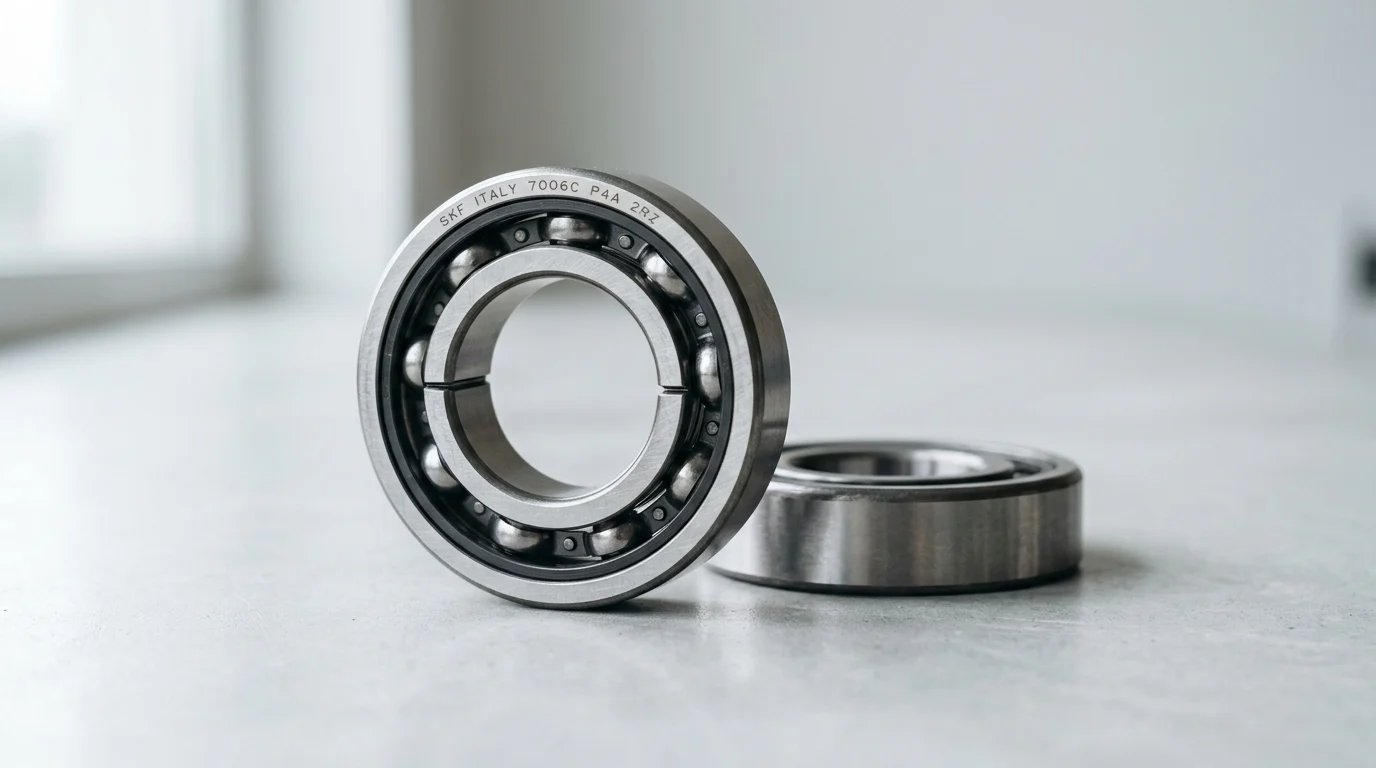
Selecting bearings for precision machinery means balancing far more than basic load ratings. At high rotational speeds, factors such as speed factor, heat generation, lubrication regime, preload, cage design, and material choice directly affect accuracy, vibration, and service life. The right decision can improve spindle stability, reduce thermal growth, and prevent premature failure in demanding applications like CNC equipment, aerospace systems, and centrifuges. This article explains the key criteria used to evaluate high speed bearings, how operating conditions change bearing behavior, and what to compare when matching a bearing to real machine performance requirements.
Why high speed bearings matter in precision machinery
In the realm of precision machinery, such as CNC machine tool spindles, aerospace actuators, and high-speed centrifuges, the kinematic performance of rotary components dictates the fundamental capability of the entire system. High speed bearings are engineered to operate under extreme rotational velocities where standard rolling-element bearings would rapidly succumb to centrifugal forces, excessive heat generation, and dynamic instability. The defining metric for these applications is the speed factor (Ndm), calculated by multiplying the bearing pitch diameter in millimeters by the rotational speed in revolutions per minute (RPM).
When engineering systems targeting an Ndm factor exceeding 1,000,000—and frequently pushing past 1,800,000 in advanced electro-spindles—the selection of the bearing becomes the primary bottleneck for machine design. At these velocities, internal bearing dynamics shift dramatically; centrifugal forces on the rolling elements alter contact angles, and gyroscopic moments induce micro-sliding. Consequently, specifying the correct high speed bearing is not merely a matter of load capacity, but a complex optimization problem involving tribology, thermodynamics, and rotordynamics.
Effects on speed, accuracy, heat, and uptime
The operational speed of a bearing directly dictates the thermal equilibrium of the precision machine. As rotational velocities increase, internal friction from elastohydrodynamic lubrication (EHL) film shearing and rolling element spin generates substantial heat. If this heat is not efficiently dissipated, the resulting thermal expansion can alter the internal clearance of the bearing, leading to a catastrophic loss of operational tolerance. In precision grinding spindles, for instance, thermal drift must be controlled to within 2 to 3 micrometers to maintain part accuracy.
Furthermore, dynamic stiffness is intrinsically linked to operating speed. High-speed angular contact bearings must maintain a rigid shaft position under varying cutting loads while avoiding resonant frequencies. A drop in uptime is frequently correlated with a failure to manage the thermal-mechanical loop: excess heat reduces lubricant viscosity, which degrades the EHL film thickness, thereby increasing metal-to-metal contact, generating more heat, and ultimately forcing a machine shutdown.
Common failure modes in precision applications
Failure in high-speed precision applications rarely stems from classical metal fatigue (L10 life exhaustion) due to heavy applied loads. Instead, empirical industry data indicates that approximately 60% to 70% of high-speed bearing failures are lubrication-related. Lubricant starvation at speeds above 1,500,000 Ndm causes rapid surface distress, manifesting as micro-spalling or smearing on the raceways.
Another prevalent failure mode is true brinelling (micro-indentation) caused by improper handling or excessive static loading during tool changes. Because precision bearings utilize highly refined raceway geometries and ultra-hard materials, even a 5-micron indentation can generate severe vibration signatures at 30,000 RPM. Additionally, cage failure is a significant risk; at extreme rotational speeds, the centrifugal stress on standard phenolic or brass cages can cause them to fracture, necessitating the use of advanced polymer cages like PEEK (Polyether Ether Ketone) guided by the outer ring.
Technical criteria for selecting high speed bearings
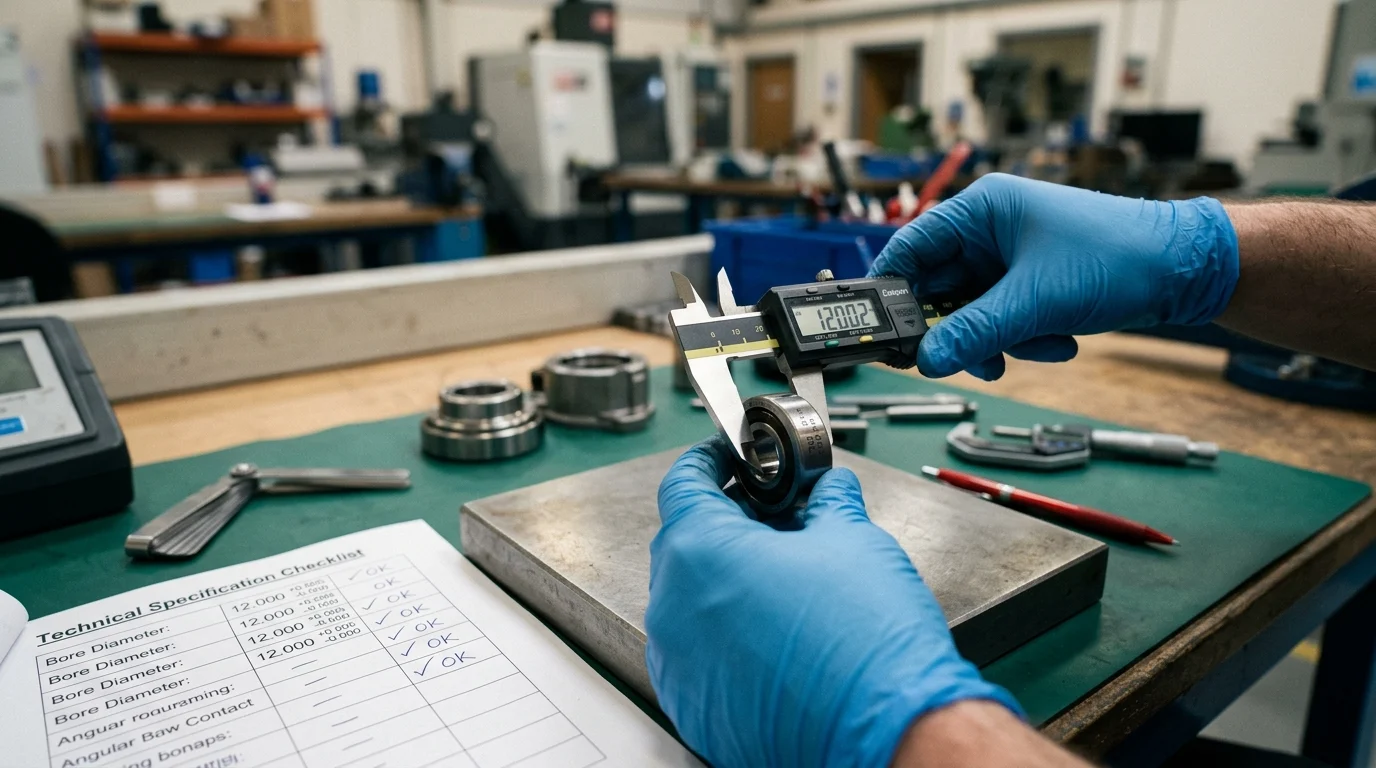
Specifying bearings for high-velocity environments requires a granular evaluation of internal geometry, material science, and tribological support systems. Engineers must transition away from catalog-standard static and dynamic load ratings, focusing instead on kinematic limitations, internal stress distribution, and thermal stability under continuous operation.
Bearing type, preload, clearance, and load
Super-precision angular contact ball bearings are the standard for high-speed spindles due to their ability to accommodate simultaneous radial and axial loads. The contact angle is a critical parameter: a 15-degree contact angle (typically designated as ‘C’) is favored for maximum speed and radial stiffness, while a 25-degree angle (‘E’) offers higher axial rigidity at the cost of a slightly reduced maximum speed limit. Cylindrical roller bearings are also utilized for pure radial support at the non-driven end, accommodating thermal shaft expansion.
Preload is engineered to eliminate internal clearance, increasing system rigidity and preventing ball skidding. However, preload must be carefully calibrated; a standard light preload (e.g., 50N to 150N for a 40mm bore) might be sufficient for high-speed routing, whereas heavy milling requires a medium or heavy preload (up to 500N) to resist deflection. Variable preload systems, utilizing hydraulic or piezoelectric actuators, are increasingly common in machines that require both low-speed heavy roughing and high-speed fine finishing.
Materials, lubrication, sealing, and thermal control
Material selection represents a major divergence between standard and high-speed bearings. Hybrid bearings, which pair ultra-clean 52100 vacuum-degassed steel rings with silicon nitride (Si3N4) ceramic rolling elements, are the industry standard for extreme speeds. Ceramic balls offer a density of 3.2 g/cm³, compared to 7.8 g/cm³ for steel, drastically reducing centrifugal forces and internal friction at high RPMs.
Lubrication strategies must match the speed factor. Grease lubrication is typically limited to an Ndm of 800,000 to 1,200,000, utilizing specialized synthetic greases with low kinematic base oil viscosity (e.g., 25 cSt at 40°C). For speeds up to 2,000,000 Ndm, oil-air (minimal quantity lubrication) systems are mandatory. These systems deliver precisely metered micro-droplets of oil (often 10 to 30 mm³/hour) directly to the raceway, minimizing churning losses while providing continuous cooling.
Comparison factors for performance and service life
When comparing bearing configurations for a specific application, engineers must balance maximum speed capability against dynamic stiffness and thermal behavior. The table below illustrates the typical performance differentials between standard steel and hybrid ceramic angular contact bearings in a 50mm bore configuration.
| Performance Metric | All-Steel (52100) | Hybrid Ceramic (Si3N4 Balls) |
|---|---|---|
| Max Speed Factor (Grease) | ~850,000 Ndm | ~1,300,000 Ndm |
| Max Speed Factor (Oil-Air) | ~1,400,000 Ndm | ~2,200,000 Ndm |
| Rolling Element Density | 7.8 g/cm³ | 3.2 g/cm³ |
| Thermal Expansion Coefficient | 11.5 x 10⁻⁶ /K | 3.2 x 10⁻⁶ /K |
| Elastic Modulus | 210 GPa | 310 GPa |
The higher elastic modulus of silicon nitride increases the static stiffness of the bearing but reduces the contact ellipse area, which can increase Hertzian contact stress under heavy loads. Therefore, hybrid bearings excel in high-speed, light-load applications but require careful fatigue life calculations if heavy shock loads are anticipated.
How to compare suppliers and quality standards
Procuring high speed bearings for precision machinery extends beyond selecting the correct part number; it requires rigorous vetting of the manufacturer’s quality control, manufacturing tolerances, and supply chain transparency. Microscopic deviations in manufacturing can lead to macroscopic failures at operating speeds of 40,000 RPM or higher.
Tolerances, inspection, and traceability
Dimensional and running accuracies are governed by strict international tolerance classes. For high-speed applications, bearings must meet or exceed ABEC 7 (ISO P4) standards, with ultra-precision applications demanding ABEC 9 (ISO P2). At the ISO P4 level, the radial runout of the inner ring for a standard machine tool bearing is restricted to less than 2.5 micrometers, and surface finish (Ra) on the raceways must be polished to 0.1 to 0.2 micrometers.
Buyers must evaluate a supplier’s inspection methodology. Top-tier manufacturers utilize roundness testers, laser interferometry, and automated optical inspection (AOI) to verify raceway geometry and ball grade (often Grade 3 or better for high-speed applications, meaning ball diameter variation is less than 0.08 micrometers). Furthermore, lot traceability is non-negotiable. Suppliers must provide documentation linking specific bearing serial numbers to the exact heat of the steel, the heat treatment batch, and the dimensional inspection report.
ISO and application-specific compliance
Baseline compliance with ISO 9001 is a prerequisite, but precision bearing manufacturers should also demonstrate adherence to sector-specific standards depending on the end-use. For aerospace actuators, AS9100 certification is mandatory, enforcing strict aerospace-grade risk management and configuration control. For automotive or high-volume industrial spindles, IATF 16949 certification indicates a robust statistical process control (SPC) environment.
Additionally, buyers should seek suppliers who comply with ISO 15242 for measuring vibration in rolling bearings. A supplier’s ability to provide 100% vibration testing data (often categorized into low, medium, and high-frequency bands) prior to shipment is a strong indicator of their quality assurance maturity, ensuring that no bearing with subsurface defects or micro-contaminants enters the assembly line.
Practical selection process for buyers
Transitioning from engineering specifications to a finalized procurement contract requires a structured selection process. Buyers must harmonize the technical demands of the engineering team with the commercial realities of the supply chain, establishing a workflow that mitigates risk while optimizing total cost of ownership.
Step-by-step workflow from requirements to validation
The selection workflow should commence with a rigid definition of the application’s kinematic and environmental constraints: maximum RPM, duty cycle, ambient temperature, and external loads. Once the target Ndm and required L10 nominal life (typically >10,000 hours for industrial spindles) are established, buyers should issue a Request for Quotation (RFQ) that includes these specific parameters rather than just a generic dimensional envelope.
Following initial supplier proposals, the validation phase begins. This involves procuring small batches for prototype testing. A standard validation protocol for a high-speed spindle bearing involves a minimum 500-hour continuous run-in and endurance test at maximum operating speed. During this test, engineers monitor vibration spectra, acoustic emissions, and outer ring temperature. Only suppliers whose bearings maintain a temperature delta of less than 15°C above ambient and show no degradation in the vibration signature should proceed to the approved vendor list.
Balancing price, lead time, customization, and support
Commercial friction often arises when balancing peak performance against lead time and unit cost. Standard super-precision steel bearings may cost between $150 and $300 per unit with lead times of 8 to 12 weeks. Conversely, custom-preloaded hybrid ceramic bearings with specialized PEEK cages can command prices exceeding $800 per unit, with lead times stretching from 20 to 26 weeks due to specialized ceramic ball sourcing.
Buyers must also navigate Minimum Order Quantities (MOQs). While standard ISO P4 bearings might be available off-the-shelf, custom contact angles or specialized grease fills frequently trigger MOQs of 50 to 100 units. To mitigate supply chain disruptions, procurement teams should negotiate blanket purchase orders with scheduled releases, ensuring the supplier holds safety stock. Evaluating the supplier’s regional application engineering support is equally critical; a lower upfront price is quickly negated if the supplier cannot dispatch an engineer to assist with a complex spindle rebuild or failure analysis.
Final decision framework

The final selection of a high speed bearing supplier should be an objective, data-driven process. Relying solely on brand reputation or lowest initial cost introduces unacceptable risk into precision machinery manufacturing. A structured decision framework synthesizes both engineering and commercial data into a single, actionable metric.
Using a selection matrix to rank options
A weighted decision matrix provides the most transparent method for ranking competing bearing solutions. Cross-functional teams—comprising engineering, procurement, and quality assurance—should assign relative weights to critical criteria based on the specific machine’s market positioning. For a high-end aerospace 5-axis CNC, kinematic performance and reliability will heavily outweigh unit cost.
| Evaluation Criteria | Weight (%) | Supplier A (Standard P4) | Supplier B (Hybrid P2) |
|---|---|---|---|
| Kinematic Performance (Max Ndm) | 30% | 6/10 (Max 1.2M Ndm) | 10/10 (Max 2.0M Ndm) |
| L10 Service Life Expectancy | 25% | 7/10 (12,000 hrs) | 9/10 (18,000 hrs) |
| Unit Cost | 20% | 9/10 ($180/unit) | 4/10 ($550/unit) |
| Lead Time & Supply Chain | 15% | 8/10 (10 weeks) | 5/10 (22 weeks) |
| Technical Support & Traceability | 10% | 7/10 | 9/10 |
| Total Weighted Score | 100% | 7.15 / 10 | 7.70 / 10 |
In this matrix, despite Supplier B’s significantly higher cost and longer lead time, their superior speed capabilities and extended service life yield a higher overall score, making them the preferred choice for a cutting-edge precision application.
Final recommendation criteria for approval
Before final approval and issuance of a purchase order, the recommended bearing solution must pass a Total Cost of Ownership (TCO) review.
Key Takeaways
- The most important conclusions and rationale for high speed bearings
- Specs, compliance, and risk checks worth validating before you commit
- Practical next steps and caveats readers can apply immediately
Frequently Asked Questions
What bearing type is best for high speed precision machinery?
Super-precision angular contact ball bearings are usually the first choice for CNC spindles and similar equipment because they handle high speed with good radial and axial accuracy.
How do I choose the right contact angle for high speed bearings?
Use 15° for higher speed and radial stiffness, and 25° when your application needs more axial rigidity. Match the angle to spindle speed and cutting load.
Why is lubrication so critical in high speed bearings?
Because most high speed bearing failures are lubrication-related. Use the correct grease or oil-air system, control supply rate, and avoid starvation above very high Ndm levels.
How important are preload and clearance in high speed bearing selection?
They are critical. Light preload suits higher-speed, lighter-load work, while medium or heavy preload supports heavier cutting. Incorrect preload can raise heat, vibration, and wear.
Can VETOR GROUP support OEM high speed bearing sourcing for global buyers?
Yes. VETOR GROUP offers factory-based bearing supply, OEM customization, quality-focused production, and fast export service for buyers needing precision and cost-effective sourcing.