
Introduction
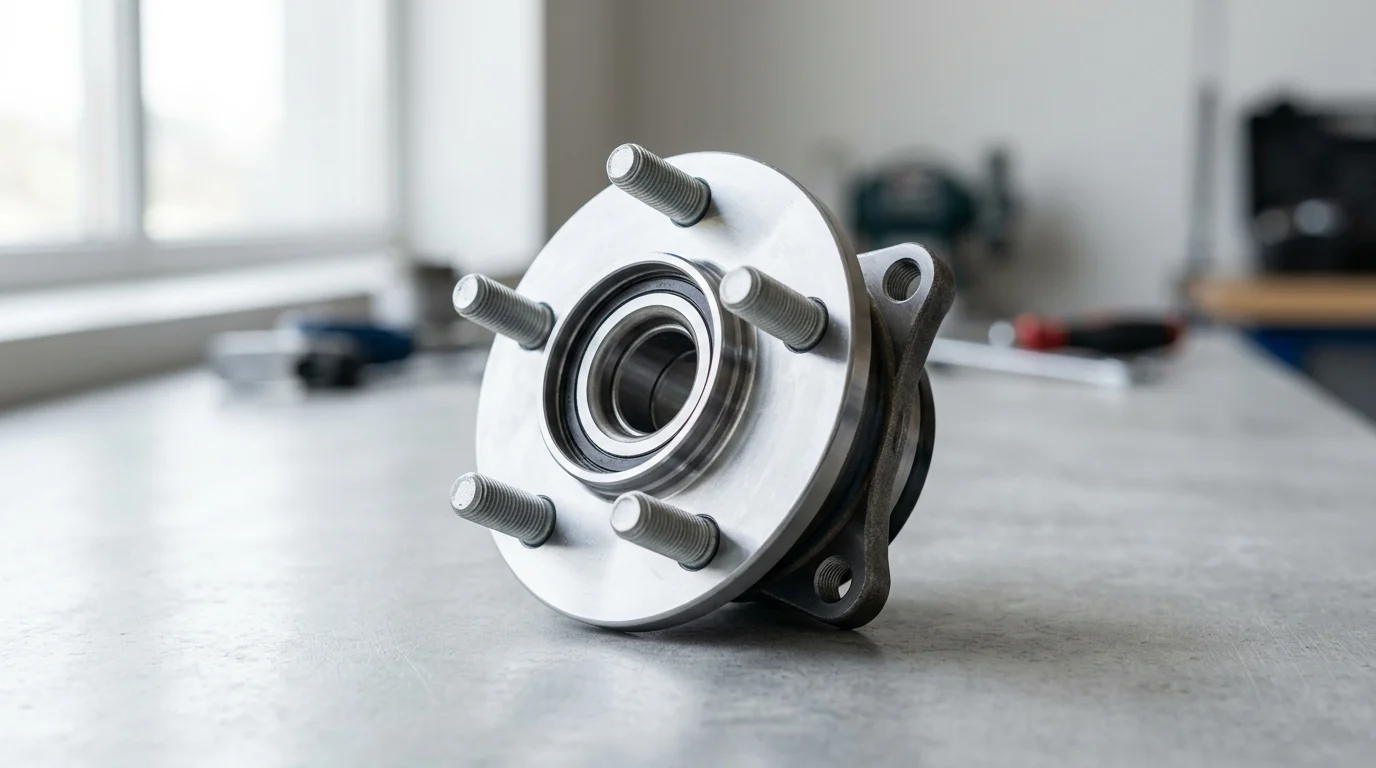
In high-volume auto wheel bearing production, small clearance deviations can lead to noise, premature wear, and costly batch rework. Bearing clearance detectors make fast screening practical by measuring internal radial or axial play at line speed, helping manufacturers catch out-of-spec parts before assembly moves downstream. This article explains what these detectors actually measure, why clearance is a reliable early indicator of bearing quality, and how they support low-PPM quality targets in mass production. It also sets up the key production points where automated clearance testing delivers the most value, providing a clear foundation for the methods and workflow described next.
Using Bearing Clearance Testing for Auto Wheel Bearings
Ensuring the structural and operational integrity of an auto wheel bearing requires precise control over its internal geometry. Modern automotive manufacturing operates under strict quality mandates, frequently demanding defect rates below 50 Parts Per Million (PPM). To meet these aggressive targets, manufacturers utilize bearing clearance testing as a primary diagnostic tool. Internal clearance—the total distance one bearing ring can move relative to the other radially or axially—dictates load distribution and fatigue life. Utilizing automated clearance detectors enables facilities to evaluate these microscopic tolerances at production speeds without destroying the component.
Why fast screening matters
High-volume automotive assembly lines cannot tolerate inspection bottlenecks. Traditional manual measurement techniques require skilled metrologists and minutes per part, making them unviable for mass production. This speed is critical because cycle times for auto wheel bearing production typically range from 5 to 15 seconds per unit. Automated clearance detectors synchronize with these cycle times, evaluating the mechanical play of every unit in real-time. This immediate feedback loop prevents the compounding of errors, ensuring that out-of-tolerance batches are isolated before they advance to costly downstream processes like greasing and sealing.
Where clearance detectors fit in production
Clearance detectors are strategically positioned at critical junctures within the manufacturing workflow. In most facilities, these systems are integrated immediately following the automated assembly of the inner ring, outer ring, rolling elements, and cage. By placing the clearance testing rig at this end-of-line (EOL) mechanical assembly stage, manufacturers can verify the dimensional stack-up of all sub-components. Additionally, clearance detectors are often used in incoming quality control (IQC) by Tier 1 automotive suppliers to audit batches of bearings before they are pressed into steering knuckles or hub assemblies.
What Bearing Clearance Reveals About Quality
An auto wheel bearing’s internal clearance is not merely a dimensional specification; it is a comprehensive indicator of assembly quality and component compatibility. Analyzing radial and axial play provides a non-destructive window into the internal conditions of the bearing, revealing whether the raceway grinding, ball sorting, and ring matching processes were executed correctly.
Acceptable internal clearance conditions
Acceptable internal clearance varies significantly depending on the bearing’s architectural generation. For standard first-generation (Gen 1) double-row angular contact bearings, acceptable radial clearance typically falls within a precise band of 15 to 30 microns. Conversely, third-generation (Gen 3) hub units often require a preloaded state to maximize stiffness, meaning the target clearance is intentionally negative, commonly ranging from -10 to -30 microns. Clearance detectors must be calibrated to measure these specific micron-level ranges accurately, as deviations outside the acceptable bandwidth compromise the bearing’s structural stability.
Links to noise, preload, and heat
Clearance directly influences the acoustic and thermal performance of the auto wheel bearing under dynamic loads. Excessive internal clearance leads to uneven load distribution, causing the rolling elements to skid rather than roll, which generates high-frequency vibration and audible noise. Insufficient clearance, or excessive preload, eliminates the necessary space for thermal expansion and lubrication film formation. As the bearing operates, friction-induced heat causes the steel to expand; without adequate clearance, operating temperatures can rapidly exceed 120°C, leading to lubricant degradation, severe metal-to-metal contact, and premature spalling.
Defects detectable through clearance testing
Beyond verifying the design dimensions, high-speed clearance testing acts as a diagnostic tool for specific manufacturing anomalies. A clearance reading that is anomalously high by 50 microns or more often indicates a missing rolling element or the use of an undersized ball grade during the sorting phase. Similarly, highly variable clearance readings during spindle rotation suggest raceway runout, elliptical ring distortion, or an improperly seated cage. By capturing these distinct clearance signatures, quality control systems can identify and categorize specific assembly defects.
How to Screen Auto Wheel Bearing Quality Quickly
Executing high-volume clearance screening requires a synchronized interplay of precision mechanics, sensors, and automated material handling. Achieving reliable data at mass-production speeds necessitates strict adherence to standardized testing workflows and environmental controls.
Step-by-step high-volume workflow
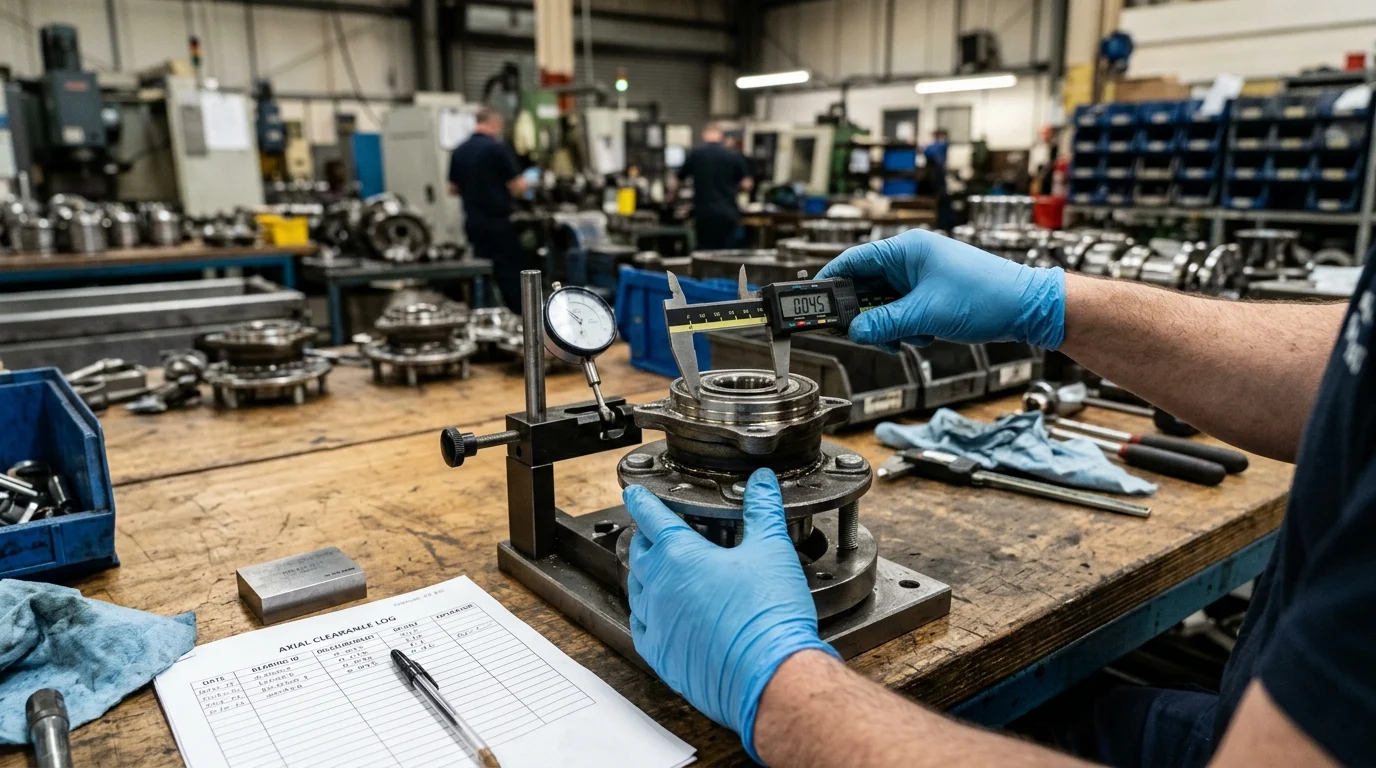
The high-volume screening workflow begins with robotic or pneumatic transfer mechanisms loading the auto wheel bearing into the testing fixture. Once seated, a pneumatic clamp applies a standardized axial or radial load—typically ranging from 49 N to 147 N, depending on the bearing size—to seat the rolling elements against the raceways. The detector then oscillates or rotates one of the rings while a highly sensitive Linear Variable Differential Transformer (LVDT) measures the displacement. The system captures the peak-to-peak movement, logs the data to a centralized Manufacturing Execution System (MES), and triggers a pneumatic diverter to route the bearing to either a ‘pass’ or ‘fail’ chute, all within a 3- to 8-second cycle.
Test specifications and pass-fail thresholds
Establishing rigorous pass-fail thresholds is critical for minimizing false positives and false negatives. These thresholds are dictated by the bearing’s application and generation.
| Bearing Type | Typical Testing Load (N) | Target Clearance / Preload (µm) | Reject Threshold Deviation (µm) |
|---|---|---|---|
| Gen 1 (Standard) | 98 | +15 to +30 | ± 5 |
| Gen 2 (Flanged) | 147 | 0 to +15 | ± 4 |
| Gen 3 (Hub Unit) | 147 | -10 to -30 | ± 3 |
Bearings falling outside these strict reject thresholds are automatically quarantined. The data is continuously monitored using Statistical Process Control (SPC) software to detect tool wear or assembly drift before the defect threshold is breached.
Controls for fixturing, cleanliness, and temperature
Precision clearance detection is highly sensitive to external variables. The testing environment must maintain strict thermostatic control, typically at 20°C ± 2°C, because bearing steel has a linear thermal expansion coefficient of approximately 12 µm/m/°C. A temperature fluctuation of just a few degrees can artificially alter the clearance reading by several microns, leading to false rejections. Furthermore, stringent cleanliness protocols are mandatory. A single 5-micron metallic particulate trapped between a ball and the raceway during testing will artificially reduce the measured clearance, rendering the screening data invalid. Consequently, clearance detectors are often housed in positive-pressure enclosures.
Comparing Clearance Detectors with Other Inspection Methods
While clearance detectors are indispensable, they are part of a broader metrology ecosystem used in automotive manufacturing. Understanding how clearance testing compares to alternative inspection methodologies—such as Coordinate Measuring Machines (CMM) and vibration analysis—is essential for designing an optimized quality assurance strategy.
Comparison criteria for inspection methods
When evaluating inspection methods for auto wheel bearings, engineers prioritize three main criteria: measurement resolution, cycle time compatibility, and the ability to detect functional assembly errors. CMMs offer unparalleled geometric precision, mapping the exact topography of individual components. Vibration testers (anderometers) evaluate the dynamic acoustic signature of the fully assembled bearing. Clearance detectors occupy the middle ground, providing rapid, highly accurate verification of the dimensional stack-up and mechanical play of the assembled unit.
Trade-offs in cost, speed, labor, and defect detection
Each inspection methodology presents distinct trade-offs regarding capital expenditure, throughput, and defect visibility.
| Inspection Method | Avg. Cycle Time | Primary Defect Detected | Capital Cost Band (USD) | Labor Requirement |
|---|---|---|---|---|
| Clearance Detector | 3–8 seconds | Stack-up errors, missing balls | $30,000 – $80,000 | Low (Automated) |
| CMM Metrology | 5–15 minutes | Component geometry deviations | $80,000 – $250,000 | High (Skilled Tech) |
| Vibration Testing | 10–20 seconds | Surface defects, contamination | $40,000 – $100,000 | Low to Medium |
CMMs are too slow for 100% inline inspection, relegating them to batch sampling and first-article inspection. Vibration testing is excellent for finding raceway scratches but cannot quantify internal play. Clearance detectors provide the optimal balance for mass screening, offering the speed required for 100% inspection while reliably identifying critical assembly and tolerance stack-up failures.
Selecting the Right Bearing Clearance Testing Approach
Procuring and deploying the correct clearance testing architecture requires aligning equipment capabilities with production volumes and risk management policies. Automotive suppliers must systematically evaluate both the hardware specifications and the overarching inspection methodology to maximize their return on investment.
Key equipment selection criteria
Selecting a high-performance clearance detector hinges on specific technical specifications. The LVDT sensors utilized must feature a measurement resolution of at least 0.1 microns to guarantee accuracy on tight-tolerance Gen 3 hubs. Furthermore, the gauge repeatability and reproducibility (GR&R) metric is paramount; automotive standards generally require a GR&R of less than 10% to ensure the equipment’s measurement variation does not consume the part’s tolerance band. Buyers must also evaluate the stability of the pneumatic or servo-driven clamping system, as pressure fluctuations (e.g., deviations outside a 0.4 to 0.6 MPa operating window) will cause inconsistent seating of the bearing rings and erratic clearance data.
Choosing between 100% inspection and sampling
Manufacturers must decide between implementing 100% inline inspection or relying on statistical sampling. For safety-critical components like auto wheel bearings, particularly Gen 2 and Gen 3 units where preload dictates vehicle handling and safety, 100% inspection is increasingly mandated by OEM contracts. However, for aftermarket Gen 1 bearings or lower-tier components, facilities may employ Acceptable Quality Limit (AQL) sampling—such as ISO 2859-1 AQL 0.65. While sampling reduces initial capital expenditure on testing rigs, it introduces the risk of defective units escaping into the supply chain, potentially leading to catastrophic field failures.
Decision guidance for manufacturers and buyers
For plant managers and procurement teams, the decision framework should balance upfront capital costs against the long-term financial impact of defect escapes. Investing $50,000 in a fully automated clearance detector is easily justified when it prevents a single $500,000 OEM warranty claim or a mass recall. Buyers should prioritize equipment vendors that offer robust MES integration, allowing clearance data to be tied to the serial number of each auto wheel bearing for full traceability. Ultimately, deploying precise clearance testing is not merely a quality control expense, but a strategic asset for safeguarding brand reputation and maintaining Tier 1 supplier status.
Key Takeaways
- The most important conclusions and rationale for Auto Wheel Bearing
- Specs, compliance, and risk checks worth validating before you commit
- Practical next steps and caveats readers can apply immediately
Frequently Asked Questions
What does a bearing clearance detector check in an auto wheel bearing?
It measures radial or axial internal play between bearing rings. This quickly confirms whether assembly, ball sorting, and ring matching are within the specified micron range.
Why is fast clearance screening important for mass wheel bearing production?
It keeps inspection aligned with 5–15 second production cycles, prevents bottlenecks, and isolates bad batches before greasing, sealing, or hub assembly adds extra cost.
What defects can abnormal clearance readings reveal?
They can indicate missing rolling elements, wrong ball size, raceway runout, ring distortion, or cage seating problems. Rotational variation is especially useful for spotting assembly instability.
Where should clearance detectors be installed in the production process?
They are best placed right after mechanical bearing assembly and also used in IQC to audit incoming batches before installation into steering knuckles or hub units.
How can VETOR GROUP support buyers needing reliable auto wheel bearings?
VETOR GROUP offers factory-based bearing supply, precision manufacturing, OEM support, and export service, helping global buyers source cost-effective wheel bearings with consistent quality control.