
Precision automotive bearings operate under high rotational speed, temperature variation, and load complexity. The core conclusion is straightforward: ABEC ratings define dimensional tolerances, while ISO standards define broader performance, quality, and testing frameworks. Selecting the correct bearing requires understanding how these two systems interact rather than treating them as interchangeable metrics. Misinterpretation of ABEC ratings often leads to over-specification, increased cost, and no measurable performance gain in automotive applications.
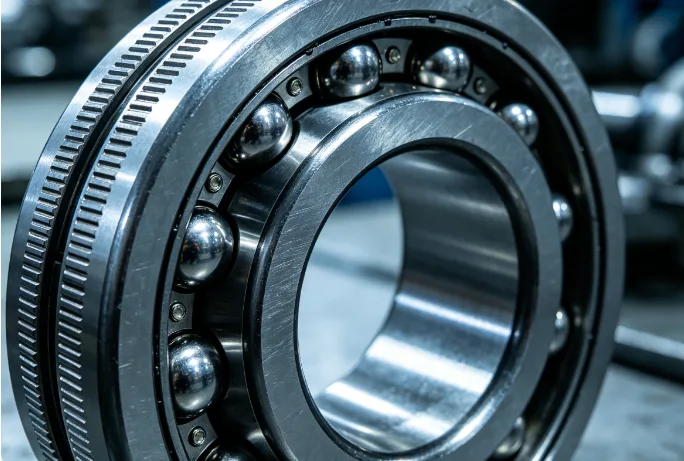
What Are ABEC Ratings in Precision Automotive Bearings
ABEC ratings (Annular Bearing Engineering Committee) specify tolerance classes for ball bearings, primarily focusing on dimensional accuracy such as bore diameter, outer diameter, and runout. ABEC ratings range from ABEC 1 to ABEC 9, with higher numbers indicating tighter tolerances.
ABEC ratings do not measure lubrication quality, material composition, or load capacity. This limitation is critical in automotive engineering, where environmental and mechanical stresses often dominate performance outcomes. For example, an ABEC 7 bearing may not outperform an ABEC 3 bearing in a wheel hub if lubrication and sealing are inadequate.
Key Differences Between ABEC Ratings and ISO Standards
ABEC ratings and ISO standards serve complementary roles rather than competing functions. ISO standards, such as ISO 492, define tolerance classes similar to ABEC but extend into material quality, vibration levels, and testing procedures.
| Parameter | ABEC Ratings | ISO Standards (ISO 492) |
|---|---|---|
| Focus | Dimensional tolerance | Comprehensive performance |
| Scale | ABEC 1–9 | ISO Class 0–2–4–5–6 |
| Vibration/Noise Control | Not included | Included in extended standards |
| Global Adoption | Primarily North America | International |
Why ABEC Ratings Alone Are Insufficient for Automotive Bearings
Automotive bearing performance depends on multiple engineering variables beyond dimensional precision. According to research from the U.S. Department of Energy, friction losses in drivetrain components account for up to 15% of total energy loss in vehicles.
This data indicates that lubrication, sealing, and material science influence efficiency more than dimensional tolerance alone. Therefore, relying solely on ABEC ratings can lead to incomplete engineering decisions.
For example, high-speed transmission systems benefit from optimized lubrication regimes rather than tighter tolerances alone. This distinction is critical when selecting components such as precision automotive bearings designed for thermal stability.
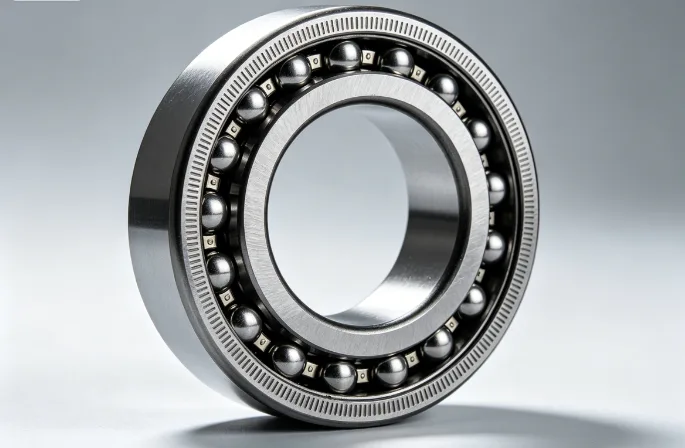
ISO Standards for Precision Automotive Bearings Explained
ISO standards provide a broader framework for evaluating bearing quality. ISO 492 defines tolerance classes, while ISO 281 focuses on bearing life calculation. These standards incorporate fatigue life, load ratings, and reliability metrics.
| ISO Standard | Focus Area | Application Context |
|---|---|---|
| ISO 492 | Dimensional tolerances | High-speed rotation systems |
| ISO 281 | Bearing life calculation | Load and fatigue prediction |
| ISO 15243 | Failure analysis | Root cause identification |
These frameworks are essential for evaluating high precision bearing solutions used in automotive powertrains.
Practical Comparison: ABEC vs ISO in Automotive Applications
In real-world automotive systems, ABEC ratings are often mapped to ISO tolerance classes:
| ABEC Rating | Equivalent ISO Class |
|---|---|
| ABEC 1 | ISO Class Normal |
| ABEC 3 | ISO Class 6 |
| ABEC 5 | ISO Class 5 |
| ABEC 7 | ISO Class 4 |
| ABEC 9 | ISO Class 2 |
However, ISO standards extend further by incorporating vibration and noise limits, which are critical in electric vehicles. Research from the National Renewable Energy Laboratory highlights that noise reduction in EV drivetrains is a key design factor.
This insight reinforces the importance of ISO-based evaluation when selecting low noise automotive bearings .
How to Select the Right Bearing Based on ABEC and ISO Standards
Selecting a bearing requires aligning application requirements with both tolerance and performance criteria. The process includes:
- Define rotational speed and load conditions
- Evaluate environmental exposure (temperature, contamination)
- Match tolerance requirements using ABEC or ISO classes
- Validate fatigue life using ISO 281 calculations
This structured approach ensures compatibility with automotive bearing applications such as wheel hubs, transmissions, and electric motors.
Engineering studies from MIT emphasize that system-level optimization often outweighs component-level precision improvements:
Common Misconceptions About ABEC Ratings
A common misconception is that higher ABEC ratings always deliver better performance. This assumption ignores application-specific requirements. For instance, off-road vehicles prioritize durability and contamination resistance over ultra-tight tolerances.
Another misconception is that ABEC ratings apply equally to all bearing types. In reality, ABEC standards primarily address ball bearings and do not fully cover roller bearings or specialized designs.
These misunderstandings can lead to incorrect selection of industrial precision bearings in automotive contexts.
Data-Driven Insights: Performance Impact of Bearing Standards
Empirical data from NASA tribology research indicates that bearing failure is more often linked to lubrication breakdown than dimensional inaccuracies.
This finding highlights a critical engineering principle: system reliability depends on multiple interacting variables, not just tolerance class. Therefore, ISO-based evaluation provides a more holistic approach.
Additionally, a 2025 report from the European Automobile Manufacturers Association confirms that drivetrain efficiency improvements increasingly rely on material science and lubrication technology rather than tolerance tightening alone.
Key Takeaways for Engineers and Buyers
The relationship between ABEC ratings and ISO standards can be summarized in three key points:
- ABEC ratings define dimensional precision but do not reflect full performance
- ISO standards provide a comprehensive framework including life, noise, and reliability
- Optimal bearing selection requires combining both systems with application-specific analysis
These conclusions support informed decision-making when sourcing automotive grade bearings for modern vehicles.
FAQ: ABEC Ratings and ISO Standards for Bearings
1. What does ABEC rating actually measure in a bearing?
ABEC rating measures dimensional tolerances such as bore accuracy, outer diameter precision, and runout. ABEC rating does not evaluate material quality, lubrication, or load capacity. This limitation means ABEC rating alone cannot predict overall bearing performance in automotive systems.
2. How does ISO 492 differ from ABEC standards?
ISO 492 defines tolerance classes similar to ABEC but operates within a broader international framework. ISO standards integrate additional performance factors such as vibration and noise, making ISO more suitable for global automotive engineering applications.
3. Is a higher ABEC rating always better for automotive use?
A higher ABEC rating is not always beneficial. Automotive environments often prioritize durability, contamination resistance, and lubrication efficiency. Excessively tight tolerances may increase cost without improving performance under real operating conditions.
4. How are ISO bearing life calculations performed?
ISO 281 calculates bearing life based on dynamic load ratings, rotational speed, and reliability factors. Engineers use this standard to estimate fatigue life and predict maintenance intervals in automotive systems.
5. Can ABEC and ISO standards be used together in selection?
Yes, combining ABEC tolerance ratings with ISO performance standards provides a more complete evaluation. ABEC ensures dimensional accuracy, while ISO standards address reliability, lifespan, and operating conditions, enabling balanced engineering decisions.