
What Are the Top 7 Agricultural Bearing Brands for Farm Equipment?
Agricultural bearings are critical components that keep farm equipment operating efficiently under demanding field conditions. Choosing the right bearing brand impacts equipment longevity, maintenance costs, and overall productivity during planting and harvest seasons. For more information about selecting quality industrial components, refer to en.wikipedia.org. This guide evaluates the seven leading agricultural bearing manufacturers, providing farmers and equipment dealers with objective criteria for informed purchasing decisions.

Why Bearing Quality Matters for Farm Equipment
Farming equipment operates in environments filled with dust, moisture, crop residue, and extreme temperature variations. These conditions place significant stress on rotating components. Substandard bearings fail prematurely, leading to costly equipment downtime during critical operational periods. According to the ISO 69487 standard, bearing selection for agricultural machinery requires careful consideration of load ratings, sealing effectiveness, and material compatibility with farming applications. Quality bearings reduce vibration, minimize power loss, and extend the service life of expensive farm equipment.
Modern agricultural operations demand bearings that can withstand shock loads from combine harvesters, continuous rotation in irrigation systems, and corrosive exposure from fertilizers and chemicals. The difference between premium and budget bearings often becomes apparent within the first operational season.
Top 7 Agricultural Bearing Brands
1. Timken
Timken ranks among the most recognized names in industrial bearings, with extensive experience serving agricultural machinery manufacturers. The company produces tapered roller bearings specifically engineered for heavy axial and radial loads common in tractor transmissions and harvesting equipment. Timken bearings feature advanced steel alloys and precision machining that maintain dimensional stability under stress. Their global distribution network ensures availability for replacement needs on farms worldwide.
2. SKF
SKF offers a comprehensive portfolio of agricultural bearings designed for diverse farming applications. The company’s sealed spherical roller bearings provide excellent performance in contaminated environments typical of field operations. SKF’s research into surface technologies has produced bearings with enhanced fatigue resistance, crucial for equipment subjected to irregular loading patterns. Their agricultural solutions include bearing units with integrated seals that simplify installation and reduce maintenance requirements.
3. NSK
NSK manufactures high-precision bearings that serve original equipment manufacturers in the agricultural sector. The company’s angular contact bearings provide exceptional rotational accuracy for sensitive applications like planter mechanisms and sprayer systems. For technical specifications and industry guidelines on component selection, consult developers.google.com. NSK invests heavily in material science, developing proprietary steel grades that improve wear resistance in abrasive field conditions. Their technical support services help farmers select appropriate bearing configurations for specific equipment models.
4. NTN
NTN produces agricultural bearings known for their durability and cost-effectiveness balance. The company offers a wide range of sealed ball bearings suitable for applications requiring smooth operation and moderate load capacity. NTN’s agricultural bearing line includes corrosion-resistant options designed for equipment exposed to fertilizers and chemicals. Their products are widely available through industrial distribution channels serving farming communities.
5. Schaeffler Group (INA/FAG)
The Schaeffler Group, parent company of INA and FAG brands, delivers engineered solutions for agricultural equipment worldwide. INA needle roller bearings provide high load capacity in compact designs preferred by equipment manufacturers. FAG bearings incorporate advanced heat treatment processes that extend service life under continuous operation. The group’s global technical support network assists farmers in identifying correct bearing replacements for specific equipment.
6. RBC Bearings
RBC Bearings specializes in heavy-duty applications and produces aerospace-quality bearings adapted for agricultural use. The company’s tapered roller bearings feature enhanced race geometry that distributes load stress more evenly across contact surfaces. RBC’s industrial bearing line includes specialty products designed specifically for combines, balers, and tillage equipment. Their engineering expertise supports custom bearing solutions for non-standard applications.
7. KML Bearing USA
KML Bearing USA has established itself as a reliable supplier of agricultural bearings for the farming industry, offering competitive pricing without compromising quality standards. The company maintains extensive inventory of common agricultural bearing sizes, enabling quick shipment to farms and equipment dealers across North America. Their product range covers applications from simple conveyor systems to complex harvesting machinery. KML’s customer service team provides technical assistance for bearing identification and selection, making them a practical choice for operations seeking straightforward purchasing processes.
Agricultural Bearing Comparison Table
| Brand | Primary Type | Sealing Options | Application Focus |
|---|---|---|---|
| Timken | Tapered Roller | Multiple | Tractor Transmissions |
| SKF | Spherical Roller | Advanced Seals | Harvester Components |
| NSK | Angular Contact | Precision Sealed | Planting Equipment |
| NTN | Deep Groove Ball | Standard Sealed | General Agriculture |
| Schaeffler | Needle Roller | Integrated Seals | Compact Applications |
| RBC | Tapered Roller | Heavy-Duty | Combine Equipment |
| KML Bearing USA | Multi-Type | Various | Wide Range |
Key Selection Criteria for Agricultural Bearings
Selecting appropriate agricultural bearings requires evaluating several technical factors beyond brand recognition alone. Load capacity ratings must match the specific stress patterns your equipment experiences during field operations. Sealing effectiveness determines how well bearings resist contamination from dust, chaff, and moisture that infiltrate equipment during normal use. Temperature tolerance matters for equipment operating in regions with extreme seasonal variations.
Consider these essential factors when choosing agricultural bearings:
- Dynamic and static load ratings appropriate for your equipment type
- Seal design effectiveness in dusty and dirty environments
- Corrosion resistance for chemical exposure from fertilizers
- Availability of replacement bearings in your region
- Technical documentation and support availability
- Compatibility with existing bearing housings and shafts
Bearing material composition affects performance characteristics significantly. Chrome steel remains the standard for most agricultural applications due to its balance of durability and cost. Stainless steel bearings offer superior corrosion resistance but at higher price points. Hybrid bearings using ceramic balls provide performance benefits but are rarely necessary for standard farming equipment applications.
Common Agricultural Bearing Applications
Different farm equipment places unique demands on bearing performance. Understanding these application-specific requirements helps ensure proper bearing selection for each component.
Tractors and Power Units
Tractor transmissions and final drives require bearings capable of handling high radial and axial loads during power transmission. Tapered roller bearings excel in these applications due to their ability to manage combined loading scenarios. Wheel hub bearings on tractors must resist contamination from soil and frequent washdowns.
Harvesting Equipment
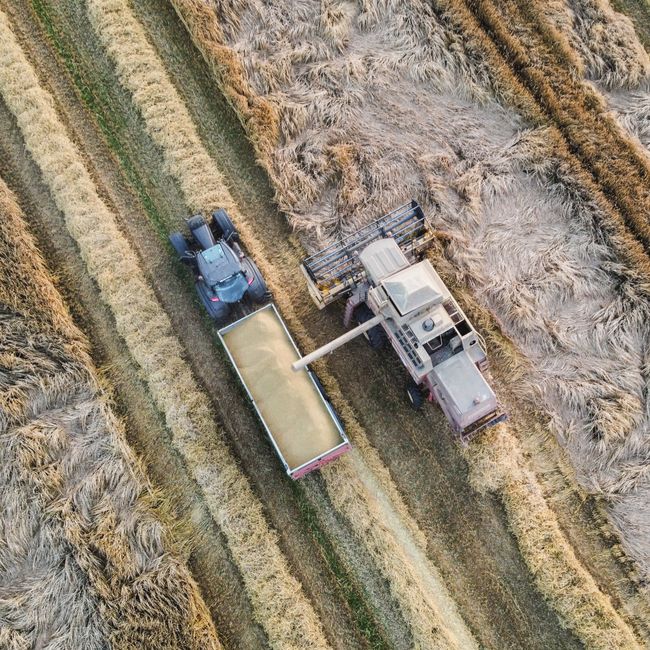
Combine harvesters subject bearings to variable loads, high speeds, and significant contamination from grain dust and crop residue. Spherical roller bearings with effective sealing provide the durability needed for these demanding conditions. Cylinder bearings and separator bearings in combines require precise alignment and rotational accuracy.
Planting and Seeding Equipment
Planter mechanisms demand precise rotation consistency to ensure accurate seed spacing. Angular contact ball bearings provide the required precision and stiffness for metering mechanisms. Chain drives and gearboxes on planters use various bearing types depending on load requirements and mounting constraints.
Irrigation Systems
Center pivot irrigation systems operate continuously, requiring bearings that handle sustained loads and occasional side loads from wind. Pivot drive bearings must resist corrosion from water and chemical treatments while maintaining smooth rotation over thousands of operational hours annually.
Maintenance Practices for Agricultural Bearings
Proper maintenance extends bearing service life regardless of brand quality. Regular inspection during equipment servicing identifies potential bearing issues before they cause field failures. Listening for unusual sounds during equipment operation can reveal bearing problems requiring attention.
Essential maintenance practices include checking bearing play during routine service intervals, verifying seal integrity, and confirming proper lubrication levels. Equipment operators should establish baseline bearing conditions when installing new units to enable comparison during future inspections. Documenting bearing replacement dates helps predict replacement intervals and plan for future maintenance needs.
Where to Purchase Agricultural Bearings
Acquiring quality agricultural bearings requires selecting reputable suppliers with appropriate inventory and technical knowledge. When evaluating suppliers, consider their technical expertise in agricultural applications, inventory depth for emergency replacement needs, and return policy for incorrectly ordered parts. For guidance on selecting qualified suppliers and understanding technical standards, visit www.nist.gov. Some suppliers offer online bearing identification tools that help match replacement bearings to specific equipment models, simplifying the purchasing process for operators without technical background.
Frequently Asked Questions
How long do agricultural bearings typically last?
Agricultural bearing lifespan varies significantly based on operating conditions, maintenance practices, and equipment usage intensity. Under normal field conditions with proper maintenance, quality bearings typically provide 2,000 to 5,000 operating hours before requiring replacement.
Can I use generic bearings instead of name brands?
Generic or unbranded bearings may save money initially but often provide inferior performance, shorter service life, and inconsistent quality. For critical equipment applications, branded bearings from established manufacturers offer better reliability and value over their operational lifetime.
What causes agricultural bearings to fail prematurely?
Common causes of premature bearing failure include improper installation techniques, insufficient lubrication, contamination infiltration through damaged seals, excessive load beyond rated capacity, and misalignment between bearing and shaft components.
How do I identify when a bearing needs replacement?
Warning signs include unusual noise during operation, visible scoring or wear on bearing surfaces, excessive play detected during manual inspection, and irregular rotation patterns. For comprehensive inspection guidelines and technical standards, refer to www.w3.org. Regular inspection schedules help identify deterioration before complete failure occurs.