
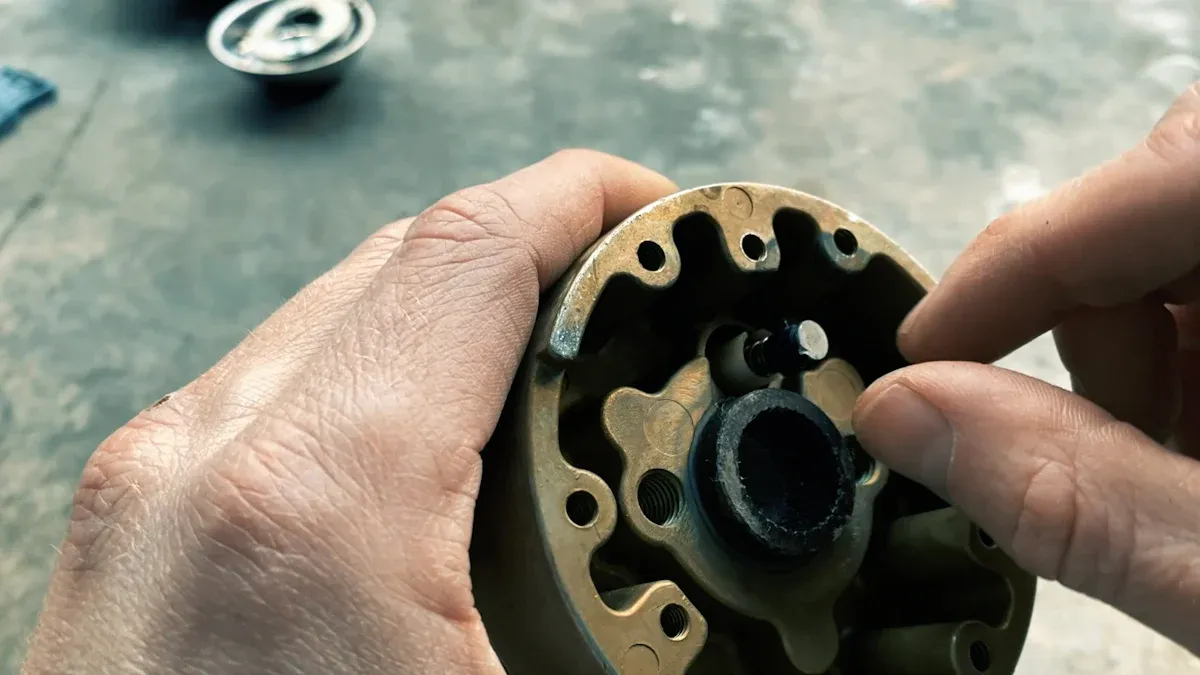
Proper installation of pillow block bearings is crucial for ensuring functionality and longevity. A correctly installed mounted bearing minimizes wear and maximizes efficiency. Using adapter sleeves offers several advantages, including simplified maintenance and reduced risk of damage during installation. However, improper installation can lead to common issues such as misalignment, overtightening, and using the wrong shaft fit for the shaft support bearing. Addressing these concerns early can prevent costly downtime and enhance overall performance, making it a maintenance-friendly bearing choice.
Key Takeaways
- Proper installation of pillow block bearings is essential for maximizing performance and longevity. Follow the correct steps to avoid costly issues.
- Gather the right tools, such as a locknut spanner and hydraulic nut, to ensure a smooth installation process. Safety gear like gloves and safety glasses is also crucial.
- Prepare the work area by keeping it clean and well-lit. This reduces the risk of accidents and helps in accurate installation.
- Check the shaft for surface quality and alignment before installation. Even minor misalignment can significantly reduce bearing life.
- Regular inspections and proper lubrication are key to maintaining pillow block bearings. This prevents overheating and extends their lifespan.
Required Tools for Pillow Block Bearings
Installing pillow block bearings requires specific tools to ensure a successful and efficient process. Having the right equipment not only simplifies the installation but also enhances safety and accuracy.
Essential Tools
To effectively install pillow block bearings with adapter sleeves, gather the following essential tools:
- Locknut Spanner: This tool is crucial for tightening the locknut during the mounting process. It ensures that the bearing remains securely in place.
- Hydraulic Nut: This tool applies pressure to position the adapter sleeve or bearing correctly. It helps achieve the necessary fit without damaging the components.
In addition to these tools, consider having the following on hand:
- Torque Wrench: This tool allows for precise tightening of fasteners to the manufacturer’s specifications.
- Caliper: Use a caliper to measure the shaft diameter and ensure compatibility with the pillow block bearing.
- Hammer: A soft-faced hammer can assist in gently tapping components into place without causing damage.
Safety Gear
Safety should always be a priority during installation. Proper safety gear protects individuals from potential hazards associated with the installation process. Recommended safety gear includes:
- Safety Glasses: Protects the eyes from debris and potential hazards.
- Gloves: Provides grip and protects hands from sharp edges and heavy components.
- Steel-Toed Boots: Offers foot protection against heavy items that may fall during installation.
By equipping oneself with the right tools and safety gear, individuals can ensure a smoother installation process for pillow block bearings, ultimately leading to better performance and longevity.
Preparation for Pillow Block Bearing Installation

Assessing the Work Area
Before beginning the installation of pillow block bearings, it is essential to assess the work area. A clean and organized workspace minimizes the risk of accidents and ensures that all tools and components are easily accessible. Here are some key considerations for preparing the work area:
- Cleanliness: Remove any debris, dust, or contaminants from the installation site. A clean area prevents foreign particles from entering the bearing during installation.
- Lighting: Ensure adequate lighting to facilitate visibility. Proper lighting helps in accurately aligning components and reduces the likelihood of errors.
- Space: Provide enough space to maneuver tools and components. A cramped workspace can lead to mistakes and increase the risk of injury.
By taking these steps, individuals can create a safe and efficient environment for installing pillow block bearings.
Preparing the Shaft
Proper shaft preparation is critical for the successful installation of pillow block bearings. The shaft must meet specific requirements to ensure optimal performance and longevity of the bearing. Here are essential steps to prepare the shaft:
-
Surface Quality: The shaft surface should have a roughness (Ra) below 0.8μm. Poor surface quality can significantly impact bearing life. A smooth surface reduces friction and wear, enhancing the bearing’s performance.
-
Alignment: Ensure that the shaft is aligned correctly. Just 0.1mm of misalignment can reduce bearing life by over 10%. Misalignment is a leading cause of premature failure, so it is crucial to check alignment before proceeding.
-
Axial Movement: Verify that the shaft has the appropriate axial clearance. Insufficient clearance can cause overheating, while excessive clearance may lead to vibration. Proper clearance is essential for maintaining performance.
| Common Error | Effect on Bearing Performance |
|---|---|
| Surface Quality | Shaft surface roughness (Ra) should be below 0.8μm for optimal performance. Poor surface quality can significantly impact bearing life. |
| Misalignment | Just 0.1mm misalignment can reduce bearing life by over 10%. Misalignment is a leading cause of premature failure. |
| Axial Movement | Insufficient axial clearance can cause overheating, while excessive clearance leads to vibration. Proper clearance is essential for performance. |
Additionally, there is a strong positive correlation between the magnitude of misalignment and vibration intensity. Increased misalignment escalates dynamic instability in the bearing system. Addressing these common shaft preparation errors can significantly enhance the performance and longevity of pillow block bearings.
Mounting the Pillow Block Bearing
Aligning the Bearing
Proper alignment of the pillow block bearing is essential for optimal performance. Misalignment can lead to increased friction, heat generation, and premature wear. To achieve accurate alignment, follow these techniques:
- Use a solid baseplate for mounting to ensure stability.
- Ensure proper torque on fasteners to maintain alignment.
- Utilize laser alignment systems for precision.
- Check for soft foot conditions to avoid distortion in the bearings.
Mounting pillow blocks onto a single baseplate simplifies alignment. Shim and move the entire plate to align with the pump. Dowel pins can help maintain alignment after installation. For minute adjustments, consider using jacking dogs. These tools allow for precise tuning of the alignment, ensuring the bearing operates efficiently.
Installing the Adapter Sleeve
Installing the adapter sleeve correctly is crucial for securing the pillow block bearing. Begin by sliding the adapter sleeve onto the shaft. Ensure that the sleeve fits snugly against the bearing. Next, tighten the locknut using a locknut spanner. The recommended torque values for tightening adapter sleeves vary based on the bearing size and load conditions. The following table outlines the appropriate torque values:
| Bearing Size | Normal Load (ft-lbs) | Heavy Load (ft-lbs) |
|---|---|---|
| UK205 | 11 – 22 | 14 – 29 |
| UK206 | 14 – 29 | 22 – 43 |
| UK207 | 22 – 43 | 36 – 72 |
| UK208 | 29 – 58 | 43 – 87 |
| UK209 | 29 – 58 | 43 – 87 |
| UK210 | 36 – 72 | 54 – 108 |
| UK211 | 51 – 101 | 76 – 152 |
| UK212 | 72 – 145 | 105 – 210 |
| UK213 | 80 – 159 | 119 – 239 |
| UK215 | 94 – 188 | 134 – 268 |
| UK216 | 116 – 231 | 170 – 340 |
| UK217 | 148 – 297 | 217 – 434 |
| UK218 | 177 – 354 | 260 – 521 |
Following these guidelines ensures that the adapter sleeve is securely fastened, preventing any potential issues during operation. Proper installation of the pillow block bearing with the adapter sleeve enhances overall performance and extends the lifespan of the components.
Assembling the Housing for Pillow Block Bearings
Securing the Bearing in Place
Securing the pillow block bearing in its housing is vital for preventing movement during operation. Proper techniques ensure stability and longevity. Consider the following best practices:
- Locknut Angular Tightening: Adjust the locknut to set the axial engagement of the bearing inner ring onto the tapered adapter sleeve. This method provides a secure fit.
- Radial Clearance Reduction: Measure the internal clearance reduction as the bearing is pushed along the adapter sleeve. This step ensures a proper fit and minimizes play.
- Hydraulic Take Up: Utilize a hydraulic nut to measure and ensure the correct engagement of the adapter sleeve into the bearing inner ring. This method enhances precision during installation.
By following these practices, technicians can effectively secure the pillow block bearing, reducing the risk of premature failure.
Final Adjustments and Checks
After assembling the housing, performing final adjustments and checks is crucial. These steps help confirm that the installation meets operational standards. Recommended checks include:
- Ensure the bearing pedestal surface is flat, with a preferred tolerance of 0.001 inch per foot.
- Check for gaps under the housing after proper torquing to the mounting surface using shim stock or a feeler blade.
- Avoid checking flatness on a flat inspection plate to prevent distortion; instead, check on a properly prepared flat surface.
Common mistakes during final adjustments can lead to significant issues. The table below outlines these mistakes:
| Common Mistakes | Description |
|---|---|
| Lubrication Issues | Problems related to insufficient or improper lubrication can lead to wear. |
| Misalignment | Incorrect alignment of the shaft and bearing can cause uneven loading. |
| Overheating | Excessive heat can result from misalignment and increased friction. |
By addressing these potential pitfalls, technicians can ensure the pillow block bearing operates efficiently and reliably.
Maintenance Tips for Pillow Block Bearings
Regular Inspection
Regular inspections play a vital role in maintaining the performance of pillow block bearings. Technicians should follow a systematic approach to identify potential issues early. Here are key aspects to consider during inspections:
- Visual Inspection: Look for signs of damage, such as cracks, dents, or corrosion on both the bearing and housing.
- Lubrication Level: Ensure that adequate grease is present and check for any contamination.
- Temperature Monitoring: Use an infrared thermometer to measure the temperature. Elevated temperatures may indicate underlying problems.
- Noise and Vibration: Listen for unusual sounds or vibrations that could signal wear or misalignment.
According to industry standards, the frequency of inspections varies based on machine type. The following table outlines recommended inspection intervals:
| Machine Type | Inspection Frequency |
|---|---|
| Heavy-duty or continuously running | At least once a week |
| Machines in harsh environments | Weekly or even daily |
| Standard industrial machines | Once a month |
| Lightly used or well-protected machines | Every few months |
Lubrication Guidelines
Proper lubrication is essential for the longevity and efficiency of pillow block bearings. Following these guidelines can help maintain optimal performance:
- A few pumps of grease from a standard grease gun are generally sufficient for lubrication.
- For sealed bearings, the seals primarily keep dirt out rather than retaining grease.
- If grease visibly depletes, it indicates that the bearing needs re-greasing.
- To re-grease, remove the zerc fitting and align the bearing holes before replacing it.
- Avoid over-greasing; too much grease can blow out seals and allow contaminants in.
- If the bearing has a grease groove and hole, it should be lubricated periodically.
Regular maintenance, including inspections and lubrication, extends the lifespan of pillow block bearings. Identifying and addressing common issues like overheating can prevent failures, ensuring smooth operation and reducing costs associated with repairs.
In summary, the installation of pillow block bearings with adapter sleeves involves several key steps:
- Shaft Assembly: Slide the seal ring, adapter sleeve, bearing, lockwasher, and lock nut onto the shaft in sequence.
- Clearance Adjustment: Lift the shaft to relieve pressure and measure clearance with feeler gauges.
- Locking Mechanism: Secure the lock washer by bending a tab into the lock nut’s grooves.
- Install Shaft Assembly: Ensure the housing is clean and carefully lower the bearings into position.
- Lubrication: Hand-pack the bearing with grease and fill the housing base cavity.
- Housing Cap Installation: Grease the seal grooves and align the housing cap before tightening bolts.
- Rotation Test: Rotate the shaft to check for seal binding and realign if necessary.
- Mounting Bolt Torque: Secure housing base bolts according to the specified torque.
Following best practices, such as ensuring proper lubrication and alignment, significantly impacts the service life of pillow block bearings. Regular maintenance checks can prevent issues like rust and vibration, enhancing overall performance. Technicians should prioritize these practices to ensure optimal functionality and longevity of their machinery.
FAQ
What is a pillow block bearing?
A pillow block bearing is a mounted bearing that supports a rotating shaft. It consists of a bearing housed in a block, providing stability and alignment for the shaft.
Why use adapter sleeves with pillow block bearings?
Adapter sleeves simplify the installation process by allowing easy adjustment of the bearing’s position on the shaft. They also reduce the risk of damage during installation and maintenance.
How often should I inspect pillow block bearings?
Inspect pillow block bearings regularly, ideally once a month. Increase frequency for heavy-duty or continuously running machines to weekly or daily inspections to catch potential issues early.
What are common signs of bearing failure?
Common signs of bearing failure include unusual noises, excessive vibration, overheating, and visible wear or damage. Address these issues promptly to prevent further damage.
Can I install pillow block bearings myself?
Yes, individuals with basic mechanical skills can install pillow block bearings. However, following proper procedures and safety guidelines is essential to ensure a successful installation.