
Self-aligning ball bearings are innovative components specifically designed for misalignment, making them ideal for various self-aligning bearing applications. Their unique construction allows for a certain degree of angular misalignment between the shaft and housing. This capability significantly reduces the risk of bearing failure from misalignment, ensuring smoother operation and extending the life of machinery.
Key Takeaways
- Self-aligning ball bearings adapt to misalignment, reducing wear and extending machinery life. This feature ensures smoother operations and less downtime.
- Understanding the types of misalignment—angular, parallel, and combination—helps identify potential issues early. Proactive measures can enhance machinery performance.
- Choosing the right self-aligning ball bearing based on expected misalignment, load type, and operational conditions can significantly improve efficiency and reliability.
Understanding Misalignment
Misalignment can be a significant challenge in industrial machinery. I have seen firsthand how it affects performance and efficiency. Misalignment occurs when the shafts of machinery do not align correctly. This misalignment can lead to increased wear and tear, ultimately causing machinery failure.
I want to share the common types of misalignment I have encountered:
| Type of Misalignment | Description |
|---|---|
| Angular Misalignment | Occurs when the equipment centerlines cross. |
| Parallel Misalignment | Exists when the centerlines of the two shafts are parallel but not concentric. |
| Combination Misalignment | Typically involves both angular and parallel misalignment occurring simultaneously. |
Understanding these types helps me identify potential issues before they escalate. For instance, I often notice:
- Parallel Misalignment: Centerlines are parallel but offset.
- Vertical Angle Misalignment: Shafts intersect at an angle in the vertical plane.
- Horizontal Angle Misalignment: Shafts intersect at an angle in the horizontal plane.
- Combined Vertical Angle and Offset Misalignment: One shaft is at an angle with another in the vertical plane.
- Combined Horizontal Angle and Offset Misalignment: One shaft is at an angle with another in the horizontal plane.
Recognizing these misalignments empowers me to take proactive measures. By addressing misalignment early, I can enhance machinery performance and extend its lifespan. This knowledge inspires me to choose the right solutions, like self-aligning ball bearings, to ensure smooth operations.
Definition of Misalignment
Misalignment is a crucial concept in the world of rotating machinery. I often see it as a silent enemy that can lead to significant issues if not addressed. In simple terms, misalignment occurs when the rotational centerlines of two coupled machines do not align as intended. This misalignment can manifest in two primary forms:
- Parallel (Offset) Misalignment: Here, the shafts are offset but remain parallel to each other.
- Angular Misalignment: In this case, the shafts intersect at an angle.
Understanding these definitions helps me recognize potential problems before they escalate. When I encounter parallel misalignment, I notice that the shafts may still function, but they do so inefficiently. This inefficiency can lead to increased wear on components and ultimately shorten their lifespan.
On the other hand, angular misalignment can create more severe issues. The shafts may experience uneven loads, which can lead to vibrations and even catastrophic failure if left unchecked.
By grasping the definition of misalignment, I empower myself to take proactive measures. I can implement solutions like self-aligning ball bearings to mitigate these issues. These bearings adapt to misalignment, ensuring smoother operation and enhancing the overall performance of machinery.
Recognizing misalignment is the first step toward maintaining efficiency and reliability in any mechanical system.
Impact on Machinery Performance
Misalignment can significantly affect machinery performance. I have witnessed firsthand how even small misalignments can lead to major issues. When machinery operates with misalignment, it experiences several measurable effects that can hinder efficiency.
| Measurable Effect | Description |
|---|---|
| Increased Energy Consumption | Misalignment leads to higher energy usage as motors operate less efficiently, drawing more current. |
| Mechanical Wear | Excessive forces from misalignment accelerate wear on components like bearings and seals. |
| Operational Costs | Higher energy consumption and mechanical failures result in increased operational costs. |
These effects can create a ripple effect throughout the entire system. For instance, I often notice that misalignment causes premature failure of seals and bearings. This leads to costly replacements and higher operating costs.
Here are some consequences I have observed due to misalignment:
- Misalignment leads to premature failure of components, necessitating more frequent repairs.
- It increases energy consumption, which raises operational costs.
- Excessive vibrations caused by misalignment result in accelerated wear and tear, leading to more maintenance.
The impact of misalignment doesn’t stop there. Downtime due to misalignment leads to lost production. Equipment damages from misalignment require costly repairs. Overtime for repairs increases overall maintenance expenses.
By understanding these impacts, I feel empowered to take action. Choosing self-aligning ball bearings can help mitigate these issues, ensuring smoother operations and enhancing the overall performance of machinery.
How Self Aligning Ball Bearings Work
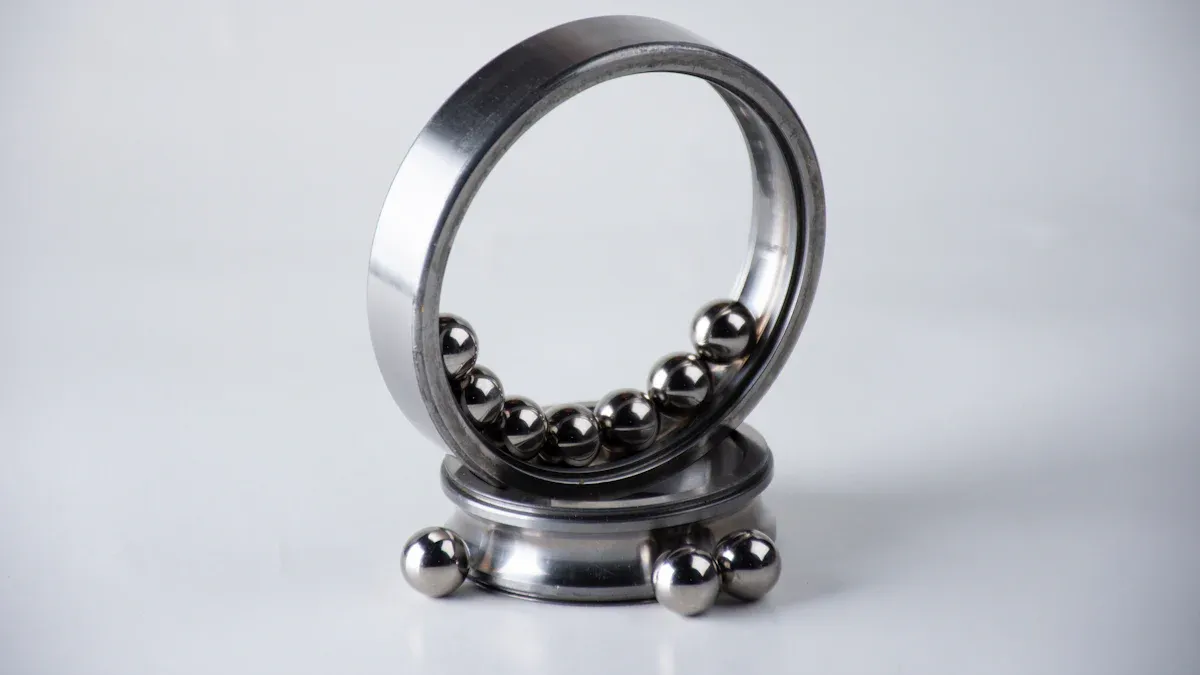
Self-aligning ball bearings operate on a fascinating principle that allows them to adapt to misalignment. I find it remarkable how their design enables them to maintain functionality even when the shafts deviate from their intended alignment. The spherical outer ring and double-row design play a crucial role in this adaptability.
Here’s how it works:
- The spherical outer ring raceway allows for automatic accommodation of angular misalignment.
- The inner surface of the outer ring is concave and spherical, enabling the balls to swivel around a common center.
- When the shaft deviates, the inner ring tilts, and the balls move as a unit, maintaining contact with the spherical outer raceway.
This self-aligning capability is essential for applications where shaft deviation, vibration, or instability occurs. I often see this feature in action, especially in machinery that experiences frequent changes in load or position.
When loads are applied to the bearings, they create relative motion between the inner and outer rings. This motion leads to several key actions:
- The rolling elements distribute the load evenly, which reduces friction and wear.
- If the bearing experiences deflection or tilting, the balls roll between the rings to self-align, keeping the load balanced.
- The tilted inner ring and ball assembly swivel within the spherical raceway, maintaining contact and eliminating internal stress.
I appreciate that self-aligning ball bearings can accommodate angular misalignment of up to 3 degrees without significantly increasing friction or heat. This tolerance level is impressive, especially when I consider the potential for machinery failure due to misalignment.
| Bearing Type | Maximum Misalignment |
|---|---|
| Open Bearings | Up to 3° |
| Sealed Bearings (2RS) | Approx. 1.5° to 2.5° |
In my experience, using self-aligning ball bearings for misalignment not only enhances performance but also extends the lifespan of machinery. Their ability to adjust to misalignment ensures smoother operations, which ultimately leads to increased efficiency and reduced maintenance costs.
By understanding how these bearings work, I feel empowered to make informed decisions in my projects. Choosing the right self-aligning ball bearing for misalignment can make all the difference in maintaining the reliability and efficiency of machinery.
Design Features
Self-aligning ball bearings boast several remarkable design features that enhance their performance and adaptability. I find it fascinating how these components are engineered to tackle misalignment effectively.
One standout feature is the spherical outer ring. This design allows for slight movement, accommodating misalignment without compromising functionality. The inner ring, with its dual raceways, holds the balls and cage securely. This configuration enables tilting and swiveling, which enhances the bearing’s self-aligning capability. Here’s a quick overview of how these elements work together:
- The outer ring has a common sphered raceway, allowing for slight movement to accommodate misalignment.
- The inner ring is designed with two raceways that hold the balls and cage, enabling tilting and swiveling.
- This configuration allows the bearing to adjust automatically to misalignment, enhancing its self-aligning capability.
Additionally, the materials used in constructing these bearings play a crucial role in their durability and efficiency. I often see the following materials in self-aligning ball bearings:
| Material Type | Description |
|---|---|
| Pressed Steel Cages | Commonly used for structural support |
| Polyamide | Used by some manufacturers as an alternative material |
These design features not only improve the bearings’ performance but also contribute to their longevity. I appreciate how thoughtful engineering can lead to such effective solutions for misalignment challenges. By choosing self-aligning ball bearings, I feel confident in enhancing the reliability and efficiency of my machinery.
Mechanics of Self-Alignment
Self-aligning ball bearings operate through a remarkable mechanism that allows them to adjust to misalignment effortlessly. I find it fascinating how these bearings can maintain their functionality even when the shafts deviate from their intended alignment.
The mechanics of self-alignment hinge on a few key principles:
- Spherical Outer Ring: The outer ring has a spherical shape. This design allows it to accommodate angular misalignment without losing contact with the balls.
- Ball Movement: When misalignment occurs, the balls roll within the raceways. This rolling action helps distribute the load evenly, reducing stress on the bearing.
- Tilt and Swivel: The inner ring can tilt and swivel. This flexibility allows the bearing to adjust automatically, maintaining optimal performance.
Tip: When selecting self-aligning ball bearings, consider their ability to handle misalignment. This feature can save you time and money in maintenance.
I have seen firsthand how these mechanics work in various applications. For instance, in conveyor systems, the bearings adapt to changes in load and position. This adaptability ensures smooth operation, even in challenging environments.
By understanding the mechanics of self-alignment, I feel empowered to make informed choices. Choosing the right self-aligning ball bearing can significantly enhance the reliability and efficiency of machinery.
Advantages of Using Self Aligning Ball Bearings for Misalignment
Using self-aligning ball bearings for misalignment offers numerous advantages that I have come to appreciate in my work. These bearings are not just components; they are solutions that enhance the performance and reliability of machinery. Here are some key benefits I have observed:
-
Adaptability to Misalignment: Self-aligning ball bearings excel in situations where shafts bend or housing is not perfectly aligned. They can accommodate both static and dynamic misalignment, which is crucial in unpredictable environments. This adaptability reduces downtime and maintenance costs, making them a dependable choice for manufacturers.
-
High-Speed Performance: I often find that these bearings perform exceptionally well in high-speed applications. They generate less friction, which leads to lower heat generation. This characteristic extends the bearing life and allows for longer maintenance intervals. In industries like textiles, where equipment operates continuously under stress, this feature is essential.
-
Reduced Wear and Tear: The design of self-aligning ball bearings helps distribute loads evenly. This distribution minimizes excessive forces that can lead to mechanical wear. I have seen firsthand how this reduces the risk of premature failure of components, saving time and money on repairs.
-
Smooth Operation: These bearings ensure smooth operation even when the structure shifts. I appreciate how they maintain functionality despite misalignment, which significantly reduces wear and failure. This reliability is vital in maintaining productivity and efficiency in any mechanical system.
-
Versatile Applications: Self-aligning ball bearings are ideal for various applications, especially where misalignment issues may arise. They can handle angular misalignment ranging from ±1.5° to ±3°. This tolerance is impressive compared to other bearing types, which often require perfect alignment to function properly.
| Bearing Type | Misalignment Tolerance | Notes |
|---|---|---|
| Self-Aligning Ball Bearings | Up to 3 degrees | Designed to accommodate misalignment, preventing premature wear. |
| Deep Groove Ball Bearings | Limited | Requires perfect alignment to function properly, leading to potential failure if misaligned. |
| Spherical Roller Bearings | Precise alignment | Misalignment causes uneven loading, increasing friction and reducing life. |
In my experience, choosing self-aligning ball bearings for misalignment not only enhances machinery performance but also contributes to overall operational efficiency. Their ability to adapt to misalignment ensures smoother operations, which ultimately leads to increased productivity and reduced maintenance costs.
By embracing these advantages, I feel empowered to make informed decisions that enhance the reliability and efficiency of my machinery.
Reduced Wear and Tear
Using self-aligning ball bearings has significantly reduced wear and tear in my machinery. I have seen how these bearings adapt to misalignment, which helps maintain smooth operation. This adaptability leads to less friction, ultimately resulting in reduced wear on components. Here are some key benefits I have experienced:
- Minimized Downtime: With less wear and tear, I face fewer unplanned breakdowns. This translates to significant cost savings for my operations.
- Proactive Maintenance: Regular inspections catch early signs of wear. This approach prevents expensive repairs and enhances operational efficiency.
- Longevity of Equipment: I have noticed that effective maintenance can prolong the lifespan of my machinery. For instance, timely replacement of a $50 bearing can prevent a costly $5,000 pump replacement.
I appreciate how self-aligning ball bearings contribute to overall system reliability. Their ability to accommodate misalignment means I can focus on productivity rather than worrying about frequent repairs.
In my experience, proactive strategies help avoid unexpected failures. This not only protects my revenue but also keeps my operations running smoothly. By choosing self-aligning ball bearings, I feel empowered to enhance the reliability and efficiency of my machinery while minimizing wear and tear.
Embracing these advantages inspires me to continue investing in quality components that support my goals.
Increased Lifespan
Using self-aligning ball bearings has significantly increased the lifespan of my machinery. I have seen firsthand how these bearings adapt to misalignment, which helps maintain smooth operation and reduces wear. Several factors contribute to their impressive longevity:
- Applied Load: Keeping the load within the design capacity is crucial. I always ensure that I do not exceed the recommended limits. This practice prevents fatigue and extends the bearing’s life.
- Operating Speed: I pay close attention to the speed at which my machinery operates. High speeds can generate heat, leading to wear. By managing speed, I can help my bearings last longer.
- Lubrication: Proper lubrication is essential. I make it a point to regularly check and re-lubricate my bearings. This simple step minimizes friction and wear, which is vital for longevity.
- Environmental Conditions: I also consider the environment where my machinery operates. Harsh conditions can degrade performance. I take measures to protect my bearings from extreme temperatures and contaminants.
- Maintenance: Regular maintenance checks allow me to catch issues early. I believe that proactive care is key to ensuring optimal performance and extending the lifespan of my bearings.
By focusing on these factors, I have witnessed a remarkable improvement in the durability of my equipment. Self-aligning ball bearings not only enhance performance but also contribute to a longer operational life. This investment in quality components pays off in the long run, allowing me to focus on productivity and efficiency.
Enhanced Performance
Self-aligning ball bearings have truly transformed the performance of my machinery. Their unique design allows them to adapt to misalignments, which is crucial in applications like industrial pumps. I’ve noticed that this adaptability minimizes friction and wear, ensuring smooth operation. As a result, my machinery runs more efficiently and lasts longer.
In high-speed applications, these bearings excel. They generate less friction compared to other rolling bearings, which helps keep temperatures down. This characteristic not only extends the life of the bearings but also enhances overall machinery performance. I appreciate how self-aligning ball bearings manage both radial and axial loads effectively. This capability reduces wear and tear, leading to increased reliability.
Here are some performance metrics that I have observed improve with self-aligning ball bearings:
- They enhance the ability to handle misalignment, which is vital for maintaining performance.
- They significantly reduce friction, contributing to overall efficiency.
- They extend the lifespan of machinery components, leading to greater reliability.
In industries like automotive and aerospace, I see how these bearings improve efficiency and reliability. Their ability to run cooler at high speeds means longer maintenance intervals. This not only saves time but also boosts productivity. I feel empowered knowing that by choosing self-aligning ball bearings, I can enhance the performance of my machinery and achieve better results.
Applications of Self Aligning Ball Bearings
Self-aligning ball bearings find their way into various applications, and I have seen their impact firsthand. Their ability to accommodate misalignment makes them invaluable in many industries. Here are some key areas where I often see these bearings in action:
- Industrial Machinery: I frequently encounter self-aligning ball bearings in conveyor systems and manufacturing equipment. Their adaptability to misalignment ensures smooth operation, even in challenging environments.
- Automotive Systems: In vehicles, these bearings play a crucial role in components like wheel hubs and transmissions. They help maintain performance and reliability, which is essential for safety on the road.
- Aerospace: I admire how self-aligning ball bearings support critical systems in aircraft. Their ability to handle varying loads and misalignments enhances safety and efficiency in flight operations.
- Construction Equipment: Heavy machinery often faces harsh conditions. I appreciate how these bearings withstand vibrations and misalignment, ensuring that equipment operates effectively on job sites.
Application requirements significantly influence the choice of self-aligning ball bearings. For instance, I notice that different materials are used based on the specific needs of each sector. Steel is common for general purposes, while plastic or ceramic may be chosen for specialized applications.
The design features of these bearings also adapt to the demands of various industries. They accommodate misalignment, which is crucial in machinery that experiences frequent changes in load or position. I find it inspiring how these bearings enhance performance across diverse applications, making them a reliable choice for many.
Industries Utilizing Self Aligning Ball Bearings
I have seen self-aligning ball bearings play a crucial role in various industries. Their ability to adapt to misalignment makes them a preferred choice for many applications. Here are some key industries where I often find these bearings in action:
-
Automotive Industry: The demand for reliable mechanical components drives the automotive sector to use self-aligning ball bearings. They ensure smooth operation in critical systems like wheel hubs and transmissions.
-
Industrial Machinery: As industrialization and automation grow, so does the need for high precision and efficiency. Self-aligning ball bearings help machinery operate smoothly, even under varying loads.
-
Construction Industry: Infrastructure projects require robust equipment. I often see self-aligning ball bearings in cranes, excavators, and loaders, where they handle heavy loads and misalignment effectively.
The reasons industries choose self-aligning ball bearings over other types are compelling. They can handle misalignment, accommodating slight shaft bends and installation errors. This adaptability leads to an extended service life due to reduced wear on the bearings and surrounding components. Their versatility across various applications, including mining, textiles, and agriculture, enhances their appeal.
I find it inspiring that the demand for self-aligning ball bearings is expected to grow significantly, with an annual increase of about 6%. This growth reflects advancements in industrial equipment and highlights their importance in enhancing efficiency and reducing maintenance costs.
By understanding the industries that utilize these bearings, I feel empowered to make informed decisions in my projects, ensuring reliability and performance in my machinery.
Specific Scenarios for Use
Self-aligning ball bearings shine in various scenarios, and I have seen their impact across multiple industries. Their ability to accommodate misalignment makes them essential in many applications. Here are some specific uses I have encountered:
| Industry | Application Description |
|---|---|
| Automotive Industry | I often find these bearings in steering systems, suspension assemblies, and gearboxes. They handle misalignments and varying loads effectively. |
| Mining and Construction | Heavy-duty machinery relies on self-aligning ball bearings to perform in challenging conditions and under heavy loads. |
| Textile Machinery | In high-speed spinning and weaving, these bearings accommodate shaft misalignments, ensuring smooth operation. |
| Material Handling | Conveyor systems benefit from their operational versatility and load-bearing capabilities. |
| Agriculture | I appreciate how these bearings provide reliable performance in tractors and combines, especially on uneven terrains. |
Environmental factors also play a crucial role in selecting the right self-aligning ball bearings. Here are some considerations I keep in mind:
- Temperature and humidity can significantly impact bearing performance.
- Harsh conditions may require specialized materials for improved durability.
- Exposure to dust, moisture, or chemicals necessitates bearings with appropriate seals.
- Corrosion-resistant materials are vital for extreme environments.
By understanding these scenarios and factors, I feel empowered to choose the right self-aligning ball bearings for my projects. Their adaptability ensures that my machinery operates smoothly, even in the most demanding conditions.
Selection Criteria for Self Aligning Ball Bearings
Choosing the right self-aligning ball bearings can feel overwhelming, but I’ve learned to focus on a few key criteria that simplify the process. Each factor plays a vital role in ensuring optimal performance and longevity. Here’s what I consider:
- Expected Misalignment: I always assess how much misalignment the application may encounter. This helps me select bearings that can handle the specific conditions.
- Rotational Speed: Evaluating the speed at which the machinery will operate is crucial. Higher speeds require bearings that can maintain performance without overheating.
- Load Type and Magnitude: I take into account the type of load—whether it’s radial, axial, or a combination. Understanding the load helps me choose bearings that can withstand the forces they will face.
- Tolerances: Checking the tolerances is essential. I ensure that the bearings can accommodate any variations in alignment or installation.
- Bearing Dimensions: Finally, I determine the dimensions needed for my specific application. Proper sizing ensures a perfect fit, which is vital for smooth operation.
Tip: Always keep these criteria in mind when selecting self-aligning ball bearings. Doing so can save you time and money in the long run.
By focusing on these selection criteria, I feel empowered to make informed decisions that enhance the reliability and efficiency of my machinery. Each choice I make contributes to smoother operations and greater success in my projects.
Factors to Consider
When selecting self-aligning ball bearings, I focus on several key factors that can significantly impact performance. Understanding these elements helps me make informed decisions that enhance machinery reliability.
-
Expected Misalignment: I always assess how much misalignment my application may encounter. This evaluation ensures I choose bearings that can handle specific conditions effectively.
-
Rotational Speed: I pay close attention to the speed at which my machinery operates. Self-aligning ball bearings can handle higher speeds compared to conventional bearings. However, I must consider lubrication and bearing size to maintain optimal performance.
-
Load Type and Magnitude: I take into account the type of load—whether it’s radial, axial, or a combination. Understanding the load helps me select bearings that can withstand the forces they will face.
-
Tolerances: Checking tolerances is essential. I ensure that the bearings can accommodate any variations in alignment or installation. This step is crucial for smooth operation.
-
Bearing Dimensions: Finally, I determine the dimensions needed for my specific application. Proper sizing ensures a perfect fit, which is vital for performance.
By considering these factors, I feel empowered to choose the right self-aligning ball bearings for my projects. This careful selection process leads to smoother operations and greater success in my endeavors. 🌟
Matching Bearings to Applications
Choosing the right self-aligning ball bearings for specific applications can feel daunting. However, I’ve learned that focusing on a few key considerations simplifies the process. By matching bearings to their intended use, I can enhance performance and reliability.
Here are some essential factors I consider when selecting bearings:
- Misalignment: Self-aligning ball bearings can handle misalignment of up to 3 degrees. This flexibility is crucial in applications where alignment issues frequently arise.
- Load Types: These bearings are suitable for various load types, especially in high-speed applications. They excel in environments where both static and dynamic loads are present.
- Operational Conditions: I often find that these bearings perform exceptionally well in challenging alignment conditions. Their design allows them to adapt, ensuring smooth operation even under stress.
| Consideration | Details |
|---|---|
| Misalignment | Self-aligning ball bearings can handle misalignment of up to 3 degrees. |
| Load Types | Suitable for various load types, especially in high-speed applications. |
| Operational Conditions | Effective in scenarios where alignment issues are prevalent. |
By keeping these factors in mind, I feel empowered to make informed decisions. I’ve seen firsthand how the right bearings can transform machinery performance. When I match self-aligning ball bearings to specific applications, I not only enhance efficiency but also extend the lifespan of my equipment. This approach inspires me to strive for excellence in every project I undertake.
Self-aligning ball bearings play a vital role in managing misalignment. I have seen how they enhance machinery performance and reduce wear. When selecting the right bearing, consider your specific needs. A self aligning ball bearing for misalignment can make all the difference in ensuring smooth operations and extending equipment life.
FAQ
What are the main benefits of self-aligning ball bearings?
Self-aligning ball bearings adapt to misalignment, reduce wear, and enhance machinery performance. They save time and money on maintenance.
How do I know if I need self-aligning ball bearings?
If your machinery experiences misalignment or vibrations, self-aligning ball bearings can provide a reliable solution to improve performance and longevity.
Can self-aligning ball bearings handle high speeds?
Yes! These bearings excel in high-speed applications, generating less friction and heat, which extends their lifespan and enhances overall efficiency.