
Introduction
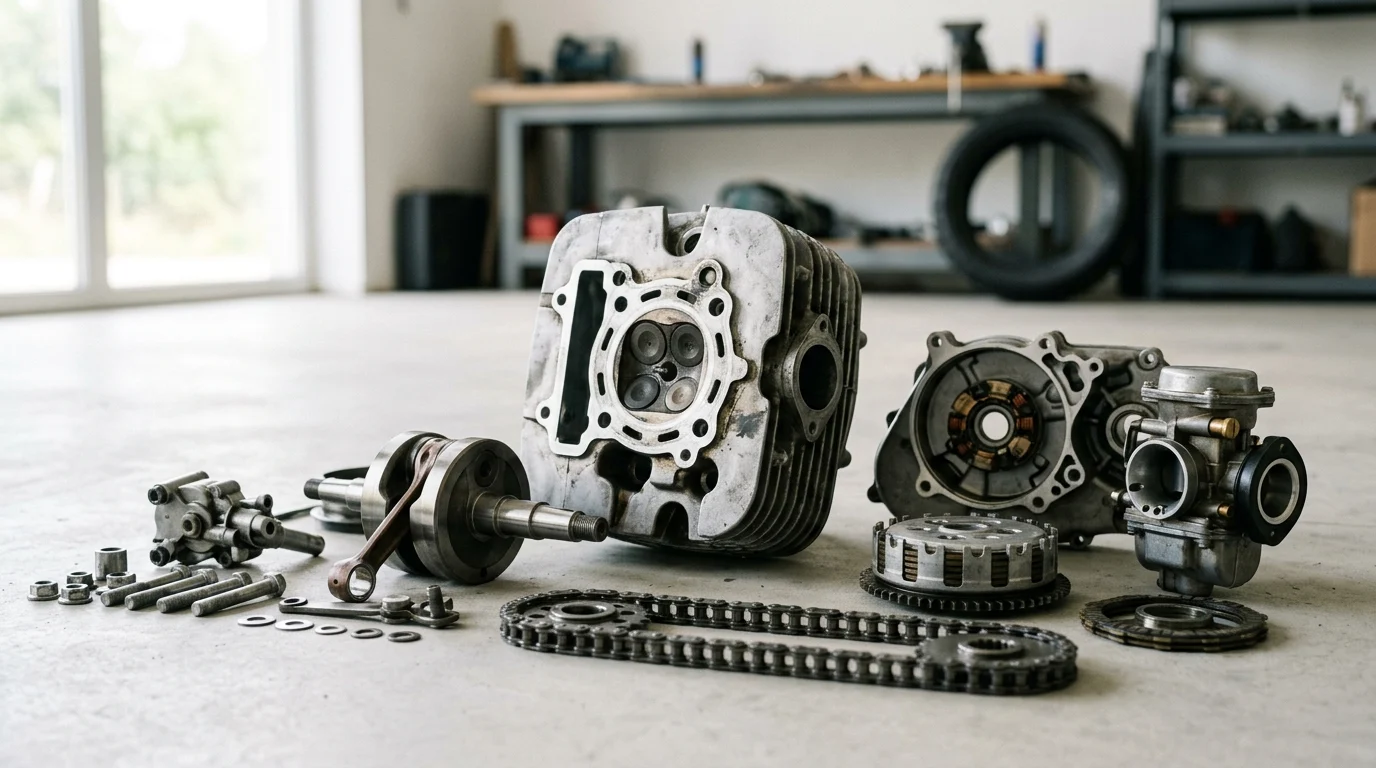
Exporting motorcycle parts is not simply a matter of finding low prices and placing bulk orders. Success depends on matching product categories to market demand, verifying compliance with destination-country standards, and choosing suppliers that can deliver consistent quality, packaging, and documentation at scale. This article explains how to evaluate parts with the strongest export potential, compare manufacturers beyond unit cost, and account for certification, defect rates, lead times, and aftersales obligations before committing to a sourcing plan. It also sets up a practical framework for reducing compliance risk and protecting margins in competitive export markets.
Why motorcycle parts sourcing for export markets needs a different
Sourcing motorcycle parts for export markets requires a rigorous departure from domestic procurement strategies. While local distribution might tolerate minor variances in finish or packaging, cross-border trade demands strict adherence to international homologation standards, precise logistics planning, and an acute understanding of landed costs. Importers targeting mature regions such as North America or the European Union must operate with defect tolerances strictly capped below 0.5%, as the compounding costs of reverse logistics and warranty claims can rapidly erode profit margins.
Target market regulations, buyer expectations, and aftersales requirements
Target market regulations impose the primary filter for supplier selection. In the European Union, components such as lighting, mirrors, and exhaust systems must carry E-mark certification, indicating compliance with Economic Commission for Europe (ECE) directives. Conversely, the United States mandates adherence to Department of Transportation (DOT) standards. Buyer expectations in these markets extend beyond mere functionality; aftersales requirements dictate comprehensive warranty coverage, often spanning 12 to 24 months, and a verifiable Mean Time Between Failures (MTBF) that matches or exceeds original equipment specifications.
Motorcycle parts categories with the highest export potential
The export viability of motorcycle parts varies significantly by product category. High-turnover consumables, including sintered brake pads, drive chains, and filtration systems, consistently demonstrate the highest export potential due to steady aftermarket demand. These categories often yield gross margins ranging from 25% to 40% for importers who secure reliable, high-volume production. In contrast, complex electronic control units (ECUs) or heavy engine blocks carry higher development costs, stricter intellectual property (IP) hurdles, and elevated shipping expenses, making them better suited for specialized, low-volume distribution networks.
How to evaluate motorcycle parts suppliers and product fit
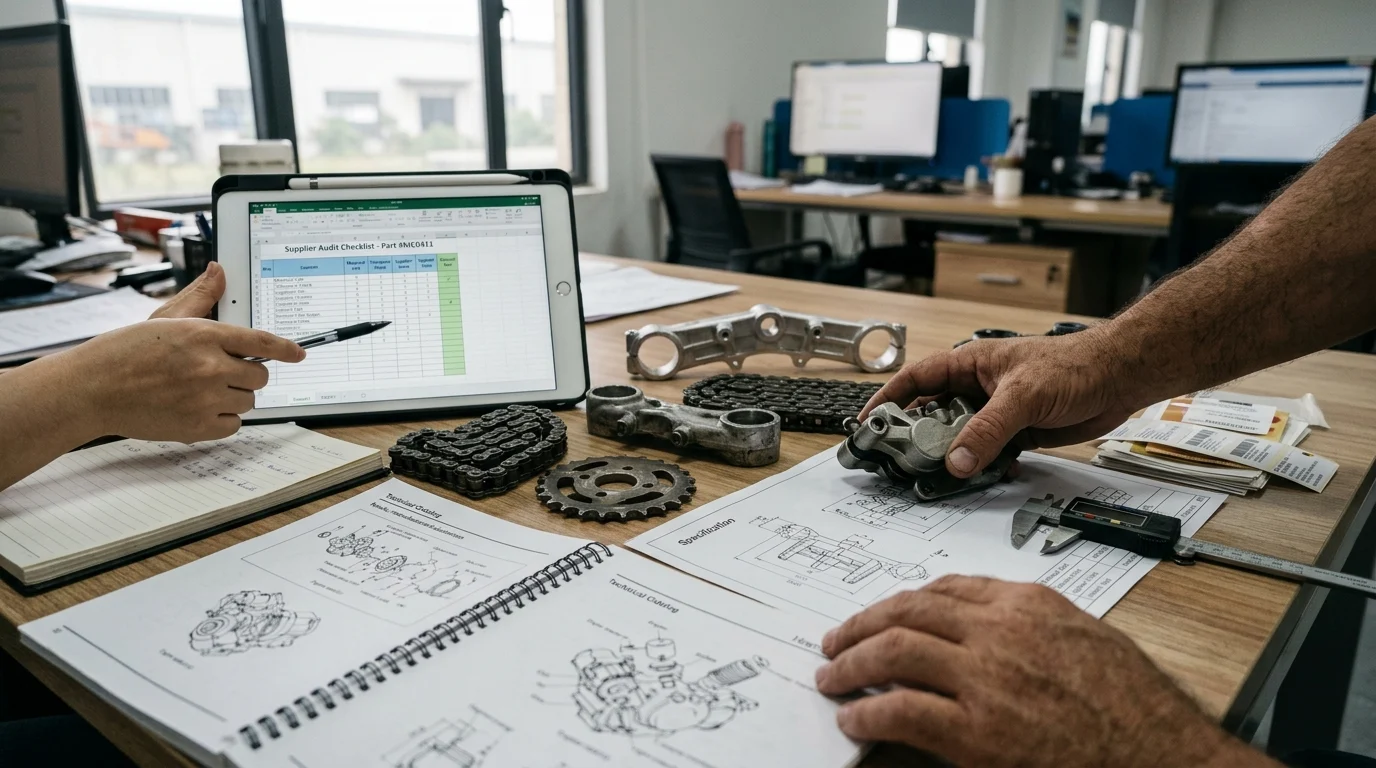
Evaluating suppliers for motorcycle parts requires looking beyond unit pricing to assess core manufacturing competencies. An exporter's success hinges on identifying factory partners capable of scaling production while maintaining strict dimensional tolerances. Minimum Order Quantities (MOQs) in this sector typically range from 500 to 2,000 units per SKU, necessitating a careful alignment between the importer's capital liquidity and the factory's production thresholds.
OEM vs ODM vs aftermarket sourcing models
The choice between Original Equipment Manufacturer (OEM), Original Design Manufacturer (ODM), and aftermarket sourcing models fundamentally shapes the supply chain. OEM models involve producing parts to exact buyer specifications, requiring heavy upfront investments in custom tooling and stringent intellectual property (IP) protection protocols. ODM allows importers to white-label pre-engineered components, drastically reducing time-to-market. Standard aftermarket sourcing involves purchasing off-the-shelf replacement parts, which minimizes tooling costs but offers zero proprietary advantage and exposes the buyer to intense price competition.
Key specifications, materials, testing standards, and documentation
Technical specifications form the backbone of quality assurance. For structural components like sprockets or triple clamps, specifying the exact metallurgy—such as 7075-T6 aerospace-grade aluminum or high-carbon steel—is non-negotiable. Manufacturing facilities must provide documented evidence of material composition via third-party spectrographic analysis. Furthermore, operations should ideally conform to IATF 16949 standards, the automotive industry's premier quality management system, ensuring robust defect prevention and reduced variation in the supply chain.
A comparison framework for supplier assessment
To systematize supplier selection, procurement teams must deploy a rigid comparison framework. This involves benchmarking factories against a standardized set of criteria rather than relying on subjective impressions.
| Sourcing Model | Typical Tooling Cost | Lead Time to Market | IP Control Level | Ideal Application |
|---|---|---|---|---|
| OEM | $5,000 – $50,000+ | 4 to 8 months | High | Custom performance parts, proprietary designs |
| ODM | $0 – $2,000 | 1 to 3 months | Medium | White-label accessories, standard upgrades |
| Aftermarket | $0 | 2 to 4 weeks | Low | Consumables, generic replacement parts |
How to source motorcycle parts efficiently without raising risk
Efficient procurement is fundamentally an exercise in risk management. Without strict oversight, importers expose themselves to material substitution, production delays, and non-compliance penalties. A robust sourcing program establishes clear checkpoints throughout the manufacturing lifecycle, requiring factories to maintain quality audit scores consistently above 85% to remain on the approved vendor list.
Supplier due diligence and factory verification
Supplier due diligence extends far beyond verifying a business license. Importers must conduct comprehensive factory audits to evaluate production capacity, machinery age, and internal quality control protocols. For critical motorcycle parts like brake calipers or suspension forks, verifying the calibration logs of CNC machinery and the presence of in-house testing equipment—such as salt-spray chambers for corrosion testing and dynamometers for performance validation—is essential. Discrepancies between a supplier's claimed capabilities and their actual factory floor setup are common red flags that warrant immediate disqualification.
Sample approval, pilot orders, and inspection checkpoints
Transitioning from prototype to mass production requires a phased approach. Sample approval must involve fitment testing on the target motorcycle models, followed by destructive testing to verify structural integrity. Once samples are approved, importers should initiate pilot orders—typically 10% to 20% of the standard production volume—to stress-test the supplier's consistency. Pre-shipment inspections must follow Acceptable Quality Limit (AQL) standards, typically applying AQL 1.5 for major defects (such as out-of-tolerance dimensions) and AQL 4.0 for minor defects (such as cosmetic blemishes).
When to consolidate suppliers vs specialize by product category
The decision to consolidate suppliers or specialize by product category depends on the importer's scale and technical requirements. Utilizing a specialized trading company can streamline logistics and communication when sourcing a wide array of low-complexity accessories from multiple sub-tier factories. However, for highly engineered components like forged pistons or electronic fuel injection modules, direct-to-factory relationships are mandatory. Sourcing complex parts through intermediaries obscures the supply chain, increasing the risk of unauthorized subcontracting and degrading quality control oversight.
Compliance, logistics, and landed cost factors in export sourcing
The final profitability of an export sourcing program is determined by the total landed cost, which encompasses freight, duties, and compliance overhead. Importers often find that logistics and regulatory compliance add 15% to 40% to the initial Free on Board (FOB) price of motorcycle parts, making accurate forecasting critical to maintaining competitive retail pricing.
Certification, labeling, packaging, and traceability requirements
Regulatory compliance dictates strict labeling, packaging, and traceability protocols. Brake components destined for Europe require ECE R90 certification marks physically stamped into the part, while brake hoses entering the US must display DOT FMVSS 106 compliance tags. Furthermore, packaging must be engineered to withstand the rigors of ocean freight, utilizing anti-corrosion VCI (Volatile Corrosion Inhibitor) bags for bare metal parts. Traceability requirements mandate batch codes or QR codes on individual components, enabling precise recalls if a manufacturing anomaly is detected post-distribution.
Incoterms, freight modes, customs classification, and spare parts planning
Logistics planning requires precise alignment of Incoterms, freight modes, and customs documentation. While FOB (Free on Board) remains the standard for ocean freight, EXW (Ex Works) is sometimes necessary when consolidating shipments from multiple inland factories. Accurate customs classification is vital; the vast majority of motorcycle parts fall under the Harmonized System (HS) code 8714.10. Misclassification can trigger severe customs delays and retroactive financial penalties. Additionally, importers must optimize spare parts planning, balancing the high carrying costs of inventory against the necessity of fulfilling sudden aftermarket demand spikes.
Regional differences in tariffs, homologation, and replacement demand
Tariffs and homologation standards vary drastically across regions, directly impacting sourcing viability.
| Destination Market | Key Homologation Standard | Typical Import Duty Range | Market Characteristic |
|---|---|---|---|
| European Union | ECE (E-Mark) | 3% – 8% | High demand for premium performance parts |
| United States | DOT / EPA | 0% – 25% (incl. Sec 301) | Massive cruiser and off-road aftermarket |
| ASEAN | Local (e.g., SNI, TISI) | 0% – 5% (with ATIGA) | High volume commuter replacement parts |
Importers must map these regional differences against their supply chain. For instance, navigating the US Section 301 tariffs on Chinese-manufactured goods has driven many importers to shift sourcing for specific components to alternative manufacturing hubs in Southeast Asia or India to preserve margins.
How importers should make final sourcing decisions
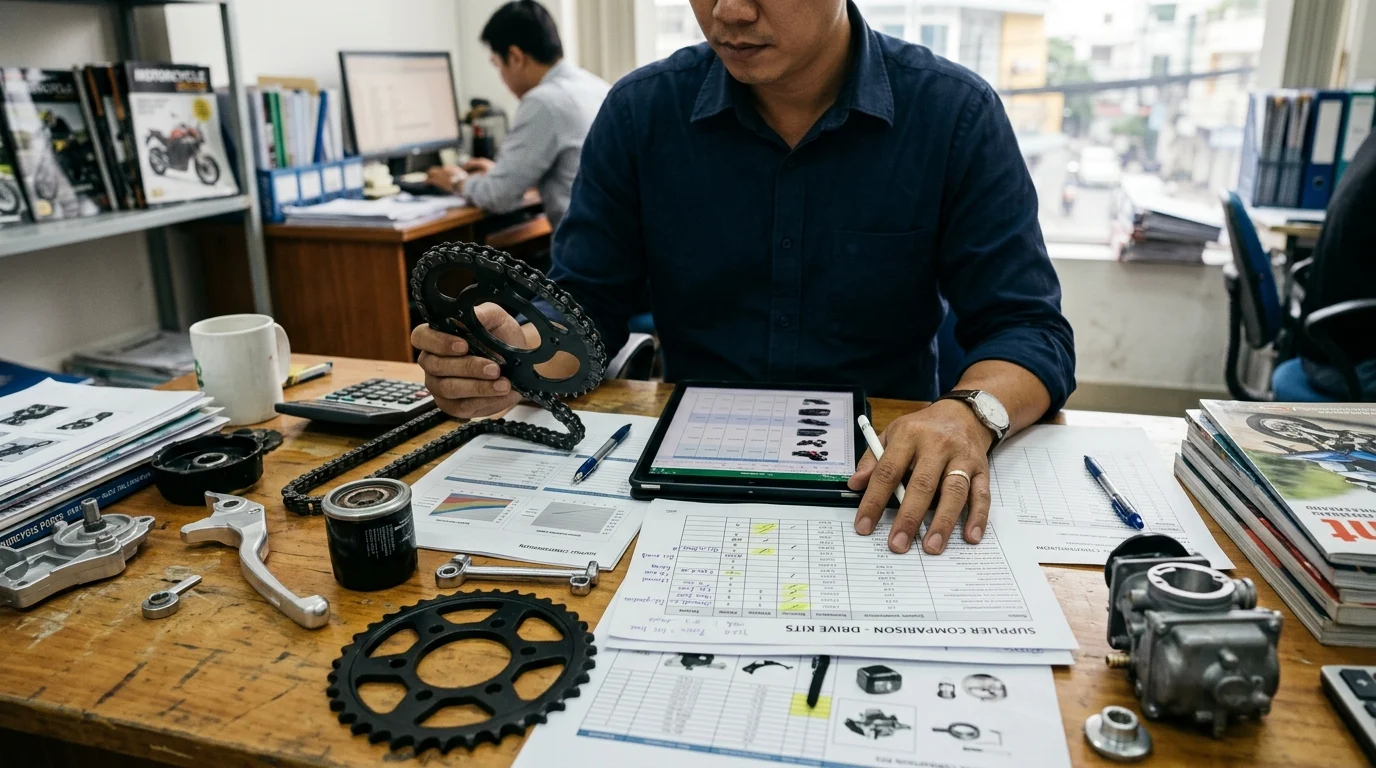
The culmination of the sourcing process is the transition from initial evaluation to a formalized, long-term procurement strategy. Importers must move beyond intuitive purchasing and rely on data-driven decision models. By quantifying supplier performance, businesses can allocate purchasing volume strategically, typically maintaining a primary supplier with an 80% order allocation while nurturing a secondary supplier with the remaining 20% to ensure operational continuity.
Supplier scorecards and decision frameworks
Final sourcing decisions should be governed by comprehensive supplier scorecards. These scorecards quantify qualitative metrics, assigning weighted values to critical performance indicators. A standard matrix might allocate 40% of the total score to quality assurance and defect rates, 30% to landed cost competitiveness, 20% to on-time delivery performance, and 10% to communication and engineering support. Suppliers failing to meet a minimum aggregate threshold are automatically filtered out, ensuring that procurement decisions remain objective and aligned with the company's financial targets.
Building resilient motorcycle parts sourcing programs
Building a resilient motorcycle parts sourcing program requires anticipating supply chain shocks before they occur. Relying on a single factory for critical components like brake master cylinders or suspension linkages creates an unacceptable single point of failure. Importers must develop dual-sourcing strategies, qualifying multiple factories in different geographic regions to hedge against geopolitical volatility, localized labor disputes, or raw material shortages. Furthermore, integrating continuous improvement clauses into supplier contracts ensures that factory partners remain incentivized to optimize production efficiency and reduce costs over the lifecycle of the partnership.
Key Takeaways
- The most important conclusions and rationale for motorcycle parts
- Specs, compliance, and risk checks worth validating before you commit
- Practical next steps and caveats readers can apply immediately
Frequently Asked Questions
Which motorcycle parts are best to source for export?
High-turnover consumables usually offer the best export potential: brake pads, drive chains, filters, bearings, and common replacement parts with broad model compatibility.
What certifications should export motorcycle parts have?
It depends on the market: E-mark for many EU-regulated parts, DOT for relevant U.S. parts, plus test reports, material records, and clear labeling documents.
How should I compare motorcycle parts suppliers?
Check factory capability, quality system, defect rate, MOQ, lead time, material traceability, and export experience—not just unit price.
When should I choose OEM, ODM, or aftermarket sourcing?
Choose OEM for custom specs, ODM for faster white-label launches, and aftermarket for low-cost standard replacement parts with quick supply.
Why source motorcycle parts from a factory-based supplier like VETOR GROUP?
A factory-based exporter can offer tighter quality control, OEM customization, competitive pricing, and faster delivery for global motorcycle parts orders.