
Selecting bearings for extreme environments requires careful consideration. The choice of materials significantly impacts performance. For instance, high-carbon chrome deep groove ball bearings offer excellent wear resistance, while stainless bearings excel in wet or chemical-rich settings. Ceramic bearings, known for their lightweight and heat resistance, are ideal for high-speed applications. Additionally, corrosion resistant bearings are essential for environments prone to moisture and chemicals, while high temperature bearings are designed to withstand elevated thermal conditions. Evaluating these factors helps determine the best option for specific applications, ensuring reliable operation under demanding conditions.
Key Takeaways
- Material selection is crucial for deep groove ball bearings. Choosing the right material enhances durability and performance in demanding environments.
- Stainless steel bearings are cost-effective and durable, making them suitable for various applications, while ceramic bearings excel in high-speed and high-temperature scenarios.
- Regular maintenance, including inspections and proper lubrication, significantly extends the lifespan of deep groove ball bearings and prevents costly failures.
- Understanding load requirements and environmental conditions helps engineers select the most suitable bearings, ensuring reliable performance and longevity.
- Sealed bearings provide excellent protection against contaminants, making them ideal for harsh environments where moisture and dust are prevalent.
Importance of Material Selection
Material selection plays a crucial role in the performance and longevity of deep groove ball bearings, especially in demanding environments. The right material can enhance durability, reduce wear, and improve resistance to various environmental factors. Choosing the appropriate material ensures that bearings can withstand the stresses they encounter during operation.
Different materials offer unique benefits. For instance, high-quality ultra-clean steel is a standard choice for its durability and efficiency. This type of steel minimizes impurities, which can lead to premature failure. Additionally, aluminum-based ceramic coatings enhance wear and corrosion resistance, making them suitable for harsh conditions. Plasma sprayed finishes provide strong bonding and moisture resistance, further extending the lifespan of bearings.
Here is a summary of the benefits associated with various materials used in deep groove ball bearings:
| Material Type | Benefits |
|---|---|
| High-quality ultra-clean steel | Standard for durability and efficiency |
| Aluminum-based ceramic coating | Enhances wear and corrosion resistance |
| Plasma sprayed finishes | Ensures strong bonding and moisture resistance |
Selecting the right material not only affects the immediate performance of deep groove ball bearings but also impacts their long-term reliability. In applications where bearings face extreme temperatures, corrosive substances, or heavy loads, the choice of material becomes even more critical. Therefore, understanding the specific requirements of each application is essential for making informed decisions.
Deep Groove Ball Bearing: Material Properties
Material properties significantly influence the performance of deep groove ball bearings. Understanding these properties helps in selecting the right bearing for specific applications. Two common materials used in deep groove ball bearings are stainless steel and ceramics. Each material has distinct characteristics that affect their functionality.
Stainless Steel Properties
Stainless steel bearings are known for their durability and resistance to corrosion. They typically have a density of 7.90 g/cm³ and a Young’s modulus of about 200 GPa. While they offer medium corrosion resistance, their hardness ranges from HRC 58 to 63. This hardness provides decent wear resistance, but it does not match the performance of ceramic materials.
Ceramic Properties
Ceramic bearings, such as those made from zirconia (ZrO2) and silicon nitride (Si3N4), exhibit superior properties. For instance, zirconia ceramic bearings have a density of 6.00 g/cm³ and a Young’s modulus ranging from 210 to 320 GPa. Their hardness can reach up to HRC 80, making them significantly harder than stainless steel. This hardness translates into excellent wear resistance, allowing ceramic bearings to last longer in demanding environments.
| Property | Stainless Steel | Ceramic Si3N4 | Ceramic ZrO2 |
|---|---|---|---|
| Density (g/cm³) | 7.90 | 3.20~3.30 | 6.00 |
| Young’s Modulus (GPa) | 200 | 300~320 | 210 |
| Hardness (Hv10HRc) | 66 | 1500~1800 | 1200 |
| Thermal Conductivity (W/mk) | 15 | 35 | 2~3 |
| Corrosion Resistance | Medium | High | High |
Ceramic bearings also provide high thermal conductivity, making them suitable for high-speed applications. Their exceptional hardness and wear resistance make them ideal for environments with extreme conditions. In fact, the fatigue life of all-ceramic bearings can be 10 to 50 times longer than that of all-steel bearings.
Comparing Stainless Steel and Ceramic Bearings
When comparing stainless steel and ceramic deep groove ball bearings, several factors come into play. Each material has its strengths and weaknesses, making them suitable for different applications.
Cost Considerations
Cost is a significant factor in bearing selection. Stainless steel bearings are generally more economical and widely available. They serve as a cost-effective solution for many industries. In contrast, ceramic bearings tend to be more expensive. However, their higher price can be justified in high-performance applications where durability and efficiency are paramount.
Here is a summary of the cost comparison:
| Bearing Type | Cost Comparison |
|---|---|
| Stainless Steel | More economical and widely available |
| Ceramic | More expensive, justifiable for high-performance applications |
Performance in High-Stress Environments
Performance under stress is another critical aspect. Stainless steel bearings exhibit good durability and can handle various loads effectively. They are less prone to failure in high-stress environments compared to ceramic bearings.
Ceramic bearings, while offering excellent corrosion resistance and low friction, face a notable risk of brittle fracture under high-stress conditions. This risk increases in applications such as seawater pumps, where maintaining adequate lubrication can be challenging. In these scenarios, stainless steel bearings may perform better due to their ability to withstand transient impacts and axial loads without significant risk of failure.
Summary of Key Differences
- Durability: Stainless steel bearings provide reliable performance in a variety of conditions. Ceramic bearings excel in specific high-performance scenarios but may fail under extreme stress.
- Cost: Stainless steel bearings are more affordable, making them suitable for cost-sensitive applications. Ceramic bearings, while pricier, offer benefits that may justify their higher cost in specialized uses.
- Corrosion Resistance: Ceramic bearings outperform stainless steel in terms of corrosion resistance, making them ideal for harsh environments.
Advantages of Stainless Steel Deep Groove Ball Bearings
Stainless steel deep groove ball bearings offer several advantages, especially in challenging environments. Their construction provides excellent corrosion resistance, making them suitable for wet and chemically aggressive settings. This feature is crucial for industries that require compliance with strict safety regulations, such as food processing. By using these bearings, companies can enhance food safety while significantly reducing maintenance needs.
Here are some key advantages of stainless steel deep groove ball bearings:
- Corrosion Resistance: The stainless steel material protects against moisture and water vapor, ensuring longevity in harsh conditions.
- Low Maintenance Requirements: Many stainless steel bearings come pre-lubricated and sealed. This design minimizes the need for regular maintenance, allowing for virtually maintenance-free operation.
- Durability: These bearings can withstand conditions that would quickly degrade other types, ensuring reliable performance over time.
| Advantage | Description |
|---|---|
| Corrosion Resistance | Stainless steel construction provides superior corrosion resistance, ideal for wet environments. |
| Low Maintenance Requirements | Many bearings come pre-lubricated and sealed, making them virtually maintenance-free. |
| Durability | They can operate in conditions that would quickly degrade other bearings, ensuring longevity. |
In terms of fatigue life, stainless steel deep groove ball bearings generally exhibit lower fatigue life compared to chrome steel. However, they still perform well under heavy loads. The microstructural differences and carbide distribution in stainless steel affect its fatigue resistance. Despite this, their overall durability and resistance to environmental factors make them a preferred choice for many applications.
Benefits of Ceramic Deep Groove Ball Bearings
Ceramic deep groove ball bearings offer numerous advantages, especially in demanding applications. Their unique properties make them suitable for high-speed and high-temperature environments. Here are some key benefits:
- Enhanced Durability: Ceramic bearings possess exceptional hardness. This characteristic leads to greater durability compared to traditional steel bearings. As a result, they have a longer lifespan and require less frequent maintenance.
- Reduced Friction and Heat: The smooth surface of ceramic bearings minimizes friction. This low friction coefficient helps reduce heat generation, supporting smoother operation in machinery.
- Corrosion Resistance: Ceramic materials resist corrosion exceptionally well. This feature makes ceramic bearings ideal for harsh or corrosive environments, ensuring lasting performance and reliability.
- High Temperature Tolerance: Ceramic bearings maintain their strength and functionality in extreme heat. They are essential for high-temperature applications where regular bearings might fail.
In addition to these benefits, ceramic deep groove ball bearings excel in energy efficiency. Their lightweight nature contributes to lower overall weight in machinery. This reduction leads to lower rolling resistance, enhancing energy efficiency. The table below summarizes how the weight of ceramic bearings affects performance:
| Evidence Type | Description |
|---|---|
| Reduced Weight | Ceramic bearings are lighter, contributing to lower overall weight in machinery. |
| Lower Rolling Resistance | The lightweight nature of ceramic bearings leads to reduced rolling resistance, enhancing energy efficiency. |
| Reduced Friction | Ceramic materials generate less friction, resulting in lower energy consumption and improved performance. |
Overall, ceramic deep groove ball bearings provide significant advantages in various applications. Their durability, low friction, and resistance to extreme conditions make them a preferred choice for industries requiring reliable performance.
Environmental Challenges for Deep Groove Ball Bearings
Deep groove ball bearings encounter various environmental challenges that can lead to premature failure. Understanding these factors is essential for ensuring optimal performance and longevity. Common environmental issues include:
- Dust and Dirt: These particles can accelerate wear and damage bearing surfaces. They create abrasive conditions that lead to increased friction.
- Chemicals and Abrasive Particles: Exposure to harsh chemicals can break down lubricants, reducing their effectiveness. This breakdown can lead to increased wear and potential failure.
- Moisture and Humidity: High levels of moisture can promote corrosion and surface damage. Contaminants in humid environments can degrade lubricants, further affecting performance.
Inadequate lubrication also poses a significant risk. Insufficient lubrication increases friction and wear, leading to potential failure. Misalignment can cause uneven load distribution, which accelerates wear. Overloading and excessive speeds can exceed the bearing’s capacity, resulting in failure.
Sealed deep groove ball bearings provide a solution for harsh environments. These bearings feature a protective sealing structure that blocks contaminants. This design enhances their lifespan and reduces maintenance needs.
Sealed bearings are particularly suitable for environments with harsh conditions, such as dusty, humid, or high-temperature surroundings. The sealing structure provides higher protective performance, ensuring stable operation even in challenging conditions.
Rubber seals in deep groove ball bearings offer excellent protection against dust, moisture, and other contaminants. This protection ensures that the bearings remain pre-lubricated and maintenance-free, which is crucial for performance in challenging environments.
High Temperature Resistance of Bearings
High temperature resistance is a critical factor for deep groove ball bearings in various applications. Bearings often operate in environments where temperatures can rise significantly. Understanding how different materials respond to heat helps in selecting the right bearing for specific needs.
Full ceramic bearings can withstand extreme temperatures, operating effectively up to 1600°C. In contrast, high-temperature steel bearings have a maximum operating temperature of around 500°C. This difference highlights the superior thermal capabilities of ceramic materials.
| Bearing Type | Maximum Operating Temperature |
|---|---|
| Full Ceramic Bearings | Up to 1600°C |
| High-Temperature Steel | Around 500°C |
Prolonged exposure to high temperatures can negatively impact the structural integrity of deep groove ball bearings. Here are some effects of high temperatures:
- High temperatures can lead to lubricant breakdown and oxidation, which diminishes protective properties.
- Thermal expansion caused by heat can alter internal clearance and increase friction.
- These changes may result in premature wear or even seizure of the bearings.
Selecting bearings that can handle high temperatures is essential for maintaining performance and longevity. In applications such as automotive engines or industrial machinery, using the right type of bearing can prevent costly failures and downtime.
By understanding the temperature limits and potential risks associated with high temperatures, engineers can make informed decisions. This knowledge ensures that deep groove ball bearings perform reliably, even in the most demanding conditions.
Corrosion Resistance in Extreme Conditions
Corrosion resistance is vital for deep groove ball bearings, especially in extreme environments. These bearings often face harsh conditions, such as exposure to saltwater, acids, and chemicals. Understanding how different materials perform in these situations helps engineers make informed choices.
Stainless steel bearings contain chromium, which provides some corrosion resistance. However, they can rust when exposed to chlorides and strong acids. In contrast, ceramic bearings excel in weak acid and alkaline environments. Their high corrosion resistance makes them suitable for applications where moisture and chemicals are prevalent.
Tip: To enhance corrosion resistance, many manufacturers apply protective coatings to bearings. These coatings serve as a crucial defense against rust, chemical attacks, and oxidation. They significantly improve the durability and performance of bearings, especially in industries like marine, chemical processing, and food manufacturing.
Here are some benefits of using protective coatings:
- They prevent rust and chemical damage.
- They enhance the overall lifespan of bearings.
- They ensure reliable operation in corrosive conditions.
Engineers recognize the need for advanced materials and coatings. They often switch to stainless steel and apply surface treatments like nickel plating. This combination creates a protective barrier against moisture and chemical attacks, reducing corrosion-related damage.
Vibration and Shock Absorption Capabilities
Deep groove ball bearings play a vital role in managing vibrations and absorbing shocks in various applications. Their design allows them to handle shock loads effectively, which is crucial in heavy machinery. For instance, in mining operations, these bearings absorb shock loads that protect machinery from damage caused by frequent vibrations and impacts. This capability enhances the reliability and longevity of equipment used in such demanding environments.
In oil and gas applications, deep groove ball bearings contribute to smooth and quiet operation. They reduce noise and vibration, which is essential for workplace safety and the longevity of equipment. By minimizing vibrations, these bearings help maintain a stable operating environment, reducing wear on machinery components.
The choice of materials also influences the damping properties of deep groove ball bearings. For example, brass cages are known for their excellent damping characteristics. They absorb vibrations effectively, leading to quieter operation. In contrast, steel cages tend to transmit more vibrations due to their rigidity, resulting in higher noise levels. Polyamide cages offer some damping benefits as well, contributing to quieter performance.
When selecting deep groove ball bearings for specific applications, engineers must consider these vibration and shock absorption capabilities. The right choice can significantly impact the performance and durability of machinery, especially in environments where vibrations are prevalent.
Tip: Always evaluate the material choice for the cage when selecting bearings. The right material can enhance vibration absorption and reduce noise, leading to improved operational efficiency.
By understanding the vibration and shock absorption capabilities of deep groove ball bearings, engineers can make informed decisions that enhance machinery performance and reliability.
Evaluating Application Needs for Deep Groove Ball Bearings
Selecting the right deep groove ball bearing requires careful evaluation of application needs. Several criteria help engineers make informed decisions. Here are key factors to consider:
- Size Limitations: Ensure proper dimension matching for installation. Incorrect sizing can lead to operational failures.
- Speed and Lubrication: Select lubrication methods that influence speed and bearing life. Proper lubrication reduces friction and wear.
- Dimensional Tolerances: Choose bearings with appropriate accuracy for high-speed operations. This ensures smooth performance.
In addition to these criteria, consider the following aspects:
- Protection Against Contaminants: Use shields or seals to block particles and liquids. This protection enhances bearing longevity.
- Temperature Range: Consider thermal expansion and choose appropriate bearing clearance. This factor is crucial in high-temperature environments.
- Lubrication: Select lubrication that withstands environmental conditions to prevent breakdown. Effective lubrication is vital for performance.
- Vibration and Shock: Choose bearings that can handle the stresses of heavy-duty machinery. This capability is essential in industries like mining and construction.
Industry standards also guide the selection process. Key factors include:
| Key Factors | Description |
|---|---|
| Sizing | Correct sizing is essential for optimal performance and compatibility. |
| Load Ratings | Determines the maximum load the bearing can handle without failure. |
| Internal Clearance | Affects the bearing’s performance and lifespan based on application needs. |
| Limiting Speeds | Ensures the bearing operates efficiently within specified speed limits. |
By evaluating these application needs, engineers can select the most suitable deep groove ball bearings. This careful selection process ensures reliable performance in tough environments.
Load Requirements for Bearings
Load requirements are essential when selecting deep groove ball bearings. Different types of loads can significantly impact their performance. Understanding these loads helps engineers choose the right bearings for specific applications.
-
Radial Load: This load acts perpendicular to the rotating shaft. It is the most common load type for deep groove ball bearings. These bearings are designed to handle radial loads effectively, making them suitable for various machinery.
-
Axial (Thrust) Load: This load aligns with the shaft’s direction. It either pushes or pulls along the length of the shaft. Deep groove ball bearings can manage moderate axial loads, but they perform best under radial loads.
-
Combined Load: This load consists of both radial and axial forces. In many applications, bearings experience a combination of these loads. Engineers must consider the total load when selecting bearings to ensure optimal performance.
Different bearings are engineered to withstand specific load types based on their structure and function. For instance, while deep groove ball bearings excel in handling radial and moderate axial loads, other types, like spherical roller bearings, are better suited for heavy radial loads and misalignment conditions.
When determining load requirements, engineers should also consider factors such as the operating environment and the expected lifespan of the bearings. Proper load management ensures that deep groove ball bearings operate efficiently and reliably, reducing the risk of premature failure.
Tip: Always consult load ratings and specifications when selecting bearings. This practice helps ensure that the chosen bearings can handle the expected loads without compromising performance.
By understanding load requirements, engineers can make informed decisions that enhance the reliability and longevity of deep groove ball bearings in various applications.
Speed and RPM Considerations for Bearings
Speed and RPM (revolutions per minute) are critical factors when selecting deep groove ball bearings. These elements directly influence the performance and longevity of bearings in various applications. Understanding how speed affects bearing choice helps engineers make informed decisions.
When operating at high speeds, bearings experience increased friction and heat generation. This situation can lead to premature wear and failure if not managed properly. For speeds exceeding 20,000 RPM, engineers should consider using ceramic hybrid bearings or full ceramic bearings. These materials significantly reduce friction and heat, enhancing performance in high-speed applications.
To optimize high-speed performance, selecting the right materials, lubricants, and design is essential. High-performance materials like ceramics or hybrid bearings can handle higher speeds and temperatures due to their lower friction coefficients. This capability allows them to maintain efficiency and extend service life.
Here are some key considerations for speed and RPM in deep groove ball bearings:
- Material Selection: Choose materials that can withstand high speeds without degrading. Ceramic bearings often outperform traditional steel bearings in this regard.
- Lubrication: Proper lubrication reduces friction and heat. Using high-quality lubricants designed for high-speed applications is crucial.
- Bearing Design: The design of the bearing affects its ability to handle speed. Features such as cage design and internal clearance play significant roles.
Engineers must evaluate these factors to ensure that deep groove ball bearings perform reliably in high-speed environments. By understanding the relationship between speed and bearing performance, they can select the most suitable bearings for their applications.
Maintenance and Lifespan of Deep Groove Ball Bearings
Proper maintenance plays a crucial role in extending the lifespan of deep groove ball bearings. Regular inspections and timely lubrication can significantly enhance their performance. Here are some essential maintenance practices:
- Regular Inspections: Check for signs of wear, corrosion, or damage. Early detection of issues can prevent costly failures.
- Lubrication: Use the right lubricant to reduce friction and wear. Ensure that the lubricant remains clean and free from contaminants.
- Alignment: Maintain proper alignment during installation. Misalignment can lead to uneven wear and premature failure.
- Temperature Monitoring: Keep an eye on operating temperatures. Excessive heat can degrade lubricants and damage bearings.
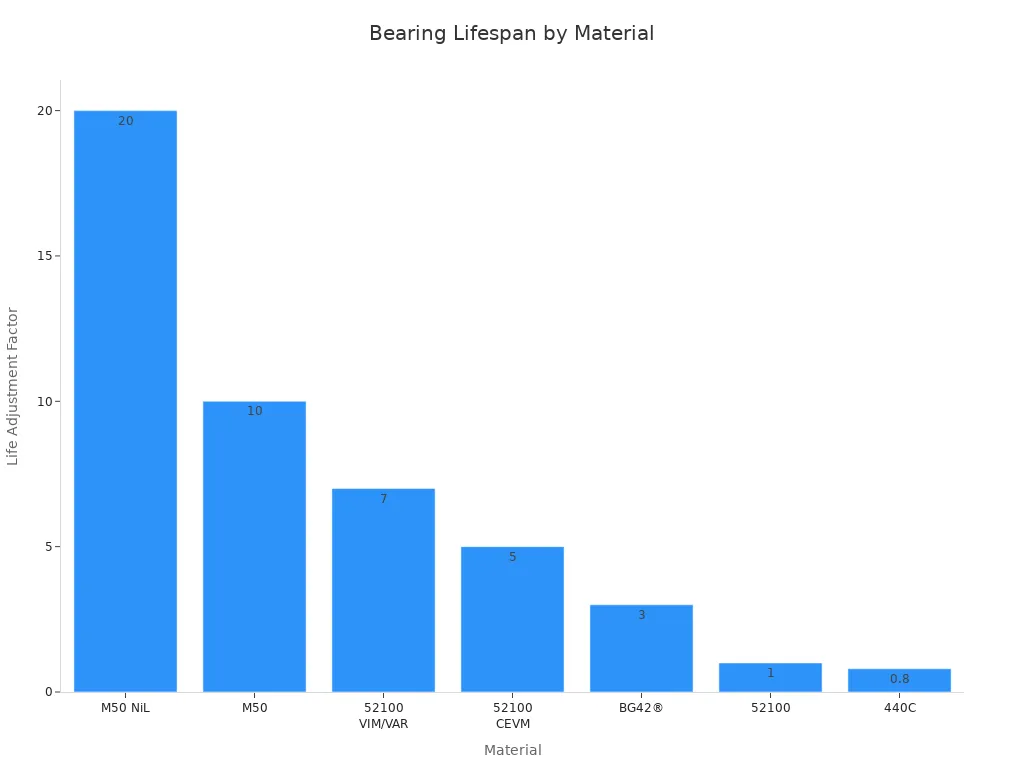
The expected lifespan of deep groove ball bearings varies based on material and operating conditions. Different materials exhibit different life adjustment factors. The table below summarizes these factors:
| Material | Life Adjustment Factor |
|---|---|
| M50 NiL | 20 |
| M50 | 10 |
| 52100 VIM/VAR | 7 |
| 52100 CEVM | 5 |
| BG42® | 3 |
| 52100 | 1 |
| 440C | 0.8 |
Several factors can influence the lifespan of deep groove ball bearings:
- Vibration and/or shock-impact loads
- Angular misalignment
- High speed
- Operating at elevated temperatures
- Lubricant effects
By understanding these factors, engineers can make informed decisions about maintenance and material selection. This knowledge helps ensure that deep groove ball bearings operate efficiently and last longer in demanding applications.
Careful material selection is vital for maximizing the performance and reliability of deep groove ball bearings. Choosing the right material can enhance efficiency by reducing friction and wear, potentially increasing efficiency by up to 30% compared to traditional steel bearings.
When comparing stainless steel and ceramic bearings, consider the following differences:
- Material Properties: Stainless steel is strong but may rust, while ceramic is corrosion-resistant and ideal for high-speed applications.
- Performance Characteristics: Ceramic bearings generate less friction and heat, making them suitable for high-speed use, whereas stainless steel bearings excel in load-bearing and durability.
- Maintenance Requirements: Stainless steel may require more maintenance due to rust potential, while ceramic bearings typically have lower maintenance needs.
Aligning bearing choice with specific application needs improves operational efficiency and reduces downtime. Evaluating load requirements and operational conditions leads to enhanced performance and longer service life, resulting in fewer maintenance needs.
FAQ
What are deep groove ball bearings?
Deep groove ball bearings are versatile components used in various applications. They consist of an inner and outer ring, balls, and a cage. These bearings support radial and axial loads, making them suitable for high-speed operations.
How do I choose the right bearing material?
Selecting the right bearing material depends on the application environment. Consider factors like temperature, load, and exposure to chemicals. Stainless steel suits wet environments, while ceramics excel in high-speed and high-temperature applications.
What is the lifespan of deep groove ball bearings?
The lifespan of deep groove ball bearings varies based on material and operating conditions. Proper maintenance, lubrication, and alignment can significantly extend their service life, often ranging from several thousand to tens of thousands of hours.
Can I use ceramic bearings in high-speed applications?
Yes, ceramic bearings are ideal for high-speed applications. Their low friction and heat generation enhance performance. They can operate efficiently at speeds exceeding 20,000 RPM, making them suitable for demanding environments.
How can I maintain deep groove ball bearings?
Regular maintenance includes inspections for wear, proper lubrication, and ensuring alignment. Keeping bearings clean and monitoring operating temperatures can prevent premature failure and extend their lifespan.