
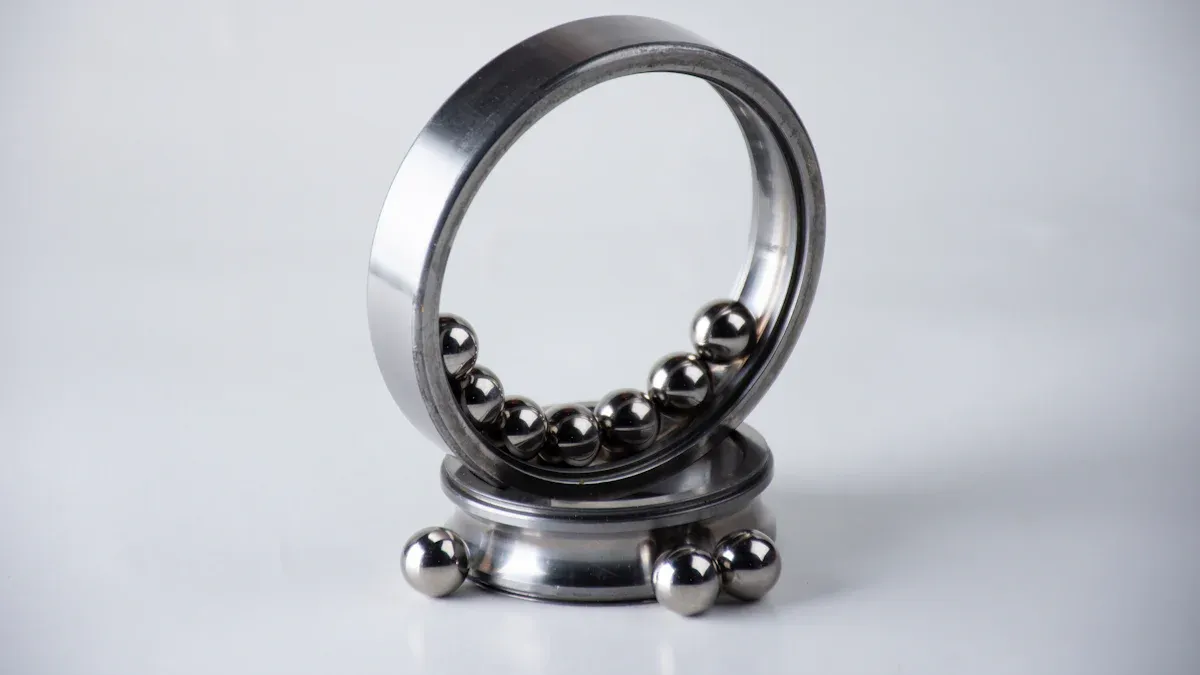
Ceramics bearings excel in corrosive environments due to their inherent resistance to corrosion. Unlike stainless bearings, which often necessitate additional coatings or lubricants to prevent rust, ceramic materials stand up to moisture, chemicals, and high humidity without degradation. This durability makes ceramic ball bearings an ideal choice for applications exposed to harsh conditions. Consequently, many industries are increasingly asking, "Are ceramic bearings better than stainless steel?" The answer often points toward the superior performance of hybrid ceramic bearings and full ceramic bearings in demanding settings.
Key Takeaways
- Ceramic bearings outperform stainless steel in corrosive environments due to their exceptional resistance to moisture, chemicals, and high humidity.
- Using ceramic bearings can significantly extend equipment lifespan, lasting up to three times longer than stainless steel in harsh conditions.
- Ceramic bearings require less maintenance, often operating without lubrication, which reduces operational costs and downtime.
- In applications like chemical processing and marine environments, ceramic bearings provide reliable performance and durability, making them the preferred choice.
- When selecting bearings, consider factors like load capacity and environmental conditions to ensure optimal performance and longevity.
Overview of Ceramic Bearings
Ceramic bearings have gained popularity in various industries due to their unique properties and performance advantages. These bearings primarily utilize materials such as silicon nitride and zirconium oxide, which contribute significantly to their corrosion resistance and durability.
| Material | Properties | Corrosion Resistance Contribution |
|---|---|---|
| Silicon Nitride | High strength, excellent fracture toughness, low density, low thermal expansion, electrical non-conductivity | Superior resistance to heat and wear, operates effectively with minimal lubrication |
| Zirconium Oxide | Remarkable resistance to corrosion and thermal shock, retains strength at elevated temperatures | Well-suited for wet or chemically aggressive environments, ideal for food processing and marine applications |
Ceramic ball bearings can last up to three times longer than stainless steel bearings in chemical plant applications. They show no visible corrosion even after extended testing, making them ideal for aggressive environments like chemical processing and marine applications. Using ceramic bearings can significantly reduce maintenance needs and extend equipment life in corrosive settings.
The lightweight nature of ceramics also enhances their performance. They generate less friction, which leads to improved efficiency and reduced energy consumption. Furthermore, ceramic bearings operate effectively in extreme temperatures, making them suitable for a wide range of applications, from aerospace to medical devices.
Overview of Stainless Steel Bearings
Stainless steel bearings are widely used in various industries due to their strength and versatility. These bearings typically consist of alloys that include chromium, which enhances their resistance to corrosion. However, their performance in corrosive environments can vary significantly based on the specific alloy used.
Two common stainless steel grades are 304 and 316. Grade 304 offers good corrosion resistance in dry, indoor environments. It is suitable for applications such as indoor automation and robotics. In contrast, grade 316 contains molybdenum, which provides superior resistance to pitting and crevice corrosion. This makes it ideal for use in medical equipment, food machinery, and coastal areas where high humidity prevails.
Here is a comparison of the corrosion resistance of these two grades:
| Material | Corrosion Resistance | Suitable Environments |
|---|---|---|
| 304 | Good in dry, indoor environments | Indoor automation, robotics, precision instruments |
| 316 | Superior due to molybdenum, resistant to pitting and crevice corrosion | Medical, food machinery, coastal, high-humidity environments |
Despite their advantages, stainless steel bearings may require additional coatings or lubricants to enhance their performance in harsh conditions. This need for extra protection can increase maintenance efforts and costs.
Performance Comparison
When comparing ceramic bearings to stainless steel bearings, several critical factors emerge, particularly in corrosive environments. These factors include corrosion resistance, lifespan, load capacity, and maintenance requirements.
Corrosion Resistance
Ceramic bearings exhibit exceptional corrosion resistance, making them ideal for harsh environments. They resist degradation from acids, alkalis, and salt solutions. In contrast, stainless steel bearings are vulnerable to corrosion, especially in highly corrosive settings.
| Bearing Type | Corrosion Resistance | Lifespan Increase Compared to Stainless Steel |
|---|---|---|
| Ceramic Bearings | Extremely resistant | 5-10 times longer with lubrication |
| Stainless Steel Bearings | Vulnerable to corrosion | Shorter lifespan due to corrosion issues |
Performance in Acidic Environments
Laboratory tests reveal that ceramic bearings outperform stainless steel bearings in acidic industrial environments. The following table summarizes their performance:
| Bearing Type | Performance in Acidic Environments | Chemical Inertness | Corrosion Resistance |
|---|---|---|---|
| Ceramic (Silicon Nitride) | Superior | Nearly 100% | No corrosion |
| Stainless Steel | Inferior | Low | Rust within days |
Load Capacity
In corrosive conditions, ceramic bearings maintain a higher load capacity compared to stainless steel bearings. This characteristic enhances their suitability for demanding applications.
| Bearing Type | Corrosion Resistance | Load Capacity in Corrosive Conditions |
|---|---|---|
| Ceramic Bearings | Superior | High |
| Stainless Steel Bearings | Moderate | Lower |
- Ceramic bearings can operate without lubrication, which reduces maintenance needs.
- Stainless steel bearings require regular lubrication, typically needing lubricant replacement every 3-6 months.
Maintenance Requirements
Ceramic bearings offer significant advantages in maintenance. Their chemical inertness allows them to resist corrosion from most acids and alkalis. Conversely, stainless steel bearings experience performance degradation over time in corrosive environments.
- Ceramic bearings have self-lubricating properties, leading to extended maintenance intervals, with some applications being maintenance-free.
- Stainless steel bearings require regular lubrication, which can increase operational costs.
Specific Applications
Ceramic and stainless steel bearings serve distinct roles across various industries, particularly in environments where corrosion poses significant challenges. Their unique properties make them suitable for specific applications, each benefiting from the advantages of either bearing type.
Chemical Processing
In chemical processing equipment, ceramic bearings demonstrate remarkable performance. They last up to three times longer than stainless steel bearings in these applications. Key benefits include:
- Significantly longer lifespan: Ceramic bearings withstand harsh chemicals without degradation.
- No visible corrosion: In standardized salt spray tests, ceramic bearings show no signs of rust, while stainless steel bearings do.
These attributes make ceramic bearings the preferred choice for chemical processing, where reliability and longevity are crucial.
Food Processing
Ceramic bearings excel in food processing machinery, especially when exposed to corrosive cleaning agents. Their advantages include:
- Resistance to acids, alkalis, and salt solutions: This property ensures that ceramic bearings maintain their integrity in wet environments.
- Lubrication-free operation: This feature reduces maintenance needs, allowing for continuous operation without frequent interruptions.
Additionally, ceramic bearings possess high thermal stability, enabling them to endure extreme temperatures often encountered in food processing applications.
Marine Applications
In marine environments, the corrosive effects of saltwater can severely impact equipment performance. Ceramic bearings provide a solution with their superior corrosion resistance. They are ideal for:
- Boat motors and propellers: Their ability to resist rust ensures reliable operation in harsh marine conditions.
- Offshore equipment: The durability of ceramic bearings extends the lifespan of machinery exposed to saltwater.
Aerospace and Medical Devices
Ceramic bearings find applications in aerospace and medical devices due to their lightweight nature and high strength. They offer:
- Reduced weight: This characteristic is essential in aerospace applications, where every ounce counts.
- Biocompatibility: In medical devices, ceramic bearings are safe for use in environments that require strict hygiene standards.
These applications highlight the versatility of ceramic bearings, making them suitable for industries that demand high performance and reliability.
Summary
Both ceramic and stainless steel bearings have their place in various industries. However, ceramic bearings consistently outperform stainless steel in corrosive environments, making them the go-to choice for applications in chemical processing, food processing, marine, aerospace, and medical fields.
Considerations for Selection
Selecting the appropriate bearing material for corrosive environments involves several critical factors. Engineers must evaluate these elements to ensure optimal performance and longevity. Key considerations include:
- Load Capacity: The bearing must support the required load without failure.
- Operating Temperatures: Bearings should withstand the temperature ranges of their applications.
- Speed Requirements: The bearing’s design must accommodate the operational speed to prevent overheating.
- Environmental Conditions: Factors such as humidity, chemical exposure, and salt presence significantly impact material choice.
- Initial Cost: Budget constraints often influence the selection process.
- Long-term Maintenance Requirements: The frequency and cost of maintenance can affect overall operational efficiency.
Tip: Corrosion-resistant materials are crucial for bearings in harsh environments like marine and chemical industries. These materials enhance bearing longevity and performance by withstanding moisture, chemicals, and salt.
Environmental regulations also play a vital role in the selection process. Compliance with these regulations ensures that operations do not disrupt the environment. Frequent replacement of corroded bearings can lead to operational disruptions, safety risks, and financial losses. Therefore, choosing materials that meet these standards is essential.
| Bearing Type | Corrosion Resistance | Maintenance Needs | Suitable Environments |
|---|---|---|---|
| Ceramic Bearings | Excellent | Lower | Harsh, corrosive environments |
| Stainless Steel | Moderate | Higher | Moderate environments |
Ceramic bearings excel in corrosive conditions due to their high resistance to acids and alkalis. In contrast, stainless steel bearings may degrade over time in highly corrosive environments. The lower maintenance needs of ceramic bearings make them more suitable for extreme conditions.
User reviews and field reports further highlight the performance differences between these two types of bearings. For instance, ceramic bearings demonstrate excellent corrosion resistance and low friction, making them ideal for chemical processing plants. Conversely, stainless steel bearings, particularly grade 316, offer durability and resistance to chloride corrosion, which is beneficial in offshore wind farms.
Ultimately, engineers must weigh these factors carefully to select the most appropriate bearing material for their specific applications.
In corrosive environments, ceramic bearings emerge as the superior choice due to their enhanced corrosion resistance and durability. They exhibit remarkable resistance to acid, alkali, and salt solutions, making them ideal for harsh conditions. Additionally, ceramic bearings can operate without lubrication, which significantly reduces maintenance needs.
Key benefits include:
- Longer lifespan: Ceramic bearings often last longer than their stainless steel counterparts.
- Lower maintenance: They require less frequent servicing, which can lead to cost savings over time.
Industry standards recommend ceramic bearings for aggressive environments like chemical processing, marine, and food industries. Their ability to withstand severe corrosive conditions makes them suitable for a wider range of applications.
FAQ
What are the main advantages of ceramic bearings over stainless steel bearings?
Ceramic bearings offer superior corrosion resistance, longer lifespan, and lower maintenance needs compared to stainless steel bearings. They perform well in harsh environments, making them ideal for applications in chemical processing and marine industries.
Can ceramic bearings operate without lubrication?
Yes, ceramic bearings can function effectively without lubrication. Their self-lubricating properties reduce friction and wear, leading to extended maintenance intervals and lower operational costs.
Are stainless steel bearings suitable for marine applications?
Stainless steel bearings, particularly grade 316, can be used in marine applications due to their resistance to pitting and crevice corrosion. However, they may require regular maintenance to prevent rust in harsh saltwater environments.
How do I choose between ceramic and stainless steel bearings?
Consider factors such as load capacity, operating temperatures, and environmental conditions. Ceramic bearings excel in corrosive settings, while stainless steel bearings may be suitable for less aggressive environments.
What industries benefit most from ceramic bearings?
Ceramic bearings are widely used in industries such as chemical processing, food processing, marine, aerospace, and medical devices. Their durability and corrosion resistance make them ideal for demanding applications.