
Ball Bearings vs Roller Bearings: Which Is Better for Your Application?
Ball bearings and roller bearings serve as fundamental components in mechanical systems, yet their distinct designs lead to different performance characteristics. This comparison examines load capacity, speed capability, alignment tolerance, and application suitability to help engineers and maintenance professionals select the optimal bearing type for their specific requirements. Understanding the mechanical differences between these two bearing categories ensures reliable equipment performance and extended service life.
What Are Ball Bearings?
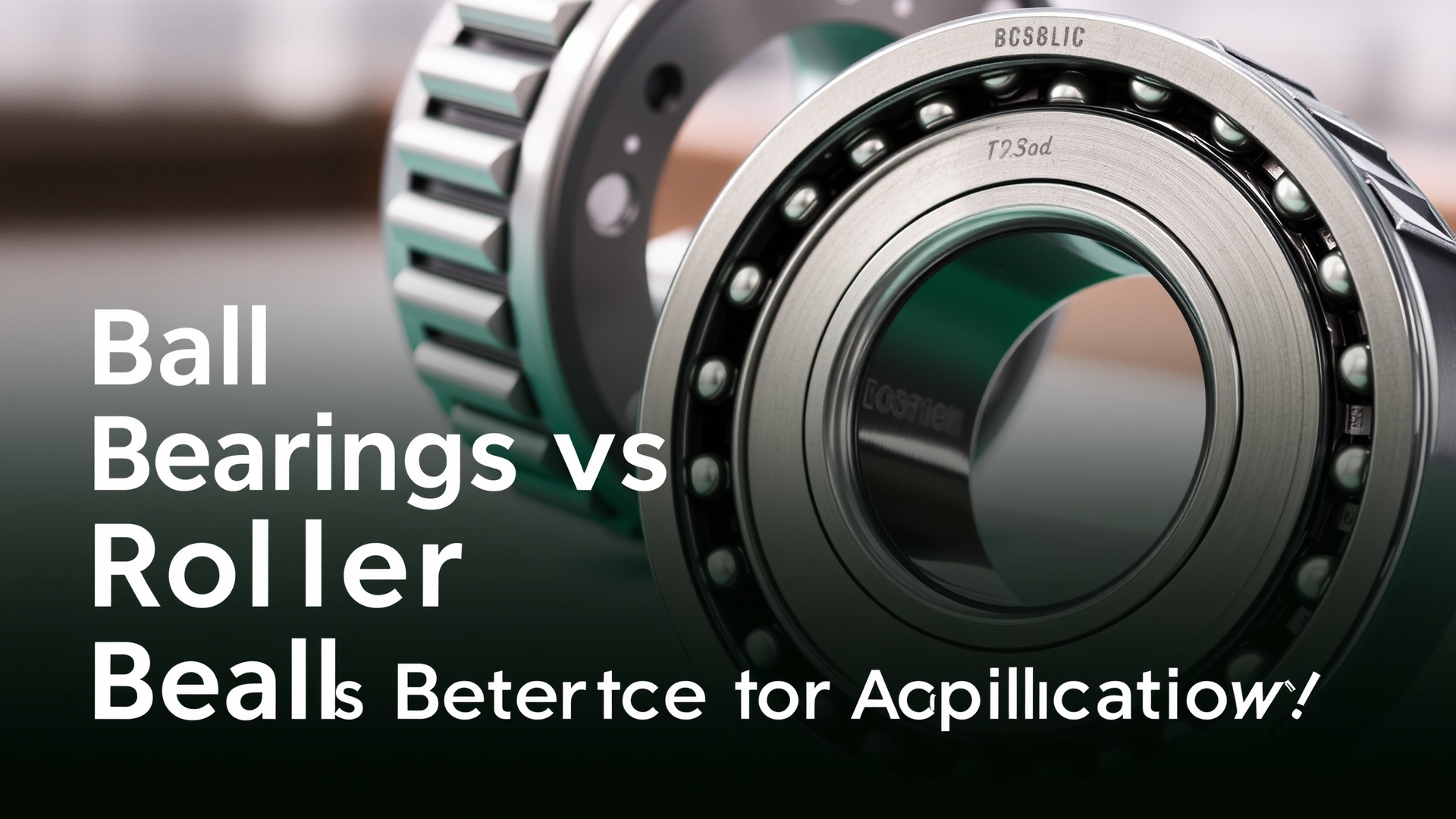
Ball bearings consist of spherical rolling elements housed between an inner and outer race. The point contact between balls and raceways enables smooth rotation with minimal friction. This design provides excellent speed capability and precise radial and axial load handling. Common variants include deep groove ball bearings, which accommodate combined radial and axial loads, and angular contact ball bearings designed for one-direction thrust loads.
Ball bearings excel in applications requiring high rotational speeds and moderate load capacities. Their compact design suits space-constrained installations in motors, pumps, and precision machinery.
What Are Roller Bearings?
Roller bearings employ cylindrical, needle-shaped, or tapered rolling elements that make line contact with raceways. This contact geometry distributes loads across larger surface areas compared to ball bearings. Cylindrical roller bearings handle high radial loads efficiently, while needle roller bearings offer maximum load capacity in minimal radial space.
Roller bearings demonstrate superior load-carrying capacity per unit bore diameter than ball bearings. Their robust construction resists shock loads and vibration better than spherical alternatives. Tapered roller bearings, commonly found in automotive wheel hubs, manage combined radial and thrust loads simultaneously.
Key Differences: Ball Bearings vs Roller Bearings
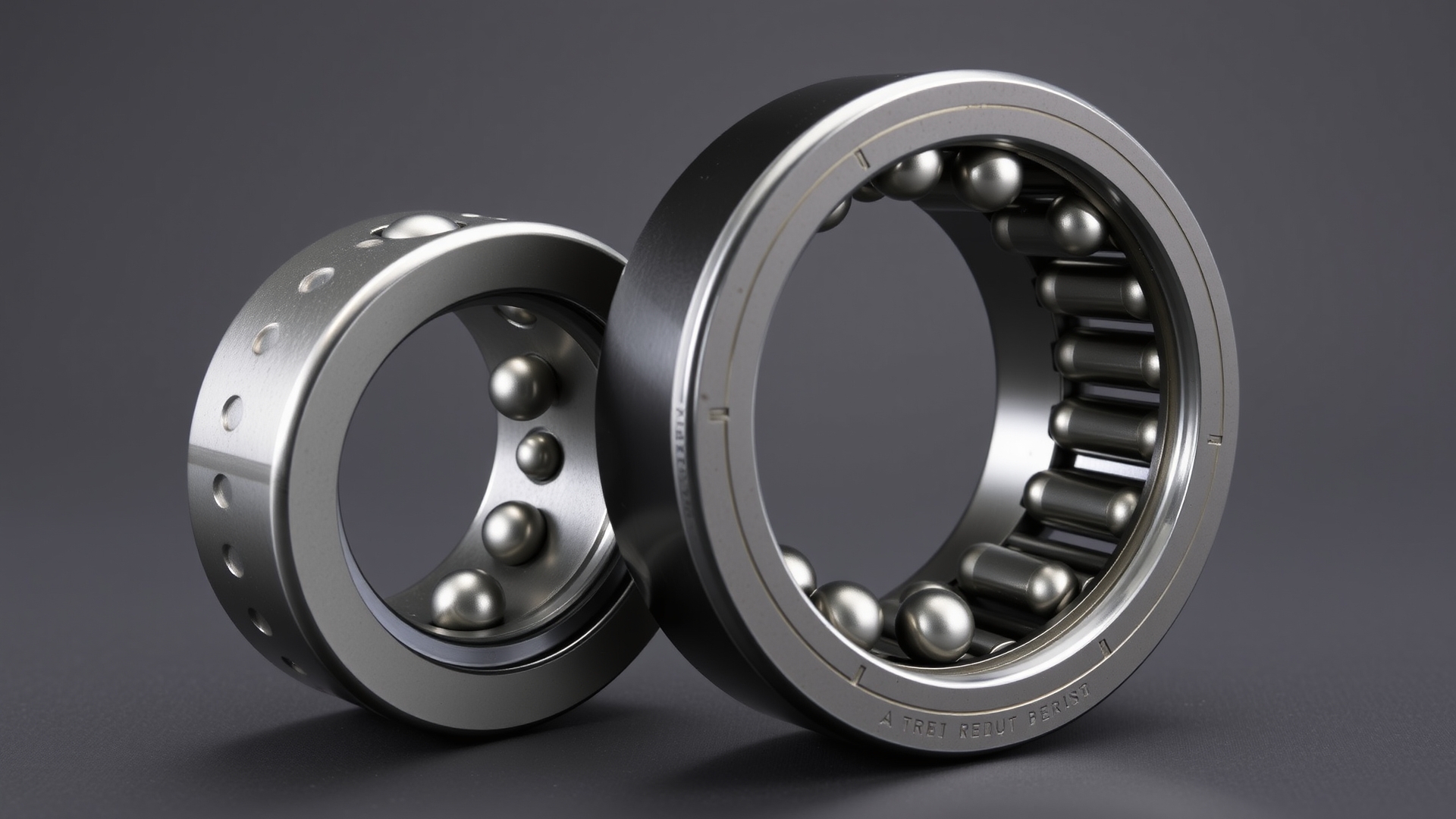
The fundamental distinction lies in contact geometry. Ball bearings feature point contact resulting in lower friction and higher speeds. Roller bearings provide line contact enabling greater load distribution and higher capacity. This mechanical difference influences nearly every performance metric and application parameter.
Load Capacity Comparison
Roller bearings typically carry 3-5 times the radial load capacity of similarly sized ball bearings. The extended contact area reduces contact stress proportionally. For heavy machinery, conveyor systems, and gearboxes, pillow block bearing housings often utilize roller elements for this reason.
Speed Capability
Ball bearings operate at significantly higher speeds due to reduced friction at the rolling contact. Maximum peripheral speeds for ball bearings may exceed 50 m/s, while roller bearings typically limit to 20-30 m/s. Self-aligning ball bearings accommodate shaft deflection while maintaining high-speed performance.
Alignment Tolerance
Roller bearings demand precise alignment during installation. Misalignment generates uneven stress distribution leading to premature failure. Ball bearings, particularly self-aligning variants, tolerate angular misalignment up to 2-3 degrees without significant performance degradation.
Application Suitability Guide
Selecting between ball and roller bearings requires evaluating specific application parameters.
- Electric motors: Deep groove ball bearings provide high speed, moderate loads, and quiet operation
- Automotive wheel hubs: Automotive wheel bearings typically use angular contact ball or tapered roller designs
- Heavy machinery: Cylindrical or tapered roller bearings handle high radial and combined loads
- Precision instrumentation: Ball bearings provide smoother operation and tighter tolerances
- Conveyor systems: Roller bearings manage high radial loads from transported materials
Performance Comparison Table
| Characteristic | Ball Bearings | Roller Bearings |
|---|---|---|
| Contact Type | Point contact | Line contact |
| Radial Load Capacity | Moderate | High (3-5x) |
| Thrust Load Capacity | Limited | Varies by type |
| Maximum Speed | High | Moderate |
| Alignment Tolerance | Good | Poor to moderate |
| Friction Level | Low | Moderate |
| Noise Level | Low | Moderate to high |
| Cost | Lower | Higher |
Installation and Maintenance Considerations
Proper installation practices significantly impact bearing service life regardless of type. Both bearing categories require clean mounting surfaces, correct press-fit tolerances, and appropriate lubrication. Industry maintenance guidelines recommend regular inspection schedules for critical applications.
- Verify shaft and housing dimensions match bearing specifications before installation
- Clean all mating surfaces and inspect for damage or contamination
- Apply appropriate lubricant to prevent metal-to-metal contact during startup
- Use proper mounting methods—avoid impact loads on bearing raceways
- Set correct clearance according to thermal expansion calculations
Lubrication Requirements
Both bearing types require adequate lubrication to minimize friction and dissipate heat. Ball bearings generally need less frequent relubrication due to lower contact stresses. Roller bearings demand more robust lubrication regimes, particularly under heavy loads. Grease lubrication suits most applications, while oil bath or circulating oil systems serve high-speed or severe-duty conditions.
Common Failure Modes
Understanding typical failure mechanisms assists in selecting appropriate bearing types and maintenance interventions. The reliability engineering standards provide frameworks for failure analysis.
- Fatigue spalling: Surface pitting from repeated stress cycles affects both types
- Brinelling: Permanent indentation from static loads common in undersized selections
- Creep: Movement on shaft or housing from improper interference fits
- Lubrication failure: Primary cause of premature bearing failures in both categories
- Misalignment damage: More severe in roller bearings due to edge loading
Cost Considerations
Initial acquisition costs favor ball bearings for comparable dimensions. However, total cost of ownership includes maintenance labor, downtime expenses, and replacement intervals. Roller bearings often prove more economical for heavy-duty applications where their extended service life offsets higher purchase prices. Standardization across equipment families reduces inventory costs for both bearing types.
Which Bearing Type Should You Choose?
The selection depends on application-specific parameters including load magnitude and direction, rotational speed requirements, alignment tolerance needs, and environmental conditions. For general-purpose applications with moderate loads and high speeds, ball bearings provide optimal performance. Heavy-load applications prioritize roller bearings despite speed limitations.
Consulting with bearing specialists ensures proper sizing using bearing selection methodologies including basic and dynamic load ratings. Computer-aided design tools enable virtual testing before physical implementation.
Conclusion
Ball bearings and roller bearings each offer distinct advantages suited to different mechanical requirements. Ball bearings excel in high-speed, moderate-load applications requiring smooth operation and alignment tolerance. Roller bearings provide superior load capacity for heavy machinery and industrial equipment. Careful analysis of application parameters combined with proper installation and maintenance practices ensures optimal bearing performance and equipment reliability.
Frequently Asked Questions
Can ball bearings replace roller bearings in all applications?
No. Ball bearings cannot typically replace roller bearings where high radial loads exceed ball bearing capacity. Attempting such substitutions leads to premature failure and potential equipment damage.
Which bearing type lasts longer?
Service life depends more on application fit, installation quality, and lubrication than bearing type alone. Properly selected and maintained bearings of either type achieve comparable theoretical life ratings.
Are roller bearings always more expensive than ball bearings?
Generally yes for similar dimensions, but cost differences narrow for specialized designs. Standard catalog bearings offer competitive pricing across both categories.
Can I mix ball and roller bearings in the same application?
Yes. Many applications use different bearing types for separate shafts or different positions. Each bearing location should receive independent selection based on local requirements.
What bearing type suits angular contact applications?
Angular contact ball bearings handle thrust loads in one direction. For bidirectional thrust or combined loads, matched pairs or tapered roller bearings provide appropriate solutions.