
Needle Bearings vs Ball Bearings: Which Is Better for Transmission Systems?
Needle bearings and ball bearings represent two fundamental bearing designs used extensively in transmission systems. Each type offers distinct advantages in load capacity, speed capability, and dimensional efficiency. This comprehensive comparison examines the technical characteristics, applications, and selection criteria to determine which bearing type better suits specific transmission requirements.
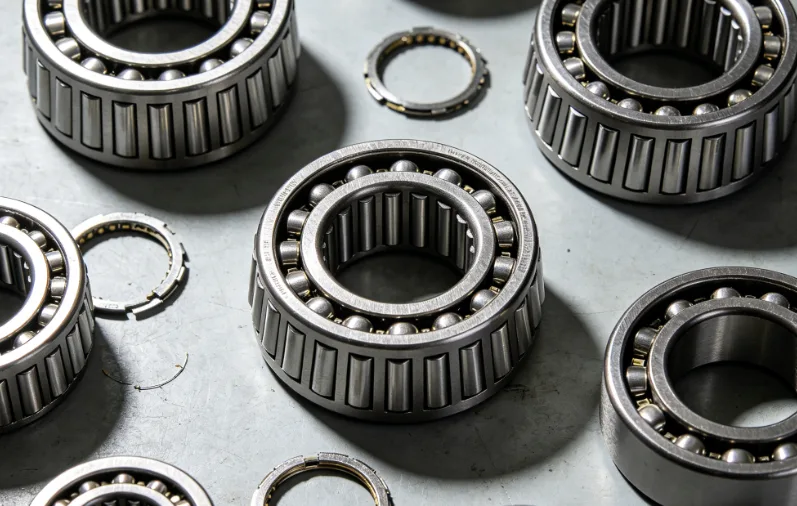
What Are Needle Bearings?
Needle bearings, also called needle roller bearings, utilize slender cylindrical rollers with a length significantly greater than their diameter. The roller length-to-diameter ratio typically exceeds 3:1, allowing these bearings to accommodate high radial loads in limited radial space. The needle roller bearing design features a large number of contact points, distributing loads effectively across the bearing raceway.
These bearings excel in oscillating applications and shock load conditions due to their enhanced roller stability. The compact cross-section makes needle bearings ideal for transmissions where radial space is constrained. Lubrication requirements are moderate, and many designs incorporate integral seals for maintenance-free operation. When selecting bearings for transmission applications, engineers should consider how search engine optimization principles in technical documentation help ensure proper specification identification.
What Are Ball Bearings?
Ball bearings use spherical rolling elements that distribute loads through point contact rather than line contact. This load versatility stems from the deep raceway grooves that guide the balls and maintain alignment under combined loading conditions.
Ball bearings operate with lower friction coefficients compared to roller bearings, enabling higher rotational speeds with less heat generation. The simple geometry facilitates easier installation and alignment during transmission assembly. These characteristics make ball bearings a versatile choice across numerous transmission applications.
Key Differences Between Needle Bearings and Ball Bearings
The fundamental distinction lies in the contact geometry between rolling elements and raceways. Needle bearings develop line contact along the roller length, creating higher load capacity per unit cross-section but generating greater friction at elevated speeds. Ball bearings establish point contact, reducing friction and enabling faster operation but limiting individual load capacity.
Dimensional characteristics also differ significantly. Needle bearings achieve comparable load ratings to larger roller bearings within reduced radial envelopes. Ball bearings typically require larger diameters to match the load capacity of needle bearings, making them less suitable for space-constrained transmission designs.
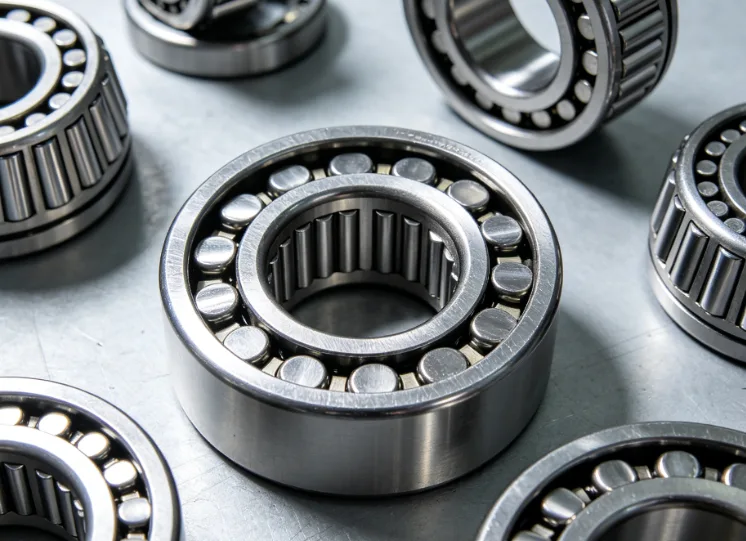
Comparison Table: Needle Bearings vs Ball Bearings
| Characteristic | Needle Bearings | Ball Bearings |
|---|---|---|
| Contact Type | Line contact | Point contact |
| Radial Load Capacity | High | Moderate |
| Axial Load Capacity | Low | Moderate to High |
| Speed Capability | Moderate | High |
| Radial Space Required | Minimal | Greater |
| Friction Level | Higher | Lower |
| Misalignment Tolerance | Low | Moderate |
Applications in Transmission Systems
Needle bearings dominate applications requiring maximum load capacity within minimal radial envelopes. Transmission designs incorporating planetary gear sets, reduction stages, and cross-axis differentials frequently employ needle bearings for their compactness. The cylindrical roller bearing category shares similar applications, though needle variants excel when cross-sectional constraints are severe.
Ball bearings remain preferred for transmission shafts requiring high-speed operation with combined radial and axial loading. Synchronizer hubs, input shafts, and output shafts in manual transmissions typically utilize ball bearings due to their speed capability and ease of installation. The angular contact ball bearing handles unidirectional thrust loads effectively in transmission input shaft applications. Industrial bearing housings often incorporate pillow block bearing units for shaft support in transmission auxiliary systems.
Automotive transmissions demonstrate the complementary nature of both bearing types. The automotive wheel bearing position typically employs ball bearings for their combined load capability and maintenance-free operation, while internal transmission gearing often relies on needle bearings for radial space efficiency.
Pros and Cons Overview
Needle Bearing Advantages
- Superior radial load capacity in minimal space
- Excellent for oscillating and shock load applications
- Reduced cross-sectional height improves transmission compactness
- Cost-effective for high-load applications requiring smaller bearings
Needle Bearing Disadvantages
- Limited speed capability due to increased friction
- Low axial load capacity restricts certain applications
- Requires precise alignment during installation
- Higher sensitivity to contamination and misalignment
Ball Bearing Advantages
- Higher speed capability with lower operating temperatures
- Handles combined radial and axial loads effectively
- Greater misalignment tolerance simplifies installation
- Lower friction improves energy efficiency in transmission systems
Ball Bearing Disadvantages
- Requires larger cross-sectional dimensions for equivalent loads
- Lower load capacity per bearing envelope
- Higher cost for equivalent load ratings in compact designs
Selection Criteria for Transmission Applications
Choosing between needle bearings and ball bearings requires evaluating multiple transmission parameters. The selection process should consider available radial space, rotational speed requirements, load magnitude and direction, operating temperature ranges, and maintenance accessibility.
When radial space is severely limited and loads are primarily radial, needle bearings provide the optimal solution. When transmission shafts operate at high speeds with combined loading, ball bearings offer superior performance. Many modern transmission designs strategically combine both types, placing needle bearings in gear mesh positions while utilizing ball bearings at shaft support locations.
For precision applications requiring exceptional alignment, the self-aligning ball bearing provides built-in misalignment compensation. However, standard ball bearings generally handle typical transmission misalignment adequately while maintaining superior speed capability.
Industry Standards and Specifications
Bearing selection should reference relevant international standards to ensure compatibility and performance verification.
These standards define load ratings, fatigue life calculations, and dimensional tolerances essential for transmission reliability. Engineers should verify that chosen bearings meet applicable specifications before finalizing transmission designs.
Conclusion
Neither needle bearings nor ball bearings universally outperform the other in transmission applications. The optimal choice depends entirely on specific design requirements including available space, speed demands, load characteristics, and operational conditions. Successful transmission designs often incorporate both bearing types strategically, leveraging the unique advantages of each to achieve optimal system performance and reliability.
For most transmission applications, evaluating the radial space constraint against speed requirements provides the clearest selection indicator. Needle bearings excel when radial packaging dominates the design constraints, while ball bearings prevail when high-speed operation with combined loading governs the selection.
Frequently Asked Questions
1. Can needle bearings replace ball bearings in transmission systems?
Needle bearings can replace ball bearings only when loads are primarily radial and sufficient axial load capacity exists from other sources. Ball bearings handle combined radial and axial loads more effectively, making direct substitution inadvisable without thorough engineering analysis.
2. Which bearing type has longer service life in transmissions?
Service life depends more on operating conditions, lubrication quality, and load management than bearing type. Both bearing types achieve comparable fatigue life when properly selected and maintained according to manufacturer specifications.
3. Are needle bearings louder than ball bearings in transmission operation?
Needle bearings may produce slightly more noise at high speeds due to increased friction and the number of rolling elements. However, proper lubrication and alignment minimize this difference in well-designed transmission systems.
4. What maintenance do these bearings require in transmission applications?
Both bearing types typically operate sealed for the duration of transmission service life in modern automotive applications. Industrial transmissions may utilize relubrication provisions specified during transmission design.
5. Which bearing type is more cost-effective for transmission manufacturing?
Cost-effectiveness depends on the specific application requirements. Needle bearings may reduce overall transmission cost when their compactness eliminates the need for larger, more expensive components, while ball bearings may offer cost advantages in high-speed applications where their speed capability reduces the need for additional cooling provisions.