
Steel Bearings vs Ceramic Bearings: Which Is Best for High-Speed Motors?
Choosing between steel bearings and ceramic bearings for high-speed motors requires understanding the fundamental differences in material properties, performance characteristics, and operational costs. Steel bearings remain the industry standard for general applications, while ceramic bearings offer superior speed capabilities and longevity in demanding environments. This comparison examines critical factors including speed ratings, load capacity, thermal behavior, and total cost of ownership to help engineers and procurement specialists make informed decisions for their specific motor applications.
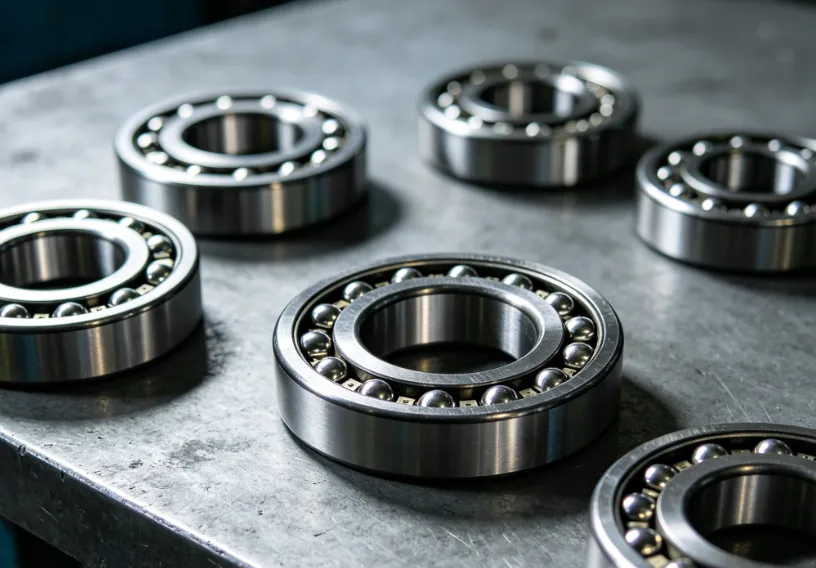
Understanding the Fundamentals of Bearing Materials
Steel bearings utilize chrome steel (AISI 52100) or stainless steel compositions for both the rolling elements and raceways. This established technology has over a century of manufacturing refinement and field-proven reliability. The steel used in bearing production undergoes heat treatment processes that achieve hardness ratings between 58-65 HRC, providing excellent wear resistance and load-carrying capacity for standard industrial applications.
Ceramic bearings typically employ silicon nitride (Si3N4) for the rolling elements while retaining steel raceways in hybrid configurations. Full ceramic bearings, where both balls and rings are ceramic, exist but remain uncommon in motor applications due to cost and fragility concerns. The ceramic balls in hybrid bearings offer significant performance advantages that justify their premium pricing in high-speed operations. For comprehensive standards on bearing materials and testing, refer to the ISO Standards for bearing specifications.
Advantages of Ceramic Bearings in High-Speed Applications
Ceramic hybrid bearings provide several distinct performance benefits that make them superior for high-speed motor applications. The lower density of ceramic balls—approximately 60% less than equivalent steel balls—reduces centrifugal loading on the outer raceway, allowing higher rotational speeds without excessive heat generation. This weight reduction translates directly to lower inertial forces during acceleration and deceleration cycles common in servo motor applications.
The improved thermal conductivity of ceramic materials helps dissipate heat more effectively during operation. Reduced friction coefficients mean ceramic bearings generate less heat at equivalent speeds, which extends lubricant life and allows for smaller lubrication systems or extended maintenance intervals. For precision motor applications requiring consistent operating temperatures, this thermal stability proves invaluable for maintaining positional accuracy and repeatability. Understanding the broader implications of precision engineering can be enhanced by resources on en.wikipedia.org for industrial technology documentation.
Additional advantages include superior corrosion resistance that eliminates the need for special coatings or stainless steel variants, reduced vibration and noise levels during operation, and longer service life under optimal conditions. These benefits compound in applications where motor downtime carries significant costs or where replacement accessibility is limited.
Advantages of Steel Bearings in Motor Applications
Steel bearings offer compelling advantages that maintain their relevance in many motor applications. The lower initial cost remains the primary driver for steel bearing adoption, with prices typically 2-5 times lower than equivalent ceramic hybrid configurations. For applications where speed requirements fall within standard bearing capabilities, this cost differential rarely justifies the performance premium of ceramic alternatives.
The established supply chain for steel bearings ensures ready availability across virtually all bearing sizes and configurations. Emergency replacements can be sourced within hours rather than days or weeks required for specialty ceramic bearings. This accessibility proves critical for production equipment where extended downtime carries substantial financial consequences.
Steel bearings handle shock loads and misalignment better than ceramic variants, making them suitable for applications with variable loading conditions or less precise mounting arrangements. The ductile nature of steel allows some deformation under extreme loads that would cause brittle fracture in ceramic materials. For motors operating in environments with vibration, variable loads, or less controlled conditions, steel bearings often provide better long-term reliability.
Performance Comparison: Speed, Load, and Temperature
Speed capability represents the most significant differentiator between steel and ceramic bearings in motor applications. Standard steel bearings typically operate effectively up to approximately 10,000-15,000 DN (bearing bore in millimeters multiplied by RPM), while precision steel variants can reach 20,000-30,000 DN with proper lubrication and mounting. Ceramic hybrid bearings commonly achieve 30,000-50,000 DN, with some specialized configurations exceeding 100,000 DN under ideal conditions.
| Characteristic | Steel Bearings | Ceramic Hybrid Bearings |
|---|---|---|
| Maximum Speed (DN) | 10,000 – 30,000 | 30,000 – 100,000+ |
| Weight (vs steel balls) | Standard | ~60% lighter |
| Operating Temperature | -30°C to 150°C | -30°C to 250°C |
| Corrosion Resistance | Requires coating | Excellent inherent |
| Typical Cost Ratio | 1x (baseline) | 2-5x higher |
| Expected Service Life | Standard | 2-4x longer |
Load capacity differs notably between the two bearing types. Steel bearings generally provide higher basic load ratings due to the larger contact area achievable with steel-to-steel interfaces. Ceramic balls create point contacts that concentrate stress, reducing static load capacity compared to steel equivalents. For applications combining high speed with substantial radial or axial loads, the bearing selection becomes more complex and may require engineering analysis or consultation with bearing manufacturers. For technical guidance on bearing selection, consult the Google SEO Guide which provides comprehensive engineering documentation standards.
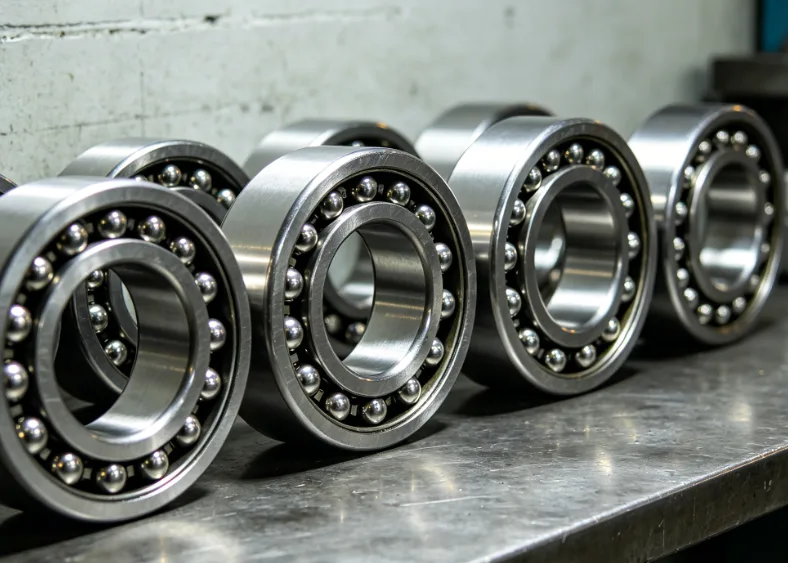
Load Considerations and Application Suitability
High-speed motor applications impose specific demands on bearing performance that influence material selection. Angular contact ball bearings excel in these conditions because they accommodate combined radial and axial loads while maintaining precise control of shaft position. The contact angles available—typically 15°, 25°, or 40°—allow optimization for speed (lower angles) or load capacity (higher angles). These specialized bearings are available through quality suppliers like Angular Contact Ball Bearing – yifeng for high-performance applications.
Cylindrical roller bearings provide exceptional radial load capacity for motor shafts experiencing primarily radial forces. Their ability to accommodate thermal expansion while maintaining alignment makes them suitable for motors operating across temperature ranges. The roller-to-raceway contact geometry distributes loads effectively, though axial load capacity remains limited without additional bearing arrangements. For applications requiring high radial load capacity, explore Cylindrical Roller Bearing – yifeng options.
Deep groove ball bearings represent the most common choice for general motor applications, offering a balance of speed capability, load capacity, and cost. Their simple geometry and widespread availability make them the default selection for many motor manufacturers. When speed or environmental requirements exceed deep groove capabilities, specialized bearing types become necessary.
Speed Ratings and Thermal Management
Thermal management emerges as the critical constraint in high-speed bearing applications. As bearing speed increases, friction-generated heat rises approximately with the square of rotational speed. This thermal load affects lubricant viscosity, bearing clearance, and ultimately mechanical integrity. Steel bearings operating near their speed limits require careful attention to lubrication type, quantity, and delivery systems.
Ceramic bearings generate approximately 20-30% less friction heat than equivalent steel configurations at the same speed, primarily due to the smoother ceramic surface and reduced centrifugal loading. This thermal advantage allows operation closer to theoretical speed limits or provides margin for extended lubricant life. In precision positioning applications, reduced thermal expansion contributes to improved positional accuracy throughout operation.
For high-speed motor applications, angular contact ball bearings with precision tolerances provide the best performance. The optimized contact geometry and precision manufacturing enable stable operation at speeds exceeding 20,000 RPM while maintaining low vibration levels essential for smooth motor operation. Additional resources on accessibility standards for industrial equipment can be found at www.w3.org for equipment design guidelines.
Cost Analysis and Total Cost of Ownership
Initial acquisition cost favors steel bearings substantially, with ceramic hybrid equivalents costing 2-5 times more depending on size and precision class. For applications requiring multiple bearings, this multiplier significantly impacts project budgets. However, total cost of ownership analysis often reveals different conclusions when considering the full operational lifecycle.
Ceramic bearings typically demonstrate service lives 2-4 times longer than steel equivalents under comparable conditions. This extended life reduces replacement frequency, lowering both material costs and maintenance labor over time. In applications where bearing replacement requires significant downtime or equipment disassembly, the maintenance cost savings can substantially offset higher initial pricing.
For high-speed motor applications requiring precision components, cylindrical roller bearings offer excellent value when calculated against total operating costs. The extended service intervals and reduced maintenance requirements often justify premium pricing for quality components. Needle roller bearings provide another cost-effective option for applications with space constraints, as detailed in Needle Roller Bearing – yifeng specifications.
Selecting the Right Bearing for Your Application
Application requirements determine the optimal bearing material choice more effectively than general performance comparisons. Medical equipment, aerospace systems, and high-precision machining require ceramic bearings to meet speed and accuracy specifications. Industrial fans, pumps, and general manufacturing equipment often operate successfully with steel bearings optimized for their specific conditions.
Critical selection factors include the required rotational speed relative to bearing speed ratings, load magnitude and direction, operating temperature range, environmental conditions such as moisture or contamination exposure, required service life, and maintenance accessibility. Budget constraints and acceptable risk levels also influence the final selection, particularly for non-critical applications where maximum performance provides limited practical benefit.
For applications requiring high precision at elevated speeds, self-aligning ball bearings provide flexibility in mounting and accommodation of shaft deflection. Their ability to compensate for misalignment reduces installation complexity while maintaining performance in demanding conditions. Quality Self-Aligning Ball Bearing – yifeng options support these demanding applications.
Supplier Selection and Quality Considerations
Bearing quality varies significantly across manufacturers and price points, affecting both performance and longevity. Reputable suppliers provide detailed specifications, material certifications, and application support that help ensure proper bearing selection. The additional cost of quality bearings from established manufacturers often proves economical compared to premature failures and associated downtime costs.
Deep Groove Ball Bearing – yifeng offers a comprehensive selection of bearing types including deep groove ball bearings, angular contact configurations, cylindrical roller bearings, and specialized options like pillow block bearings and needle roller bearings. Their technical resources support proper bearing selection for specific application requirements, helping customers navigate the complexity of high-speed motor bearing choices.
When evaluating bearing suppliers, consider the range of bearing types and sizes available, technical support capabilities for application questions, quality assurance processes and certifications, availability of custom configurations for specialized requirements, and delivery lead times for standard and emergency orders.
Key Selection Criteria for High-Speed Motors
When specifying bearings for high-speed motor applications, several criteria demand careful evaluation. Internal clearance must match operating conditions precisely—insufficient clearance causes binding at operating temperature while excessive clearance reduces rigidity and positional accuracy.
- Maximum operating speed relative to bearing DN rating
- Radial and axial load requirements under all operating conditions
- Precision class matching application accuracy needs
- Operating temperature range and thermal stability requirements
- Environmental conditions including contamination and moisture exposure
- Lubrication type compatibility and maintenance intervals
- Available mounting space and configuration constraints
The choice between steel and ceramic ultimately depends on balancing performance requirements against budget constraints while considering long-term operational costs. Applications exceeding 20,000 RPM generally benefit from ceramic bearings, while those below this threshold may achieve acceptable results with high-quality steel alternatives.
Environmental and Operational Considerations
Operating environment significantly impacts bearing material selection beyond pure performance metrics. Steel bearings require protection from moisture and contamination, often necessitating seals, shields, or corrosion-resistant coatings. Ceramic bearings offer inherent corrosion resistance that simplifies environmental protection requirements and extends operational reliability in challenging conditions.
Temperature extremes favor ceramic materials in some scenarios. While both bearing types operate effectively across similar ranges, ceramic materials maintain properties at higher temperatures where steel experiences degradation. Vacuum applications particularly favor ceramic bearings due to outgassing characteristics and lubrication challenges inherent in low-pressure environments.
For automotive applications where wheel bearings must withstand moisture, contamination, and variable loading, automotive wheel bearings require careful specification to balance performance and durability requirements. The combination of radial and axial loads from wheel dynamics demands robust bearing designs capable of maintaining performance throughout extended service intervals. Specialized Automotive Wheel Bearing – yifeng solutions address these challenging requirements.
Maintenance Requirements and Service Life
Steel bearings require regular lubrication maintenance to achieve design service life. The interval between relubrication depends on operating conditions, with speed, temperature, and contamination exposure accelerating lubricant degradation. Monitoring vibration levels provides early indication of lubrication failure or bearing degradation, allowing planned replacement before catastrophic failure occurs.
Ceramic bearings demonstrate extended service life under comparable conditions, partly due to reduced friction and heat generation. However, they require equivalent attention to lubrication—ceramic balls still require proper film thickness to prevent surface damage. The smoother ceramic surface can extend oil change intervals, but neglect of lubrication rapidly degrades any bearing regardless of material.
Pillow block bearings provide convenient mounting solutions for motors where bearing replacement accessibility matters. Their standardized dimensions simplify installation and maintenance procedures, reducing the skilled labor required for bearing replacement in industrial settings. Explore the range of Pillow Block Bearing – yifeng options for industrial applications requiring easy maintenance access.
Making the Final Decision
The steel versus ceramic bearing decision for high-speed motors ultimately depends on your specific application requirements, operational priorities, and budget constraints. Ceramic bearings deliver superior performance in speed-critical applications where their benefits justify premium pricing. Steel bearings provide reliable, cost-effective solutions for applications within their operational envelope.
For most industrial motor applications operating below 15,000 RPM, high-quality steel bearings offer the best value proposition. Applications requiring speeds above this threshold, precision positioning, or extended service intervals in inaccessible locations benefit from ceramic bearing investment. Matching bearing specifications to actual requirements—rather than specifying the highest performance available—produces optimal outcomes.
Consult with bearing specialists when application requirements approach or exceed standard bearing capabilities. Proper bearing selection requires understanding both the theoretical performance limits and practical constraints of real-world operation. The investment in expert consultation typically pays dividends through improved reliability and reduced total operating costs. Additional guidance on industrial cybersecurity considerations for bearing monitoring systems can be found at the www.nist.gov resource center.
Frequently Asked Questions
What is the difference between hybrid ceramic and full ceramic bearings?
Hybrid ceramic bearings use ceramic balls with steel inner and outer rings. Full ceramic bearings have ceramic rings and balls. Hybrid configurations provide most performance benefits at lower cost, making them suitable for motor applications.
What speed can steel bearings handle in motor applications?
Standard steel bearings operate effectively up to approximately 10,000-15,000 DN (diameter × RPM). High-precision steel variants with proper lubrication can reach 20,000-30,000 DN.
Why are ceramic bearings more expensive than steel?
Ceramic balls require precision manufacturing processes including sintering, grinding, and polishing of silicon nitride material. The higher production costs and smaller market volume contribute to premium pricing compared to standard steel components.
How do I choose the right bearing for high-speed motors?
Evaluate required RPM, load conditions, operating temperature, precision requirements, and budget. Applications exceeding 15,000 RPM typically benefit from ceramic bearings. Consult bearing manufacturer specifications for specific application guidance.
Do ceramic bearings require special maintenance?
Ceramic bearings require proper lubrication and careful handling to avoid impact damage. Regular inspection for wear and following manufacturer guidelines ensures reliable performance throughout the service life.
What factors most affect bearing selection for high-speed motors?
Speed requirements relative to bearing ratings, load magnitude and direction, operating temperature conditions, required precision level, environmental exposure, and total cost of ownership all influence the optimal bearing selection for specific motor applications. Industry standards from www.iso.org provide additional guidance on bearing testing and quality assurance.