
Introduction
China’s bearing industry has moved well beyond low-cost volume production, becoming a critical source of precision components for automotive, energy, heavy equipment, and high-speed machinery. For buyers evaluating suppliers in 2026, the challenge is no longer whether China can deliver, but which manufacturers offer the best mix of scale, engineering capability, quality control, and export reliability. This overview highlights ten leading industrial bearing manufacturers in China and explains what sets them apart, helping procurement teams, distributors, and engineers narrow their shortlist before comparing product ranges, certifications, and application fit.
Why Chinese Bearing Manufacturers Matter
The global industrial machinery landscape relies heavily on robust rotational components, and China has firmly positioned itself as a dominant force in this sector. Producing over 20 billion units annually, the country accounts for nearly a third of the world’s bearing output. This massive scale is no longer solely about high-volume commodity production; it represents a mature, technologically advanced ecosystem capable of supporting the most demanding engineering applications.
As global supply chains face continuous restructuring, procurement professionals are increasingly looking to the East not just for price leverage, but for comprehensive engineering partnerships. The evolution of domestic manufacturing infrastructure has bridged the historical quality gap, allowing top-tier Chinese facilities to compete directly with legacy Western and Japanese brands.
Cost, resilience, and performance drivers
The shift toward Chinese suppliers is driven by a compelling mix of cost efficiency, supply chain resilience, and escalating performance metrics. Industrial buyers typically observe a 15% to 25% cost reduction when sourcing from high-level Chinese facilities compared to European or North American alternatives, without sacrificing mechanical integrity.
Recent advancements in metallurgy have been pivotal. The widespread adoption of vacuum-degassed GCr15 bearing steel has significantly reduced non-metallic inclusions, extending the contact fatigue life of the final product. Furthermore, heavy investments in automated CNC grinding and robotic assembly lines have reduced human error, allowing leading factories to maintain high dimensional consistency and defect rates well below the industry standard threshold of 50 PPM (parts per million).
What this ranking covers
This comprehensive overview isolates the elite tier of industrial Bearing Manufacturers operating within China. Rather than cataloging standard trading companies or low-end producers, the focus remains strictly on enterprises with proven, in-house engineering and metallurgical capabilities.
The ranking evaluates companies that consistently meet stringent international standards, such as IATF 16949 for automotive and ISO/TS 22163 for railway applications. By focusing on Tier 1 and high-end Tier 2 suppliers capable of supporting critical sectors like renewable energy, heavy mining, and aerospace, procurement teams can identify partners equipped for long-term strategic alignment.
How to Define and Compare Industrial Bearing Manufacturers in China
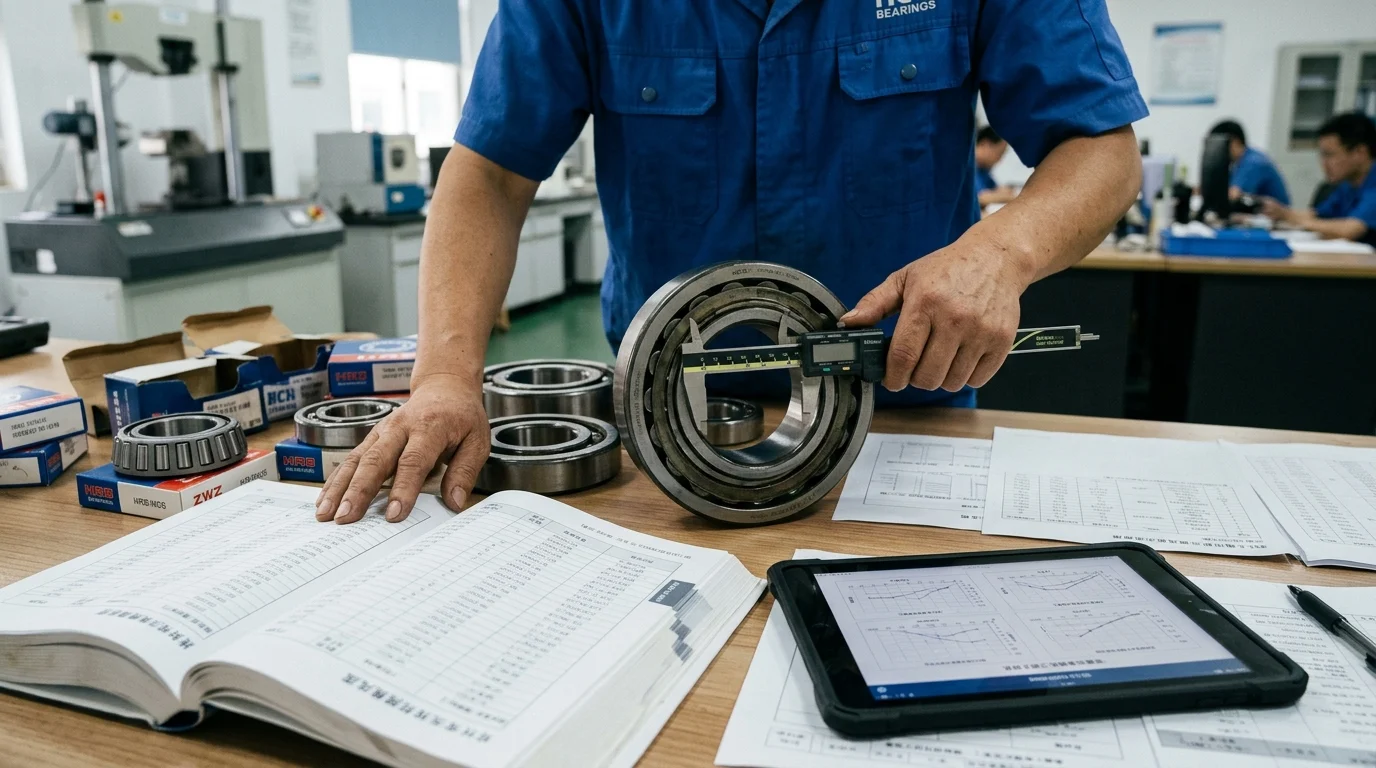
Navigating the dense landscape of industrial component sourcing requires a rigorous framework for evaluating suppliers. Distinguishing a top-tier manufacturer from a mid-market factory involves analyzing their technical specialization, metallurgical control, and application-specific expertise.
A true manufacturing partner offers comprehensive engineering support, sophisticated testing facilities, and a documented history of performing under extreme operational stresses. Establishing strict comparison parameters ensures that selected vendors align with specific industrial requirements.
Product categories, load conditions, and end-use sectors
Industrial bearings are not monolithic; they are highly specialized components dictated by complex load conditions. Sourcing strategies must differentiate between radial load specialists producing deep groove ball bearings and those engineering spherical or tapered roller bearings designed for severe axial and shock loads. For example, heavy metallurgy and mining applications often require dynamic load ratings exceeding 500 kN, necessitating specialized internal geometries and cage designs.
End-use sectors dictate the necessary product categories. Wind energy applications require massive slewing rings and main shaft bearings capable of withstanding unpredictable multi-directional forces over a 20-year lifecycle. Conversely, the machine tool industry demands ultra-precision angular contact bearings operating at speeds exceeding 20,000 RPM. Identifying a manufacturer’s core competency across these diverse product lines is the first step in successful procurement.
Comparison criteria for ranking suppliers
Ranking and comparing suppliers requires objective, quantifiable metrics. Beyond basic ISO 9001 certification, buyers must evaluate a facility’s annual R&D expenditure, which for top-tier manufacturers typically ranges between 3% and 5% of total revenue. This investment directly correlates with their ability to develop proprietary tribological coatings and advanced sealing technologies.
Other critical comparison criteria include vertical integration—specifically whether the manufacturer controls its own forging and heat-treatment processes—and overall production capacity. Facilities that manage the entire thermal cycle internally demonstrate superior control over the microstructure of the steel, ensuring uniform hardness typically ranging from HRC 60 to 64, which is vital for wear resistance in high-load environments.
Top 10 Industrial Bearing Manufacturers in China
The leading echelon of Chinese bearing production is geographically concentrated in historic industrial hubs such as Wafangdian, Luoyang, and Harbin, alongside newer, highly automated clusters in Zhejiang and Jiangsu provinces. These regions house enterprises that have transitioned from domestic suppliers to global heavyweights.
The following analysis highlights the top-performing organizations shaping the 2026 industrial landscape. These manufacturers are distinguished by their massive operational scale, advanced metallurgical research, and established presence in international export markets.
Core strengths, product focus, and ideal applications
The market leaders possess distinct core strengths tailored to specific industrial niches. State-owned giants like ZWZ (Wafangdian Bearing Group) and LYC (Luoyang Bearing) dominate the heavy machinery, railway, and wind power sectors. Their engineering focus centers on ultra-large diameter bearings, successfully outfitting 2MW to 5MW wind turbines with main shaft and pitch bearings that meet stringent global lifecycle standards.
In contrast, privately held powerhouses such as C&U Group and ZXY excel in high-volume, high-precision manufacturing. Their product focus is heavily weighted toward automotive components, electric motors, and precision machine tools. These companies leverage highly automated production lines to achieve extreme consistency, making them ideal partners for applications requiring low noise, low vibration, and precise rotational accuracy under continuous operation.
Comparison table: capacity, certifications, and export markets
To facilitate vendor selection, the following table compares key metrics among representative top-tier manufacturers, highlighting their capacity, quality frameworks, and primary global footprints.
| Manufacturer | Core Industrial Focus | Key Certifications | Est. Annual Capacity | Primary Export Markets |
|---|---|---|---|---|
| ZWZ Group | Heavy Industry, Wind, Steel | ISO 9001, IRIS, IATF 16949 | >80 Million Units | Europe, North America, Asia |
| LYC Bearing | Aerospace, Railway, Mining | AS9100, CRCC, ISO 14001 | >70 Million Units | Global OEM Supply |
| C&U Group | Automotive, Electric Motors | IATF 16949, ISO 45001 | >1.2 Billion Units | North America, Europe |
| HRB Group | Machine Tools, Agriculture | ISO 9001, ISO/TS 16949 | >50 Million Units | Southeast Asia, Middle East |
| ZXY (XCC) | Precision Components, Auto | IATF 16949, ISO 14001 | >300 Million Units | Europe, Americas |
This data underscores the massive scale at which these entities operate, ensuring they can meet the high-volume demands of international OEMs while maintaining rigorous compliance with regional quality directives.
Buyer Risks, Compliance Checks, and Supply Chain Factors
While the technical capabilities of top-tier suppliers are robust, international procurement inherently involves supply chain complexities and compliance risks. Mitigating these challenges requires comprehensive due diligence and a deep understanding of standard export protocols.
Successful integration of overseas components into domestic production lines depends on strict material verification, robust logistical planning, and legally binding quality agreements that protect the buyer from catastrophic mechanical failures.
Material traceability, testing standards, and certifications
Material traceability is the most critical risk factor in bearing procurement. Substandard steel can lead to premature spalling and catastrophic failure. Buyers must mandate 100% ultrasonic testing for raw forgings to detect internal flaws. Comprehensive metallurgical reports detailing chemical composition and heat-treatment lot numbers should accompany every shipment.
Furthermore, adherence to international testing standards is non-negotiable. Top manufacturers utilize coordinate measuring machines (CMM) and roundness testers to verify tolerances down to the micrometer level. Procurement contracts should stipulate compliance with specific precision classes, such as ABEC-5 (ISO P5) or higher, and require third-party validation from accredited laboratories if internal audits reveal discrepancies.
Logistics, packaging, MOQ, and after-sales support
Logistics and packaging are critical for preserving component integrity during transoceanic shipping. Bearings must be treated with high-grade rust preventatives, sealed in Volatile Corrosion Inhibitor (VCI) paper, and packed in fumigated wooden crates compliant with ISPM 15 standards to prevent oxidation and transit damage.
Commercial terms also dictate the feasibility of a supplier relationship. Typical Minimum Order Quantities (MOQs) for standard industrial sizes range from 500 to 2,000 units, whereas custom-engineered runs may require a minimum order value exceeding $10,000 to cover specialized tooling. With production lead times averaging 45 to 60 days, plus an additional 30 days for maritime freight, buyers must establish robust forecasting models and negotiate responsive after-sales support protocols with their chosen Bearing Manufacturers to prevent costly line stoppages.
How to Choose the Right Bearing Manufacturer in China
Transitioning from a longlist of potential vendors to a finalized procurement contract requires a systematic, risk-averse approach. The selection process must balance immediate budgetary constraints with long-term reliability and application-specific demands.
By employing a structured evaluation matrix, engineering and purchasing teams can align their technical prerequisites with the commercial realities of the Chinese manufacturing landscape.
Step-by-step supplier selection process
The supplier selection process should initiate with a detailed Request for Quotation (RFQ) accompanied by comprehensive technical drawings and load specifications. This forces the supplier to demonstrate their engineering comprehension rather than simply quoting a price off a standard catalog. Following the RFQ, buyers should request a First Article Inspection (FAI) sample to verify dimensional accuracy and surface finish.
If the samples meet the required specifications, the next mandatory step is a comprehensive facility audit. Whether conducted in-person or via a certified third-party auditing firm, this inspection must evaluate the factory’s quality management system, the calibration status of their metrology equipment, and their scrap material handling procedures. Only after a successful audit should a pilot production run of 100 to 500 units be authorized.
Decision guide by budget, quality, and application needs
Decision-making ultimately requires balancing budget against the severity of the application. Over-specifying precision classes incurs unnecessary costs, while under-specifying guarantees premature failure.
| Application Severity | Required Precision (ISO/ABEC) | Acceptable Defect Rate | Estimated Price Premium (vs. Baseline) | Ideal Supplier Profile |
|---|---|---|---|---|
| Light / General (Conveyors, Ag. Equip) | P0 (ABEC-1) | < 200 PPM | Baseline | High-volume Tier 2 |
| Medium / Demanding (Pumps, Standard Motors) | P6 (ABEC-3) | < 50 PPM | +10% to +15% | Automated Tier 1 or Tier 2 |
| Heavy / Critical (Turbines, Aerospace, CNC) | P5/P4 (ABEC-5/7) | < 10 PPM | +30% to +60% | Specialized Tier 1 with R&D Lab |
By utilizing this framework, buyers can strategically allocate their procurement budget. High-speed, high-temperature environments demand the premium associated with P4 precision and advanced lubrication, whereas standard material handling applications can be safely and economically serviced by P0 components from reputable, high-volume producers.
Further reading:
Key Takeaways
- The most important conclusions and rationale for Bearing Manufacturers
- Specs, compliance, and risk checks worth validating before you commit
- Practical next steps and caveats readers can apply immediately
Frequently Asked Questions
Why should buyers consider Chinese bearing manufacturers in 2026?
Top Chinese plants can cut sourcing costs by about 15%–25% while meeting demanding standards for mining, wind, rail, and automotive applications.
How can I verify whether a Chinese bearing supplier is a real manufacturer?
Check for in-house forging, heat treatment, grinding, testing labs, and certifications like IATF 16949 or ISO/TS 22163, not just trading capability.
What bearing types should be compared for different industrial loads?
Use deep groove ball bearings for general radial loads, tapered or spherical roller bearings for heavy axial, shock, or misalignment conditions.
What quality indicators matter most when comparing bearing manufacturers?
Focus on steel grade such as vacuum-degassed GCr15, hardness around HRC 60–64, defect rates, dimensional consistency, and documented fatigue-life testing.
Where can I explore related bearing sourcing insights on etorgroupblog.com?
Visit ETOR Group Blog’s About page and Product pages to review bearing manufacturer context, application categories, and sourcing-related product information.