
Introduction
In 2026, buying motor deep groove ball bearings is less about securing the lowest unit price and more about controlling failure risk, delivery uncertainty, and lifetime operating cost. Small gaps in supplier capability, material traceability, preload control, or cleanliness standards can turn into motor noise, premature wear, or costly downtime in the field. This article outlines the most common procurement pitfalls and explains how a disciplined vendor audit helps separate qualified manufacturers from brokers and inconsistent sources. Readers will gain a practical framework for evaluating specifications, quality systems, cost structure, and supply reliability before those weaknesses surface in production.
Why Procurement Strategy Matters for Motor Deep Groove Ball Bearings
As industrial automation and electrification accelerate in 2026, securing reliable motor deep groove ball bearings requires a proactive and highly technical procurement strategy. These rotational components are the backbone of electric motors, directly influencing energy efficiency, acoustic performance, and overall operational lifespan. The global supply chain volatility experienced in recent years demands that procurement professionals look far beyond baseline unit pricing to evaluate broader strategic impacts on production stability.
How do uptime and total landed cost shape buying decisions
Uptime is the ultimate metric for industrial motor applications. In continuous process industries, such as petrochemical refining or high-volume automotive manufacturing, motor failure due to premature bearing wear can easily incur downtime costs exceeding $10,000 per hour. Consequently, total landed cost calculations must incorporate not only the ex-works unit price but also freight volatility, inventory holding costs, and prevailing trade tariffs. Depending on the region of origin, import duties can add 15% to 25% to the baseline cost, fundamentally altering the perceived value of an offshore supplier.
Which market pressures create hidden procurement risks
The 2026 market is characterized by fluctuating raw material costs, particularly for high-carbon chromium bearing steel grades like 100Cr6 or 52100. Additionally, specialized clearance requirements—such as C3 or C4 specifications for high-temperature motors—are seeing lead times stretch from a standard 8 weeks to 16-24 weeks. Buyers must anticipate these market pressures, as delayed deliveries directly threaten OEM production schedules and may force desperate reliance on unvetted spot-market suppliers, introducing massive quality risks.
Key Technical and Commercial Criteria for Buying Motor Deep Groove
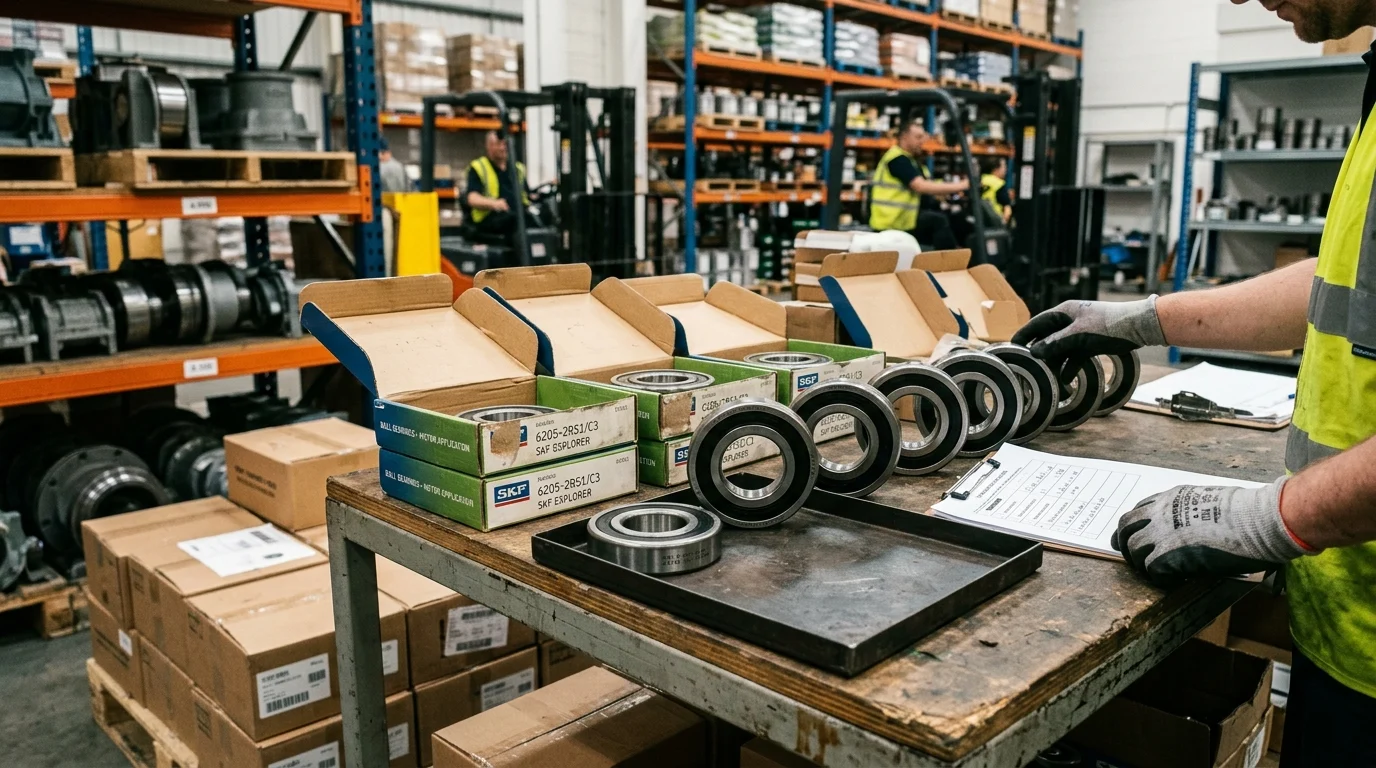
Selecting the right motor deep groove ball bearing requires strict alignment between procurement specialists and engineering teams. Standardized catalog specifications often fail to capture the nuanced demands of modern high-efficiency electric motors, making rigorous technical evaluation a mandatory step in the sourcing and vendor qualification process.
Which bearing specifications should buyers verify first
Buyers must verify precision tolerances, typically defaulting to ABEC 5 or ABEC 7 standards for high-speed motor applications to minimize rotational runout. Radial internal clearance is equally critical; C3 clearance is the industry standard for electric motors to accommodate thermal expansion up to 120°C without seizing. Furthermore, acoustic performance must be validated against standardized vibration classes, with Z3V3 or Z4V4 ratings acting as the strict baseline for low-noise motor operation.
How do catalog equivalents differ from application-fit options
A commercial catalog equivalent may match basic dimensional specifications (e.g., 6206-2RS) but lack essential application-specific enhancements. Application-fit options often incorporate specialized polyurea or synthetic greases designed for continuous high-temperature operation, alongside optimized fill rates of 30% to 40% to prevent grease churning and overheating. In contrast, standard catalog bearings frequently utilize generic lithium-based greases that degrade rapidly under industrial motor loads.
What comparison points help evaluate supplier offers
Evaluating supplier offers requires a structured comparison of both technical and commercial variables. By standardizing the evaluation criteria, procurement teams can accurately assess which supplier provides the optimal balance of precision, longevity, and cost.
| Specification Category | Standard Catalog Bearing | Application-Fit Motor Bearing | Estimated Cost Premium |
|---|---|---|---|
| Tolerance Grade | ABEC 1 / ABEC 3 | ABEC 5 / ABEC 7 | +15% to +30% |
| Noise/Vibration | Z1V1 / Z2V2 | Z3V3 / Z4V4 | +10% to +20% |
| Lubrication | Standard Lithium (25% fill) | High-Temp Polyurea (35% fill) | +5% to +15% |
| Internal Clearance | CN (Normal) | C3 / C4 | Negligible |
Common Procurement Pitfalls and Risk Signals
The global bearing market is heavily fragmented, exposing buyers to significant risks ranging from inconsistent metallurgical quality to outright counterfeiting. Identifying risk signals early in the quotation phase is essential for protecting motor performance and safeguarding brand reputation.
Which quotation-stage red flags signal supplier risk
Quotations priced more than 20% to 30% below the established market average are a primary red flag, often indicating the use of inferior reclaimed steel or bypassed heat-treatment processes. Another critical warning sign is a supplier’s inability or reluctance to provide Production Part Approval Process (PPAP) Level 3 documentation, including material test reports (MTRs) and statistical capability studies demonstrating a Cpk > 1.33 for critical dimensions.
How do OEMs, distributors, and traders differ in sourcing risk
Sourcing directly from Tier-1 or Tier-2 Original Equipment Manufacturers (OEMs) typically guarantees rigorous quality control, with top factories targeting defect rates below 50 Parts Per Million (PPM). In contrast, sourcing through unauthorized traders or the gray market introduces severe risks. Industry data suggests that counterfeit bearings sourced through unverified channels can exhibit failure rates exceeding 15%, leading to catastrophic motor damage and voided warranties. Authorized distributors offer a secure middle ground, providing localized inventory with verifiable OEM traceability.
What cost framework separates price from lifecycle value
A robust cost framework shifts the procurement focus from piece-price to Total Cost of Ownership (TCO). This involves calculating the L10 lifecycle of the bearing within the specific motor application and factoring in the cost of maintenance intervals. A bearing that costs 10% less upfront but requires replacement twice as frequently ultimately drives up the TCO through increased labor, machine teardowns, and operational disruption.
How to Audit and Approve Suppliers
A comprehensive vendor audit process separates capable manufacturing partners from opportunistic traders. As supply chains mature in 2026, remote and on-site audits must rigorously assess both quality management systems and actual shop-floor capabilities to ensure long-term reliability.
Which documents and compliance checks matter most
Foundational compliance begins with verifying active ISO 9001 and, for automotive or traction motor applications, IATF 16949 certifications. Auditors must also mandate RoHS and REACH compliance documentation for all seals, cages, and greases. Traceability is non-negotiable; suppliers must demonstrate the ability to trace any finished bearing batch back to the original steel mill heat lot within 24 hours of a request.
What audit steps validate manufacturing capability
Validating manufacturing capability requires scrutinizing the grinding and super-finishing lines. Auditors should look for automated 100% noise testing stations (utilizing calibrated Anderon meters) rather than manual or sample-based testing. Additionally, the presence of in-house metallurgical labs equipped with scanning electron microscopes (SEM) and hardness testers ensures the supplier can independently verify steel purity and heat-treatment efficacy before assembly.
Which scorecard supports supplier approval decisions
Implementing a standardized scorecard objectifies the approval decision, ensuring all prospective vendors are measured against identical performance thresholds. This data-driven approach facilitates continuous improvement and simplifies annual supplier reviews.
| Audit Category | Weighting | Key Performance Indicator (KPI) Target | Minimum Acceptable Score |
|---|---|---|---|
| Quality Systems | 35% | < 50 PPM Defect Rate, PPAP Level 3 capability | 30/35 |
| Manufacturing Capability | 30% | Cpk > 1.33 on critical dimensions, 100% automated inspection | 25/30 |
| Logistics & Delivery | 20% | > 95% On-Time Delivery (OTD), Local safety stock availability | 15/20 |
| Commercial Viability | 15% | Transparent cost breakdowns, minimum 60-day payment terms | 10/15 |
Decision Framework for Final Supplier Selection
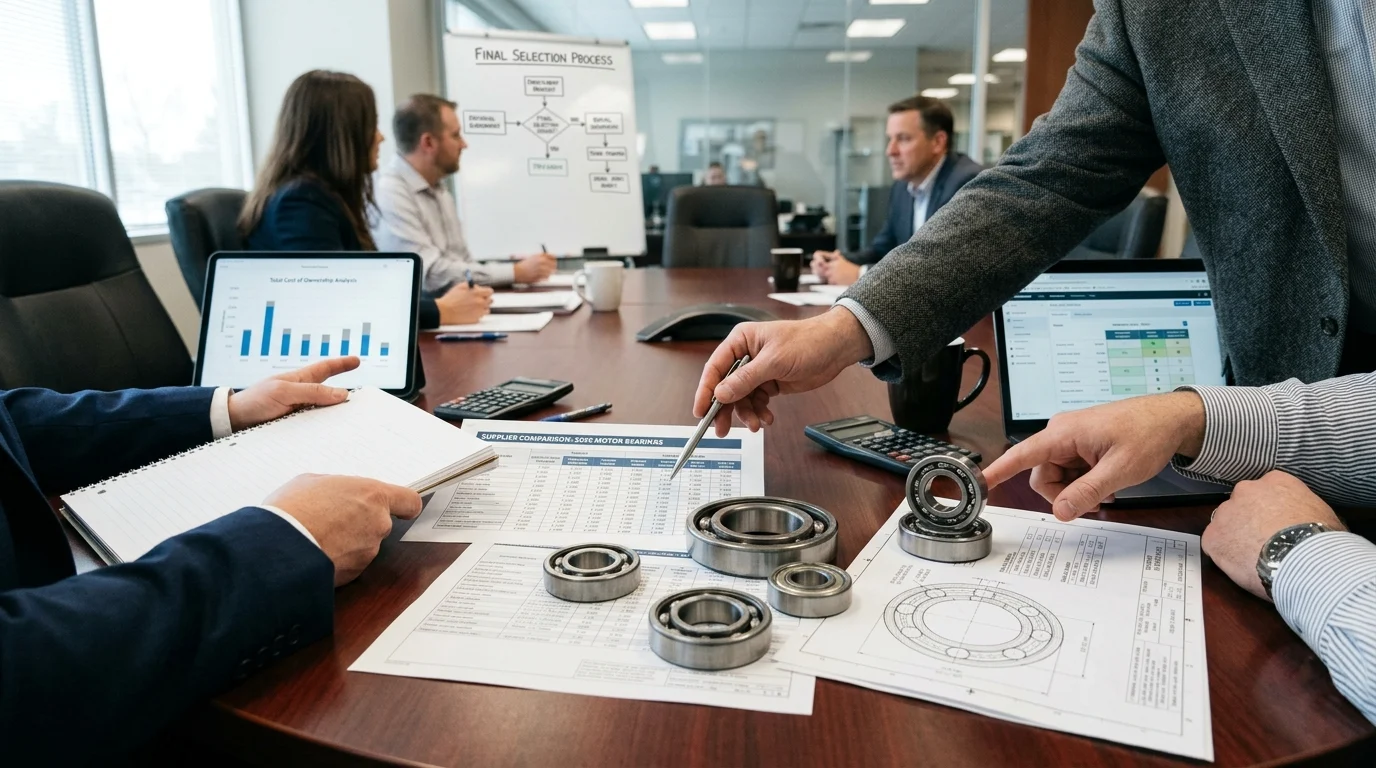
The culmination of the procurement process is a final supplier selection that balances technical validation with supply chain resilience. This requires a formalized decision framework that integrates input from multiple organizational stakeholders to mitigate risk and ensure seamless production.
How should procurement, quality, and maintenance align
Final approval mandates consensus across departments. Maintenance and engineering prioritize reliability and extended L10 life, quality assurance demands stringent traceability and low PPM, while procurement focuses on cost predictability and favorable Minimum Order Quantities (MOQs). For custom grease fills or specific seal configurations, negotiating MOQs between 1,000 and 5,000 units ensures the supplier remains committed to the production run without forcing the buyer to carry excessive, slow-moving inventory.
Which negotiation and logistics actions reduce disruption
Mitigating future disruption requires strategic negotiation of logistics parameters before the first purchase order is issued. Contracts should stipulate a vendor-managed inventory (VMI) program or local safety stock equivalent to 2 to 3 months of projected demand. Furthermore, buyers should implement a dual-sourcing strategy—allocating 70% of the volume to a primary strategic partner and 30% to a qualified secondary supplier—to insulate the production line against geopolitical shocks, localized natural disasters, or unexpected capacity constraints.
Key Takeaways
- The most important conclusions and rationale for Motor Deep Groove Ball
- Specs, compliance, and risk checks worth validating before you commit
- Practical next steps and caveats readers can apply immediately
Frequently Asked Questions
What specs should I confirm first when buying motor deep groove ball bearings?
Check tolerance grade, clearance, noise level, and grease. For many electric motors, verify ABEC 5/7, C3 or C4, Z3V3 or better, and high-temperature grease matched to operating conditions.
Why is a very low bearing quotation risky?
If pricing is 20%–30% below market, investigate material source, heat treatment, and test records. Extremely low quotes often signal unstable quality, counterfeit risk, or shortened service life.
How can I audit a bearing vendor before placing a bulk order?
Request factory details, quality certificates, inspection reports, export references, and sample testing. A reliable supplier should provide traceability, responsive documentation, and consistent production capability.
Should I choose a catalog equivalent or an application-fit motor bearing?
Choose application-fit when motors run hot, fast, or continuously. A dimensional match alone may miss critical needs like C3 clearance, low-noise grading, and polyurea grease for longer service life.
How does VETOR GROUP support global buyers sourcing motor deep groove ball bearings?
VETOR GROUP offers factory-based supply, OEM customization, export experience since 2005, and a wide bearing range. This helps buyers improve cost control, quality consistency, and delivery speed.