Why Wheel Bearing Performance Matters for Buyers
Automotive wheel bearings are a critical category in B2B automotive procurement, directly influencing vehicle safety, NVH (Noise, Vibration, and Harshness) metrics, and fleet operational costs. For wholesale distributors and OEM buyers, sourcing high-performance wheel bearings is not merely about friction reduction; it is a strategic decision impacting global supply chain stability and downstream customer satisfaction.
How reliability affects warranty costs
Reliability drives the total cost of ownership and dictates warranty liability for distributors. A bearing defect rate exceeding 50 PPM (parts per million) can trigger catastrophic warranty claims, with labor and replacement costs often ranging from $150 to $300 per axle in commercial applications. Procuring units that meet EMQ (Electric Motor Quality) standards mitigates these risks by ensuring ultra-low noise and extended fatigue life, effectively protecting distributor margins against costly field returns.
Which vehicle segments and demand patterns matter most
Demand patterns are increasingly segmented by vehicle weight and propulsion type. The rapid global adoption of Electric Vehicles (EVs) introduces heavier chassis designs and higher instantaneous torque, requiring wheel bearings with 20% to 30% higher dynamic load capacities compared to traditional internal combustion counterparts. Buyers must align inventory with these shifting segments, prioritizing high-load, low-friction bearings for modern fleets while maintaining reliable Gen 1 and Gen 2 stock for the legacy aftermarket.
How Automotive Wheel Bearings Work and Differ
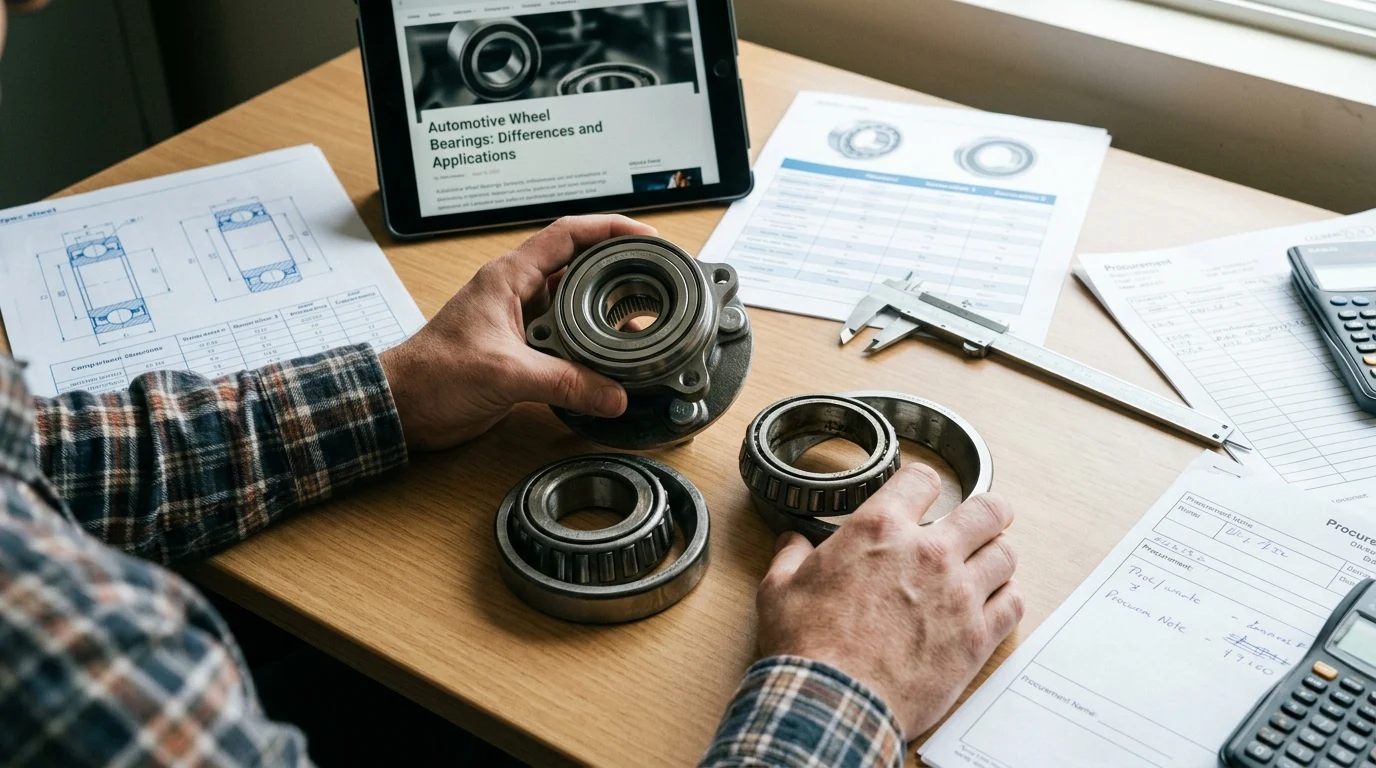
Understanding the mechanical evolution and technical variations of automotive wheel bearings is essential for precise procurement. Modern manufacturing encompasses three primary generations of hub assemblies, each serving distinct assembly line requirements and aftermarket replacement procedures.
What is the working principle
The fundamental working principle of an automotive wheel bearing relies on rolling elements—either precision balls or tapered rollers—housed between an inner and outer ring. These elements transfer radial loads (the static weight of the vehicle) and axial loads (cornering forces) from the rotating wheel to the stationary suspension components. Advanced designs utilize optimized raceway geometries and specialized greases to minimize rolling resistance and thermal expansion under sustained highway speeds.
How to compare types and materials
Evaluating bearing types requires a comparative analysis of Generation 1, 2, and 3 architectures alongside strict metallurgical specifications. Premium bearings utilize high-carbon chromium steel (GCr15), induction hardened to a precise 58-64 HRC to resist metal fatigue and abrasive wear.
| Bearing Generation | Architecture | Integration Level | Typical Application |
|---|---|---|---|
| Gen 1 | Double-row angular contact | None (requires mechanical pressing) | Older passenger vehicles, compacts |
| Gen 2 | Flanged outer or inner ring | Mounting flange included | Mid-size sedans, light commercial |
| Gen 3 | Dual flanges with sensors | ABS/Speed sensors integrated | Modern EVs, premium SUVs |
Which specifications support supplier evaluation
Supplier evaluation must be grounded in strict dimensional and performance specifications. Key metrics include radial clearance, often specified in C2 or C3 classes depending on expected thermal operating ranges, and lateral runout tolerances, which must strictly remain below 0.01mm to prevent brake rotor pulsation. Buyers should mandate technical drawings that explicitly state dynamic load ratings (Cr) and static load ratings (Cor) before approving bulk production.
How to Assess Quality and Failure Risk
Mitigating failure risk requires rigorous quality assurance protocols and a deep understanding of how bearings degrade under real-world conditions. B2B buyers must audit their suppliers’ testing methodologies to ensure the product survives harsh operational environments and meets international durability standards.
Which inspection points and tests to review
Robust quality assessment begins with destructive and non-destructive testing (NDT) at the factory level. Procurement teams should review metallurgical reports and require salt spray test results ranging from 96 to 120 hours to validate the anti-corrosion properties of the hub flanges. Furthermore, ultrasonic NDT is critical for detecting sub-surface micro-cracks in the bearing raceways before the components are assembled and shipped.
What maintenance criteria buyers should check
While modern wheel bearings are generally sealed for life, buyers must verify the maintenance criteria engineered into the product. High-quality Gen 2 and Gen 3 hubs should feature multi-lip elastomeric seals, such as 2RS or specialized labyrinth designs, engineered to retain premium polyurea greases for a lifecycle exceeding 100,000 miles. Checking the factory grease fill rate—typically strictly controlled between 30% and 50% of the internal free space—is vital to prevent overheating or hydroplaning of the rolling elements.
Which failure modes indicate quality issues
Understanding failure modes allows buyers to identify systemic manufacturing defects versus isolated incidents. Spalling and brinelling are common indicators of raceway fatigue or excessive impact loads during shipping. However, industry data shows nearly 70% of premature bearing failures stem from seal degradation leading to moisture ingress. Quality control teams should also review vibration analysis data, where velocity readings exceeding 1.5 mm/s on a factory test rig often indicate poor internal geometry or particulate contamination.
What Commercial and Compliance Requirements to Confirm
Beyond technical specifications, wholesale buyers must navigate the commercial and regulatory landscape of automotive parts sourcing. Establishing clear parameters for production volumes, pricing tiers, and international compliance is crucial for maintaining a resilient and profitable supply chain.
How to evaluate MOQ, pricing, and OEM customization
Negotiating commercial terms requires balancing unit costs against inventory carrying costs. Standard Minimum Order Quantities (MOQs) for aftermarket wheel bearings typically range from 500 to 1,000 pieces per SKU. For OEM customization, buyers must factor in tooling costs for bespoke Gen 3 hubs, which can range from $3,000 to $5,000 depending on sensor integration complexity.
| Commercial Metric | Typical Range / Standard | Impact on Procurement Strategy |
|---|---|---|
| MOQ (Standard SKUs) | 500 – 1,000 units | Dictates inventory turnover rates |
| Tooling Cost (Custom) | $3,000 – $5,000 | Increases initial capital expenditure |
| Production Lead Time | 30 – 45 days | Affects safety stock calculations |
| Target Price (Gen 3) | $30 – $60 per unit | Determines retail margin potential |
Which compliance and traceability documents are required
Compliance and traceability are non-negotiable in the automotive sector to protect against liability and counterfeiting. Suppliers must provide valid IATF 16949 certifications, representing the global quality management standard for the automotive industry. Additionally, buyers should mandate laser-etched batch codes and Julian dates on the outer rings of every bearing, ensuring full backward traceability to the raw steel heat lot in the event of a product recall.
What packaging and logistics standards to define
Defining stringent packaging and logistics standards prevents transit damage, a leading cause of false brinelling before the product even reaches the distributor. Bearings must be individually sealed in Volatile Corrosion Inhibitor (VCI) bags to prevent flash rust during extended ocean freight. Palletization should be optimized for standard shipping containers, utilizing heavy-duty fumigated wooden pallets measuring 1.2m x 1.0m, capable of supporting up to 800kg, securely strapped and shrink-wrapped to maintain load integrity.
How to Select the Right Wheel Bearing Supplier
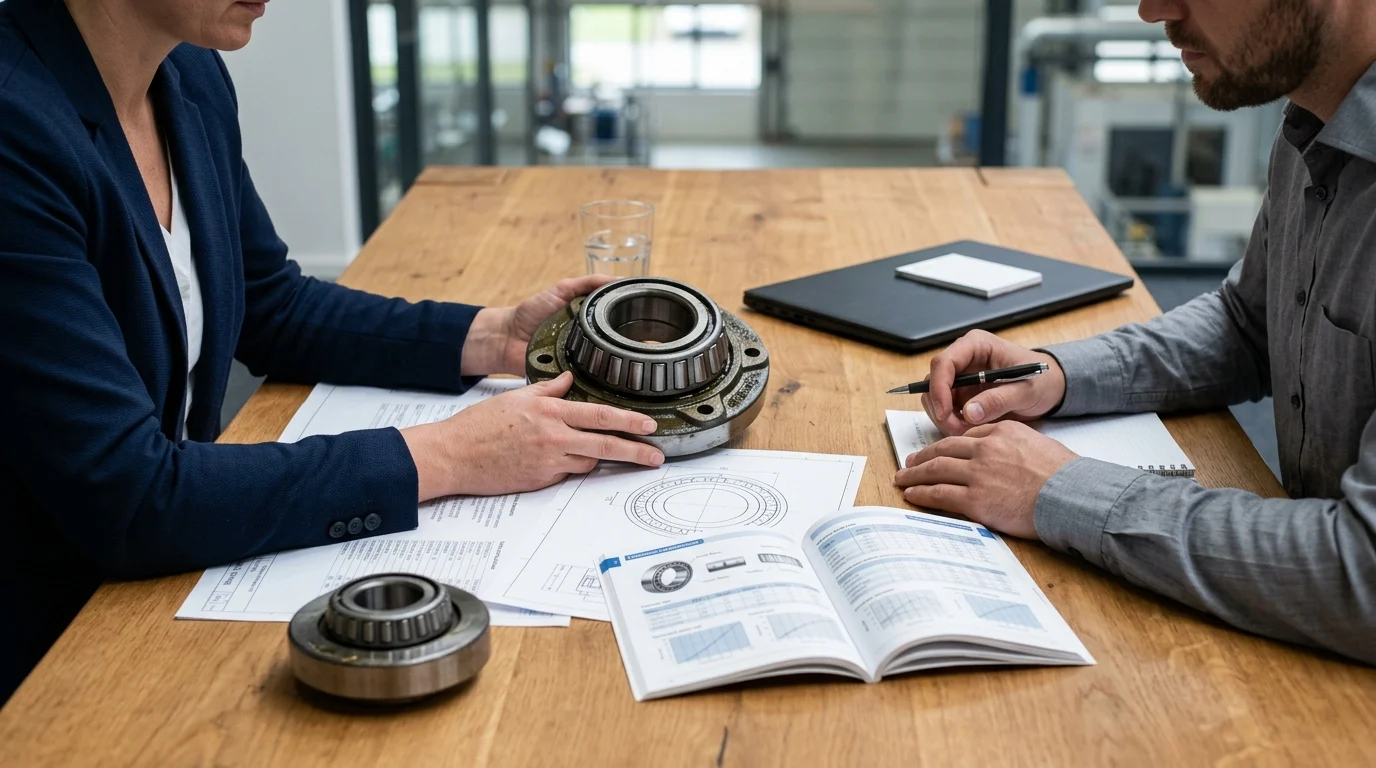
Identifying a strategic manufacturing partner requires looking beyond unit price to evaluate long-term reliability and engineering capacity. Established manufacturers operating with dedicated deep groove and EMQ grade production lines offer significant advantages in consistency and scale, particularly those with decades of export experience.
What supplier scorecard to use
Implementing a rigorous supplier scorecard provides a quantitative basis for procurement decisions. Key performance indicators (KPIs) should include an On-Time Delivery (OTD) rate strictly exceeding 95%, a documented defect rate below established PPM thresholds, and full compliance with Production Part Approval Process (PPAP) Level 3 requirements. This comprehensive level of documentation ensures the supplier’s manufacturing process is capable of consistently producing parts that meet all customer engineering design records.
Which decision criteria support supplier selection
Final supplier selection should hinge on the balance of direct factory capabilities versus trading intermediaries. Direct manufacturers offer transparent cost structures, rapid prototyping for OEM parts, and the ability to implement stringent quality controls on-site. Buyers should prioritize partners with in-house metallurgical labs, comprehensive warranty support, and a proven track record of global export logistics, ensuring that the supply chain remains resilient, cost-effective, and fully aligned with international automotive standards.
Key Takeaways
- Wholesale sourcing and supply-chain implications for Automotive Wheel Bearing
- Specifications, compliance, and commercial terms buyers should validate
- Actionable recommendations for distributors and procurement teams
Frequently Asked Questions
What does an automotive wheel bearing do?
It supports the wheel’s rotation and transfers radial and axial loads to the suspension while reducing friction, noise, and heat.
How can buyers choose the right wheel bearing generation?
Match Gen 1 for older vehicles, Gen 2 for flanged mid-size applications, and Gen 3 for modern models needing integrated ABS or speed sensors.
Which specifications should be checked before bulk purchasing?
Confirm dynamic/static load ratings, radial clearance class, hardness 58-64 HRC, and lateral runout below 0.01mm on approved drawings.
How can wheel bearing quality be verified with a supplier like VETOR GROUP?
Request metallurgical reports, ultrasonic NDT records, salt spray results, and OEM drawing confirmation to ensure consistent factory-controlled quality.
Do sealed automotive wheel bearings need regular maintenance?
Usually no. They are sealed for life, but buyers should verify grease quality, sealing design, and replacement intervals for the target vehicle application.