
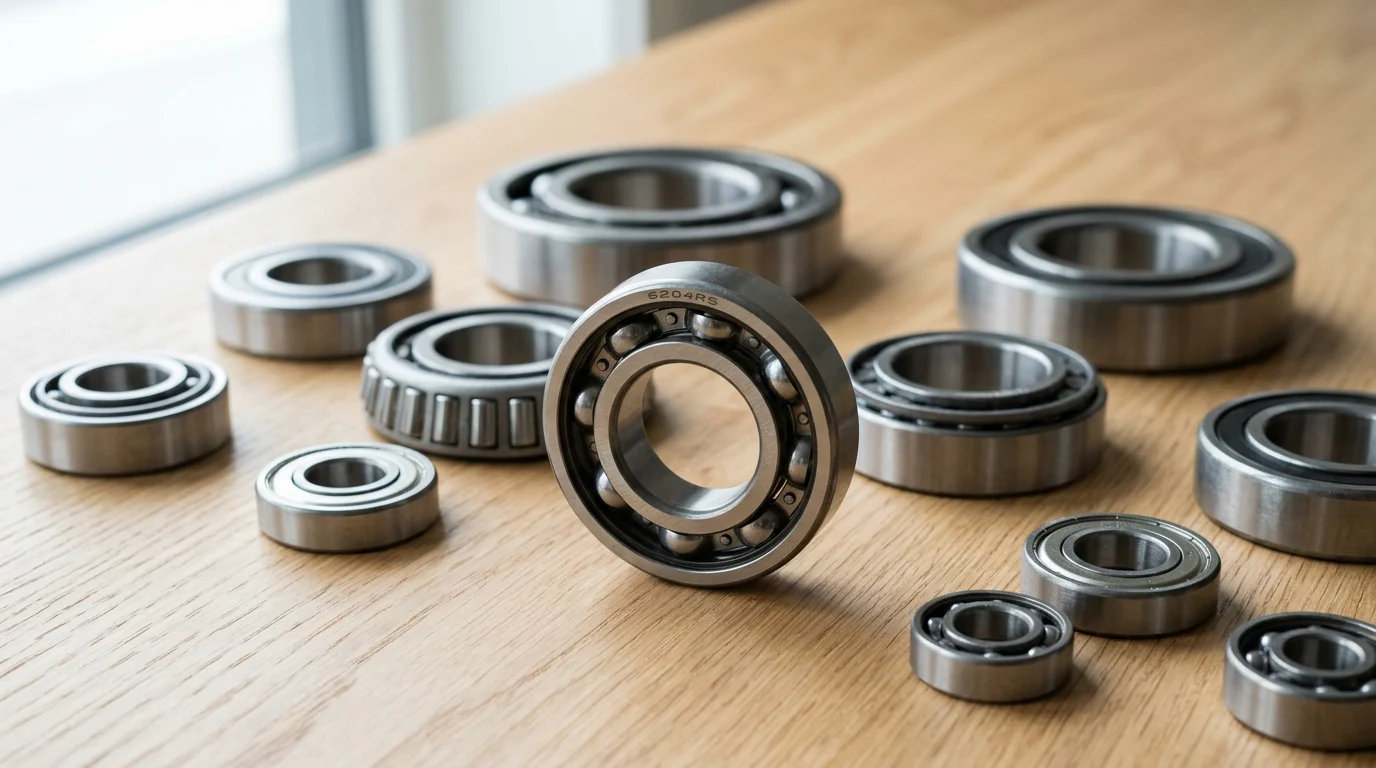
EMQ Grade vs Standard Bearings: Key Differences
In the global components supply chain, differentiating between standard bearings and Electric Motor Quality (EMQ) grade bearings is critical for optimizing product performance and controlling manufacturing costs. While standard bearings meet general industrial requirements, EMQ grade components are engineered specifically to minimize friction, acoustic noise, and vibration in high-speed applications.
Understanding these technical distinctions allows procurement teams to avoid over-specifying components for low-demand applications while preventing catastrophic field failures in high-precision equipment. The transition from standard to EMQ involves rigorous enhancements across manufacturing tolerances, material purity, and lubrication standards.
Impact on noise, vibration, precision, and rotating performance
The primary distinction between standard and EMQ variants lies in their rotating performance, specifically regarding noise and vibration levels. Standard bearings typically operate within the Z1V1 or Z2V2 noise and vibration classifications, which are entirely suitable for low-to-medium RPM environments. In contrast, EMQ bearings are manufactured to achieve strict Z3V3 or Z4V4 ratings.
This classification translates to a measurable noise reduction threshold. For example, standard bearings might emit 35 to 45 decibels under standard load testing, whereas EMQ variants are strictly calibrated to remain under 28 decibels. Furthermore, precision tolerances differ significantly. EMQ bearings require ABEC-5 (P5) or ABEC-7 (P4) dimensional accuracy, ensuring minimal runout and superior rotational stability, compared to the baseline ABEC-1 (P0) or ABEC-3 (P6) tolerances of standard options.
Differences in materials, heat treatment, cleanliness, and grease
Material purity directly dictates the fatigue life and load-bearing capacity of the component. While standard bearings utilize conventional GCr15 high-carbon chromium bearing steel, this material may contain microscopic non-metallic inclusions that act as stress concentrators. EMQ bearings are manufactured from high-purity, vacuum-degassed steel, reducing oxygen content to below 10 PPM to maximize rolling contact fatigue life.
Heat treatment processes also diverge; EMQ bearings often undergo advanced bainite quenching to ensure dimensional stability at higher operating temperatures (up to 150°C). Cleanliness during assembly is another critical differentiator. EMQ assembly lines operate in ISO Class 7 cleanrooms to prevent particulate contamination. Finally, grease selection plays a vital role. Standard units frequently use multipurpose lithium-based grease, while EMQ bearings are packed with premium low-noise, high-speed synthetic lubricants tailored for electric motors, maintaining optimal viscosity across extreme temperature gradients.
Comparison criteria buyers can use to evaluate EMQ bearings
Procurement teams must evaluate several technical criteria when auditing a supplier’s EMQ capabilities. Relying solely on a supplier’s claim of “low noise” is insufficient; buyers must request specific testing data, including vibration velocity (μm/s) and acceleration (dB) reports generated by BVT-1 testing equipment.
| Specification Criteria | Standard Bearings | EMQ Grade Bearings |
|---|---|---|
| Vibration Class | Z1V1 / Z2V2 | Z3V3 / Z4V4 |
| Tolerance Level | ABEC-1 (P0) / ABEC-3 (P6) | ABEC-5 (P5) / ABEC-7 (P4) |
| Noise Output | 35 – 45 dB | < 28 dB |
| Steel Purity (Oxygen) | < 15 PPM | < 10 PPM |
| Typical Grease | Standard Lithium | Premium Synthetic (Low Noise) |
Evaluating these exact metrics ensures that the procured bearings will meet the stringent demands of the end product, preventing costly redesigns or premature mechanical failures in the field.
Application and Cost Comparison for Buyers
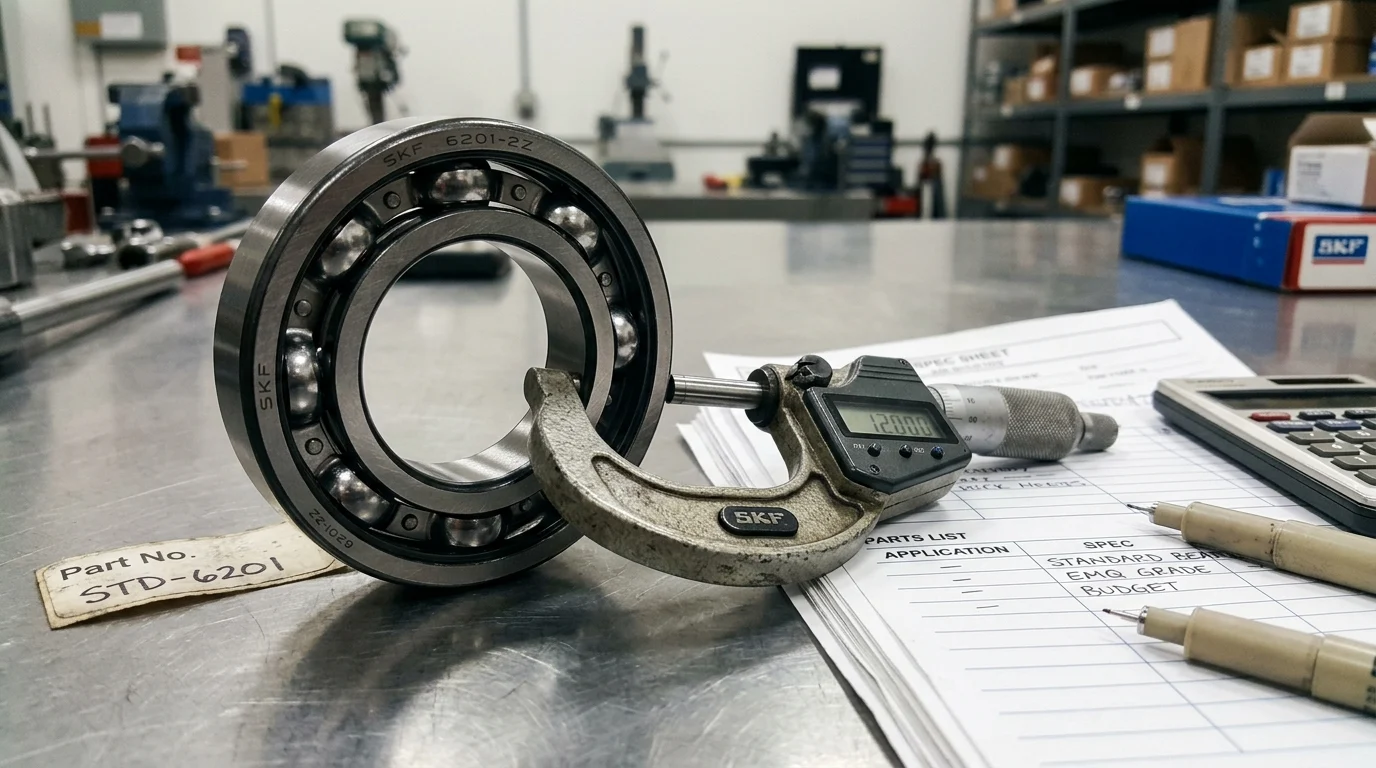
Moving beyond technical specifications, the choice between EMQ and standard bearings heavily influences unit economics, supply chain agility, and aftermarket warranty liabilities. B2B buyers must align their component selection with the commercial realities of their specific industry, balancing upfront procurement costs against the total cost of ownership (TCO).
Industries and products that require EMQ grade bearings
The application environment dictates the necessity for EMQ components. Industries manufacturing HVAC systems, electric vehicle (EV) motors, precision medical devices, and high-end power tools strictly require EMQ grade bearings. In these applications, rotational speeds frequently exceed 10,000 RPM, and excessive vibration can lead to localized overheating, stator damage, or unacceptable acoustic noise for the end-user.
Conversely, standard bearings remain the most cost-effective and practical choice for heavy machinery, low-RPM conveyor rollers, agricultural equipment, and basic automotive aftermarket chassis parts. In these sectors, load capacity and environmental sealing take precedence over micro-vibration control, making the premium cost of EMQ engineering unnecessary.
Trade-offs in unit cost, MOQ, defect tolerance, and warranty risk
Procuring EMQ bearings introduces distinct commercial trade-offs. Unit cost is the most immediate factor; EMQ bearings typically carry a 30% to 60% price premium over standard bearings of the same dimensions, driven by the costs of high-purity steel, cleanroom assembly, and premium synthetic grease.
Minimum Order Quantities (MOQs) also differ. While standard bearings might have an MOQ of 1,000 pieces due to continuous mass production, EMQ runs often demand MOQs of 5,000 to 10,000 pieces to justify the specialized setup and grease changeovers. However, this premium buys strict defect tolerance. A standard bearing batch might be acceptable at a 500 Parts Per Million (PPM) defect rate, whereas EMQ batches are held to strict automotive-grade standards of less than 50 PPM, significantly reducing warranty risk.
When upgrading from standard to EMQ makes business sense
Determining when to upgrade from standard to EMQ components requires a calculated Return on Investment (ROI) analysis. Upgrading makes business sense when the cost of aftermarket warranty claims, product returns, or brand reputation damage exceeds the procurement premium of the EMQ bearings.
| Commercial Metric | Standard Bearings | EMQ Grade Bearings |
|---|---|---|
| Cost Premium | Baseline | +30% to +60% |
| Typical MOQ | 1,000 pcs | 5,000 – 10,000 pcs |
| Target Defect Rate | < 500 PPM | < 50 PPM |
| Warranty Risk | Moderate (in high RPM) | Very Low |
If bearing-related field failures account for more than 2% of a manufacturer’s total warranty costs, transitioning to EMQ grade components generally yields a positive ROI within the first fiscal year, offsetting the higher initial unit cost through improved reliability and customer satisfaction.
Sourcing and Quality Control Requirements
Sourcing EMQ bearings requires more stringent factory qualification than procuring standard bearings. Buyers must verify that a supplier possesses the actual manufacturing capabilities, precision grinding machinery, and testing infrastructure to meet EMQ standards, rather than simply applying premium grease to a standard bearing and rebranding it.
Factory audit points, sample approval, and inspection standards
During factory audits, procurement teams should look beyond basic ISO 9001 certifications. Suppliers producing true EMQ grade bearings should ideally hold IATF 16949 certification, which mandates rigorous automotive-level quality management. Auditors must inspect the factory’s grinding and honing stations, ensuring CNC machinery can consistently hold ABEC-5 tolerances.
The sample approval process should follow a Production Part Approval Process (PPAP) Level 3 framework. Buyers must request dimensional layouts, material certifications, and BVT-1 vibration test reports for the initial samples. Inspection standards should dictate a zero-tolerance policy for acoustic anomalies, with inbound Quality Control (QC) teams utilizing decibel meters and vibration spectrum analyzers on random batch samples.
OEM customization, packaging, labeling, and compliance review
OEM customization for EMQ bearings extends beyond the metal component itself. Buyers often require custom laser etching on the outer ring for traceability, detailing the batch number, manufacturing date, and exact grease fill code. Because EMQ bearings are highly sensitive to contamination and moisture, packaging requirements are strict.
Standard bearings may be shipped in bulk industrial tubes, but EMQ bearings are typically wrapped in Volatile Corrosion Inhibitor (VCI) paper and sealed in individual vacuum pouches or precision-fitted boxes. Furthermore, compliance review is mandatory; buyers must ensure that the specialized synthetic greases used in EMQ bearings comply with European RoHS and REACH directives, particularly if the end products are exported to heavily regulated markets.
Lead time, production capacity, and shipment planning factors
The enhanced manufacturing processes for EMQ bearings significantly impact supply chain timelines. While standard bearings can often be produced and shipped within a 15 to 25-day lead time, EMQ bearings typically require 35 to 50 days. This extended timeline accounts for specialized heat treatments, multi-pass precision grinding cycles, and mandatory resting periods for the steel to achieve dimensional stability.
Production capacity planning must accommodate these longer cycles. Procurement teams are advised to provide suppliers with a 90-day to 120-day rolling forecast to ensure raw materials, specifically high-purity steel and imported synthetic grease, are secured in advance. Shipment planning should also prioritize climate-controlled transit for EMQ batches if they are routed through extreme temperature zones, preventing the separation of base oils and thickeners within the premium grease.
How Procurement Teams Should Choose
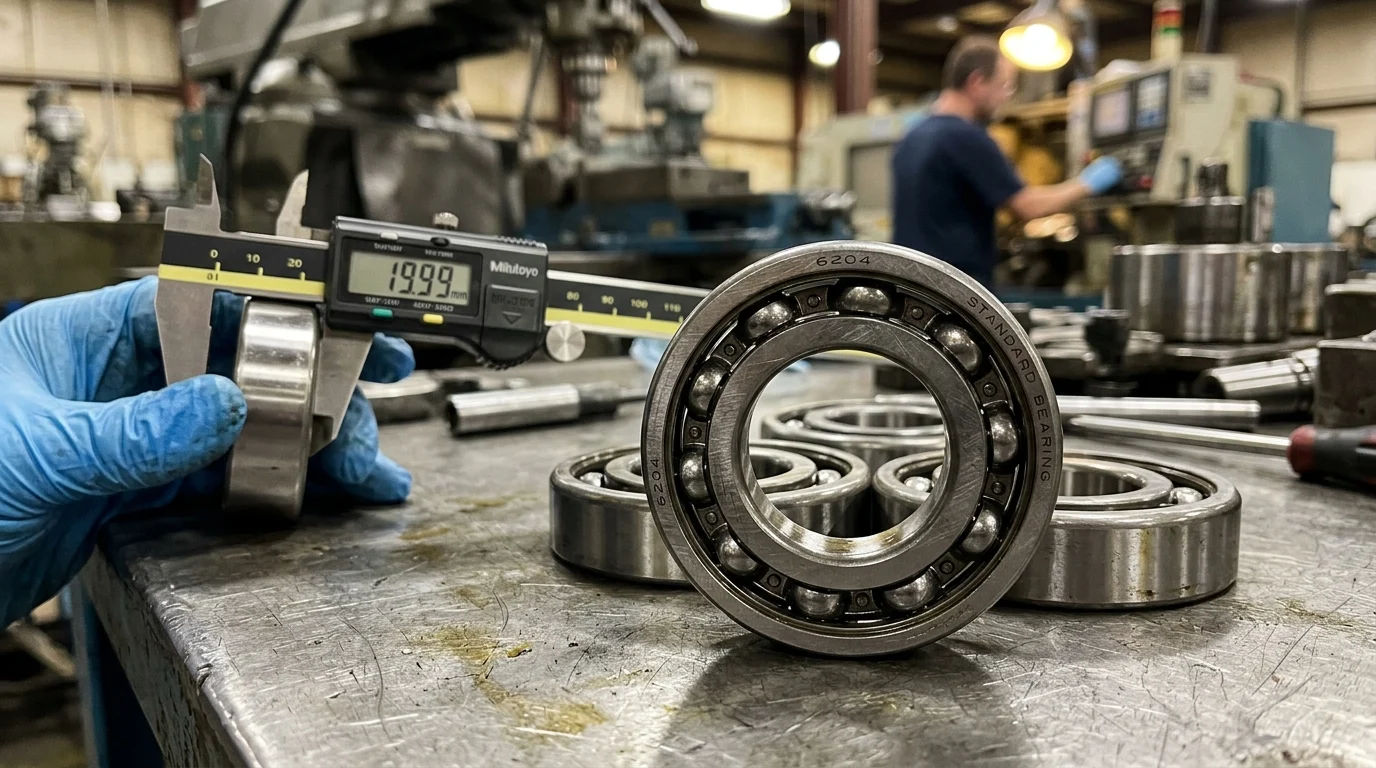
Selecting the appropriate bearing tier requires a calculated approach that aligns component specifications with the end-product’s market positioning. Procurement teams must integrate both engineering requirements and commercial targets to finalize their sourcing strategy, ensuring supply chain resilience across diverse product lines.
A decision framework to balance technical and commercial needs
A robust decision framework balances technical demands against target profit margins. Procurement engineers should establish hard thresholds based on operating conditions. For instance, any application operating continuously above 8,000 RPM, or requiring an operational noise level below 30 decibels, should automatically trigger an EMQ sourcing protocol.
For applications falling below these thresholds, buyers can weigh the commercial benefits of standard bearings. If the end product competes primarily on price in a highly commoditized market, standard bearings offer the necessary cost advantage. However, if the brand is positioned as premium or industrial-grade, absorbing the 30% to 60% cost increase for EMQ bearings protects brand equity by ensuring long-term, silent operation.
How to build a reliable bearing portfolio for different market segments
For broad-line distributors and large-scale OEMs, building a reliable bearing portfolio means adopting a tiered sourcing strategy. Relying exclusively on one grade restricts market reach and inflates costs unnecessarily. A well-balanced inventory often maintains a 70/30 or 60/40 split between standard bearings for high-volume, general-purpose clients and EMQ bearings for specialized, high-margin accounts.
Ultimately, successful procurement hinges on partnering with a factory capable of producing both tiers with distinct, verifiable quality control streams. By thoroughly auditing suppliers, understanding the precise impact of Z3V3 vibration ratings, and calculating the true cost of field failures, procurement teams can confidently navigate the complexities of bearing selection, securing components that drive both mechanical performance and business profitability.
Key Takeaways
- Wholesale sourcing and supply-chain implications for Standard Bearings
- Specifications, compliance, and commercial terms buyers should validate
- Actionable recommendations for distributors and procurement teams
Frequently Asked Questions
What is the main difference between EMQ grade and standard bearings?
EMQ bearings are built for lower noise, lower vibration, and higher-speed rotation, while standard bearings suit general industrial use at lower performance requirements.
When should buyers choose EMQ grade bearings?
Choose EMQ for electric motors, HVAC units, medical devices, and high-speed tools, especially when speed exceeds 10,000 RPM or low noise is critical.
Are standard bearings enough for everyday industrial applications?
Yes. Standard bearings are usually suitable for conveyors, agricultural equipment, heavy machinery, and basic automotive parts where ultra-low noise is not required.
How can I verify a supplier’s EMQ bearing quality?
Ask for vibration and noise test data, such as Z3V3/Z4V4 ratings, ABEC tolerance level, and BVT-1 test reports before placing bulk orders.
Can VETOR GROUP support OEM and bulk bearing sourcing?
Yes. VETOR GROUP offers factory-based supply, OEM customization, quality control, and global export service for EMQ and standard bearings.